“Twenty-four tons of basalt carved into a sun-disc dominate this space, yet it is a single concrete pillar holding up a lake of air that steals the show.”
About Museo Nacional de Antropología
The museum was born from a 1960s vision to create a world-class home for Mexico's ancestral treasures. Architect Pedro Ramírez Vázquez spent years studying ancient sites to incorporate pre-Hispanic proportions into a modernist frame. The 1964 opening transformed the way the world viewed Latin American history, moving it from the realm of 'curiosities' to the heights of global art history. In 1985, a daring Christmas Eve heist saw 140 pieces stolen, though nearly all were recovered years later, leading to the high-security protocols that now protect these priceless jades and golds.
Rainwater falls from a single, massive pillar
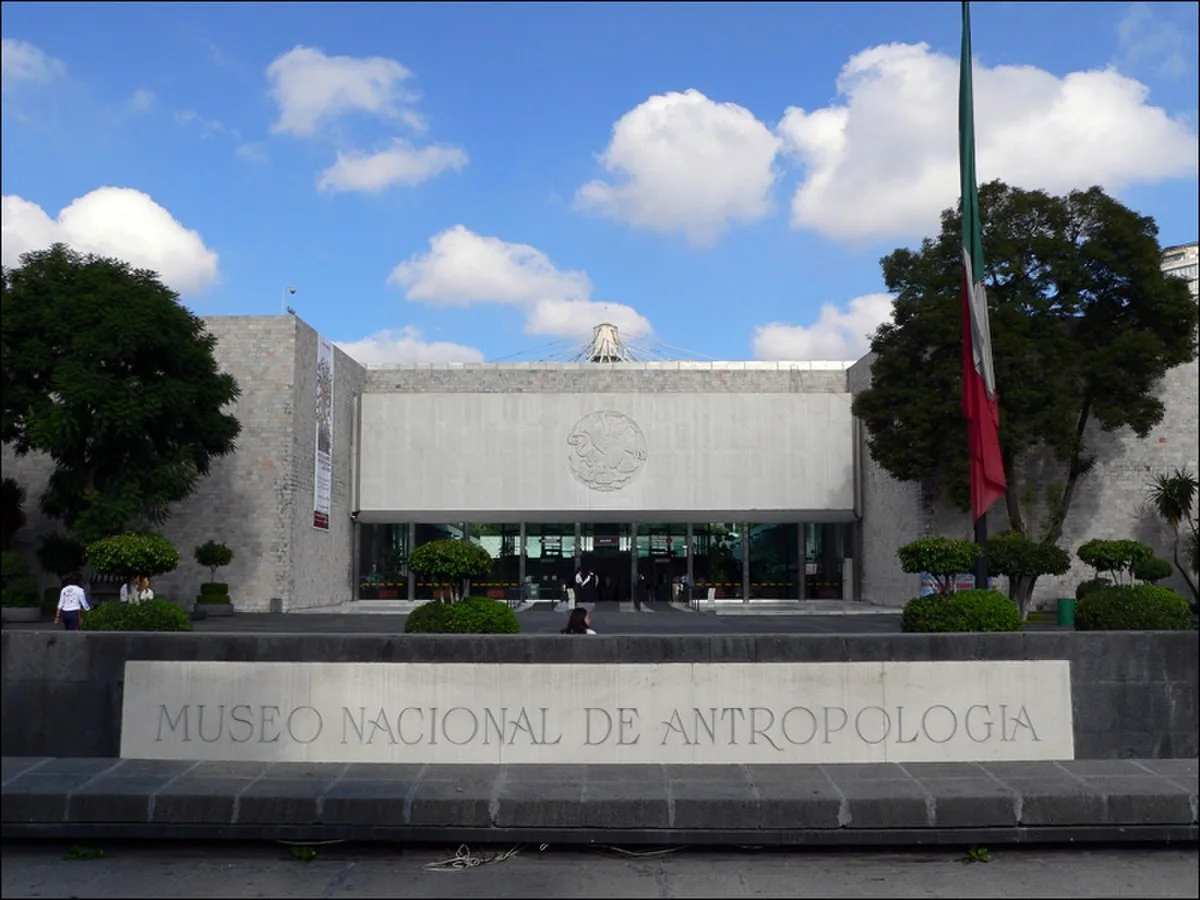
Rainwater falls from a single, massive pillar in the center of a courtyard, creating a thunderous curtain of sound that marks the threshold of Mexico’s most profound cultural treasury. Pedro Ramírez Vázquez designed this mid-century masterpiece to feel less like a building and more like a secular cathedral. It sits within the Bosque de Chapultepec, sprawling across nearly twenty acres of interconnected galleries and open-air patios. This space does not merely store artifacts; it maps the soul of a continent. Each hall transitions through the high civilizations of the Mexica, Maya, and Zapotec, blending archaeological rigor with an artistic flair that elevates a stone carving into a living presence. The architecture itself uses volcanic stone and aluminum to mirror the textures of the very civilizations it honors.
Rainwater falls from a single, massive pillar in the center of a courtyard, creating a thunderous curtain of sound that marks the threshold of Mexico’s most profound cultural treasury.
The legacy
President Adolfo López Mateos inaugurated the museum in 1964, a period of intense national pride and architectural modernization. The goal was to consolidate the fragmented archaeological history of the nation into a single, cohesive narrative that every Mexican could claim as their own. Constructing the 'Umbrella', the massive concrete canopy supported by that single bronze-clad column, was considered an engineering miracle of its time. The artifacts within represent centuries of excavation, including pieces recovered from the very streets of Mexico City during the construction of the subway. It is the definitive repository for the Sun Stone and the jade mask of Pakal, items that define the pre-Columbian world for the modern eye.
Standing before the Piedra del Sol,
Standing before the Piedra del Sol, The rhythmic complexity of the carvings seems to pulse under the gallery lights. The air inside the Mexica Hall feels cool and still, holding a reverence that hushes even the largest tour groups. First, the deep, earthy scent of the volcanic rock and the dampness near the courtyard fountain. The scale of the Olmec colossal heads, their stone features possessing a serene, heavy wisdom that dwarfs human observers. People often miss the ethnographic galleries on the second floor, which showcase the living cultures of contemporary indigenous groups. how the light shifts across the jade mosaics, revealing shades of green that once held more value than gold. The piece that stays with you is looking up at the Umbrella during a summer downpour, watching the sky’s water join the man-made waterfall.
Chapultepec Park is the lung
Chapultepec Park is the lung of Mexico City, and the museum sits on its northern edge along the Paseo de la Reforma. Reaching it via the Metro is efficient; the Auditorio and Chapultepec stations are both within a ten-minute walk through the park’s wooded paths. Heavy traffic often clogs Reforma, so taking the Metrobús line 7 is often faster than a private car. Most travelers arrive in the morning to beat the school groups, though the late afternoon light in the courtyard offers a more tranquil atmosphere for reflection.
Chapultepec Park is the lung of Mexico City, and the museum sits on its northern edge along the Paseo de la Reforma.
The Experience
A drop in temperature as you move from the sun-drenched gardens into the shaded vaults of the Maya hall. The clatter of the central fountain provides a constant, white-noise soundtrack that makes the vast galleries feel private. There is a weight of the monoliths, their surfaces pitted by centuries of rain before they were brought here. Most visitors miss the reconstructed tomb of Pakal on the lower level, a dark and intimate encounter with royalty. The late afternoon light filtering through the aluminum latticework creates a pattern of shadows that mimics the forest canopy.
Why It Matters
This museum is the pillar of Mexican national identity, bridging the gap between a colonial past and a contemporary indigenous presence. It houses the largest collection of ancient Mexican art in the world, serving as a critical academic hub for global Mesoamerican studies. It is where the complex mathematics and cosmologies of the Americas are given physical, undeniable form.
Why Visit
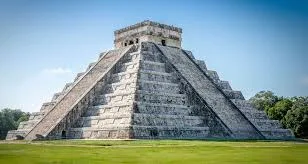
Visit this museum to understand that Mexico is not one country, but an amalgamation of lost empires. While Teotihuacán or Chichén Itzá show you the shells of cities, this place shows you the people who filled them. It is the only place on earth where you can walk through three thousand years of human ingenuity in a single afternoon.
✦ Insider Tips
- 1
Head straight to the Mexica Hall at the back when the doors open to see the Sun Stone without the midday crowds.
- 2
The second-floor ethnographic exhibits offer a vital look at how the ancient traditions survive in modern textiles and festivals.
- 3
Check the schedule for the 'Voladores de Papantla' who often perform their ritual bird-dance just outside the main entrance.
- 4
Carry a light sweater; the climate control in the jade and gold vaults is significantly colder than the rest of the building.
- 5
The museum cafe serves excellent Oaxacan chocolate, a perfect way to process the sensory overload of the galleries.