Forty-ton whales seek out the human touch in these desert lagoons, creating a rare bridge between species in Mexico's largest wilderness.
About El Vizcaíno Biosphere Reserve
The reserve was established in 1988 to halt industrial salt expansion and protect the gray whale nurseries. It represents a major victory for international conservation, as the gray whale was once nearly erased from these very waters. The UNESCO World Heritage designation in 1993 recognized both the coastal lagoons and the inland Sierra de San Francisco. The latter contains the Great Murals, which were first documented by Jesuit missionaries in the 18th century, though they remained largely unknown to the outside world until the mid-20th century.
Massive gray whales migrate thousands of miles
Massive gray whales migrate thousands of miles to find sanctuary in the shallow, hyper-saline lagoons of El Vizcaíno, a landscape like the very edge of the world. This biosphere reserve in the center of the Baja California Peninsula is the largest protected area in Mexico, spanning over 2.5 million hectares. It is a place of stark, desert beauty where the Vizcaíno Desert meets the Pacific Ocean. The terrain is dominated by giant cardón cacti, some reaching fifteen meters in height, standing guard over a salt-crusted earth that glows white under the midday sun. Beyond the lagoons, the reserve encompasses the Sierra de San Francisco, a rugged mountain range that hides some of the most significant prehistoric rock art in the Western Hemisphere.
“Massive gray whales migrate thousands of miles to find sanctuary in the shallow, hyper-saline lagoons of El Vizcaíno, a landscape like the very edge of the world.”
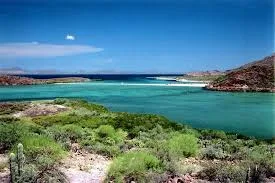
El Vizcaíno Biosphere Reserve, Mexico
Protection for this vast wilderness began in earnest
Protection for this vast wilderness began in earnest in 1988, driven by the need to safeguard the breeding grounds of the Eastern Pacific gray whale. For decades, these animals were hunted to the brink of extinction, but the lagoons of Ojo de Liebre and San Ignacio provided a shallow, sheltered nursery where they could recover. The reserve also protects the endangered Peninsular pronghorn, one of the fastest land mammals in the world. Historically, the region was home to the Cochimi people, who left behind an incredible legacy of 'Great Murals' in the mountain caves. These paintings, dating back thousands of years, depict humans and animals in a scale and detail that suggest a deeply complex relationship with this seemingly inhospitable environment.
Out on a small panga boat
Out on a small panga boat in the lagoon, The silence of the desert is broken only by the powerful 'whoosh' of a whale's blowhole nearby. It smells of salt and sagebrush, a sharp, clean scent that carries for miles. The texture of the whale's skin, rough, mottled, and surprisingly warm, if one of the 'friendlies' approaches the boat for a touch. The spray of the Pacific mist on your face, a cold contrast to the dry heat reflecting off the dunes. Simple to walk past is the vast salt flats of Guerrero Negro, where the horizon disappears into a shimmering mirage of crystal. First, the silhouettes of ospreys nesting atop the towering cacti, their sharp cries echoing over the scrubland. The moment that stays with you is looking into the eye of a forty-ton mammal and sensing a profound, ancient curiosity.
Reaching El Vizcaíno requires a dedicated journey down
Reaching El Vizcaíno requires a dedicated journey down the Trans-Peninsular Highway. The town of Guerrero Negro is the primary hub for whale-watching tours in Ojo de Liebre Lagoon, while San Ignacio is the gateway for the eponymous lagoon and the cave paintings. Most travelers fly into Loreto or La Paz and rent a rugged vehicle for the long drive north. Because of the reserve's immense size and delicate ecosystems, many areas are only accessible via authorized guides, particularly the remote canyons of the Sierra de San Francisco where the rock art is located.
“Reaching El Vizcaíno requires a dedicated journey down the Trans-Peninsular Highway.”
The Experience
Look at the way the desert light turns the salt lagoons into mirrors of pure turquoise. Audible: a mother whale communicating with her calf creates a low-frequency vibration you can feel in the floor of the boat. There is a feeling of immense isolation of the Vizcaíno Desert, where the nearest town is often hours away. Most visitors miss the endemic Cirio trees, which look like upside-down carrots reaching toward the sky. What sticks with you is the walk into a mountain cave to see a ten-foot-tall painted deer that hasn't changed in two millennia.
Why It Matters
El Vizcaíno is a global stronghold for biodiversity, acting as the primary nursery for the North Pacific gray whale population. It preserves a unique 'fog desert' ecosystem found nowhere else on earth. Its cultural significance lies in the rock art of the Sierra de San Francisco, which provides a rare window into the spiritual life of the extinct Cochimi culture.
Why Visit
Visit El Vizcaíno for an encounter with nature that feels completely unscripted. This is not a zoo or a manicured park; it is a raw, prehistoric landscape where the animals choose to interact with you. It is the ultimate destination for those who find beauty in the vast, the dry, and the silent.
Insider Tips
- 1
Book your whale-watching tour in San Ignacio for a more intimate, less industrial experience than Guerrero Negro.
- 2
Bring polarized sunglasses to cut through the intense glare of the white salt flats and see deeper into the water.
- 3
Obtain permits weeks in advance if you plan to visit the cave paintings, as access is strictly regulated to protect the art.
- 4
The Trans-Peninsular Highway is narrow and lacks shoulders; avoid driving at night due to the high risk of wandering livestock.
- 5
Pack a high-SPF sunscreen and a wide-brimmed hat, as the reflection from the lagoons can cause sunburn in record time.