“They flattened a mountain to build a city, creating a stone plateau where the Zapotec elite lived for a millennium closer to the stars than the soil.”
About Monte Albán
Monte Albán was the master of the valley from 500 BCE until roughly 850 CE. It functioned as a sophisticated state with its own writing system and calendar, long before the rise of the Aztecs. The Zapotecs engineered complex irrigation systems on the slopes to feed their growing population. When the city collapsed, it didn't fall to war but seemingly faded into a sacred memory. The Mixtecs later repurposed the Zapotec tombs, filling them with intricate gold-work that remained hidden until the early 20th century, revealing a layered history of occupation and reverence.
What Monte Albán actually is
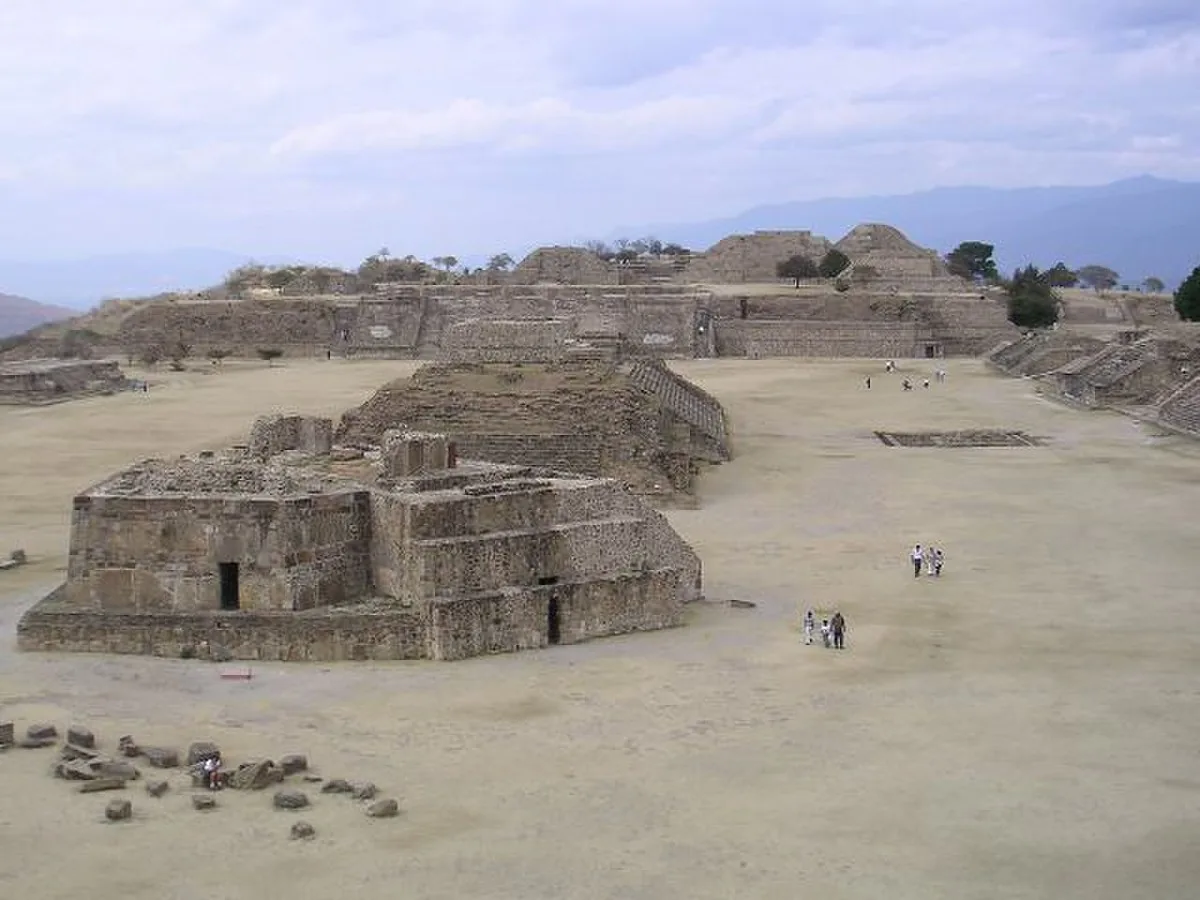
High above the valley of Oaxaca, an entire mountaintop was leveled by hand to create a plateau for the gods. Monte Albán represents the first true urban center of the Americas, a Zapotec capital that dominated the region for over a thousand years. The site is defined by its massive Main Plaza, a vast rectangular expanse flanked by pyramids, temples, and a ball court. Within the center, you are surrounded by a 360-degree panorama of the Sierra Madre mountains, giving the impression that the city is floating among the clouds. The architecture is characterized by its horizontal strength and broad stairways, designed to withstand the seismic tremors common to this region. It is a place of profound silence, where the wind through the dry grass is the only constant companion.
High above the valley of Oaxaca, an entire mountaintop was leveled by hand to create a plateau for the gods.
sculpting this ridge, 500
Zapotec builders began sculpting this ridge around 500 BCE, moving millions of tons of earth to create a flat ceremonial heart. For centuries, it was a neutral capital that united the warring factions of the Oaxaca Valley. The city reached its zenith between 300 and 700 CE, housing up to 30,000 residents on its terraced slopes. After its mysterious abandonment, the Mixtecs moved in, using the site primarily as a sacred burial ground. It was here in 1932 that archaeologist Alfonso Caso discovered Tomb 7, containing one of the richest hoards of gold and turquoise ever found in the Americas. This discovery proved the immense sophistication of the post-classic Mixtec jewelers and refocused the world's attention on the cultural depth of southern Mexico.
Climbing the North Platform, The air
Climbing the North Platform, The air grows thinner and cooler, smelling of wild sage and sun-baked limestone. The hum of your footsteps on the gravel path is surprisingly loud in the vast, open plaza. The surface of the 'Danzantes', stone slabs carved with contorted figures that many now believe represent defeated leaders or sacrificial victims. A sense of sheer vertical ambition of the site looking down from the ruins onto the modern sprawl of Oaxaca City far below. Simple to walk past is the astronomical observatory, a uniquely shaped building aligned with the stars rather than the plaza’s grid. how the shadows of the pyramids grow long and sharp in the late afternoon, accentuating the geometric perfection of the Zapotec masons. The piece that stays with you is the realization of the absolute silence at the summit, a sharp contrast to the chaotic markets in the valley below.
The site is located just
The site is located just six miles west of Oaxaca City. Local buses depart regularly from the hotel district and the main market, winding up the steep, narrow road to the entrance. Taxis are plentiful and offer a more comfortable ascent, though many visitors opt for organized shuttles that include a guide. Arriving at the 8:00 AM opening is essential; the midday sun on the unshaded plateau can be punishing, and the early morning mist clinging to the valley floor provides the most atmospheric views of the ruins.
Local buses depart regularly from the hotel district and the main market, winding up the steep, narrow road to the entrance.
The Experience
What gets you is is the way the light catches the mica in the stones, making the pyramids sparkle in the early morning. Nearby, the wind whipping through the 'Ball Court' creates a low, ghostly whistle. Something like a sense of insignificance standing in the center of the Main Plaza, which is larger than three football fields. Most visitors miss the subtle carvings of 'Building J,' which depict conquered villages through inverted heads. The moment that stays with you is standing on the South Platform as the sun dips behind the Sierra Madre, turning the entire city into a silhouette against a violet sky.
Why It Matters
Monte Albán is the premier archaeological site of the Oaxaca region and a UNESCO World Heritage landmark. It represents the pinnacle of Zapotec social and political organization and provides the most complete record of early Mesoamerican urbanism. Culturally, it remains a site of pilgrimage and pride for the Zapotec people, who still inhabit the valleys below.
Why Visit
Visit Monte Albán for the perspective; unlike the jungle-choked ruins of the Maya, this site is open, airy, and offers the most dramatic views in Mexico. It provides a sense of the immense scale of ancient American engineering without the claustrophobia of the rainforest. It is the best place to understand the relationship between ancient architecture and the natural landscape.
✦ Insider Tips
- 1
Bring more water than you think you need; there is virtually no shade on the Main Plaza once the sun is up.
- 2
The museum at the entrance houses the original 'Danzantes' slabs; the ones on the plaza are mostly replicas to prevent erosion.
- 3
Look for the 'túneles' or tunnels used by archaeologists; they offer a rare glimpse into the earlier layers of the pyramids.
- 4
The South Platform offers the most iconic photo of the entire complex with the mountains in the background.
- 5
Wear a hat with a chin strap; the winds on the plateau can be surprisingly fierce and sudden.