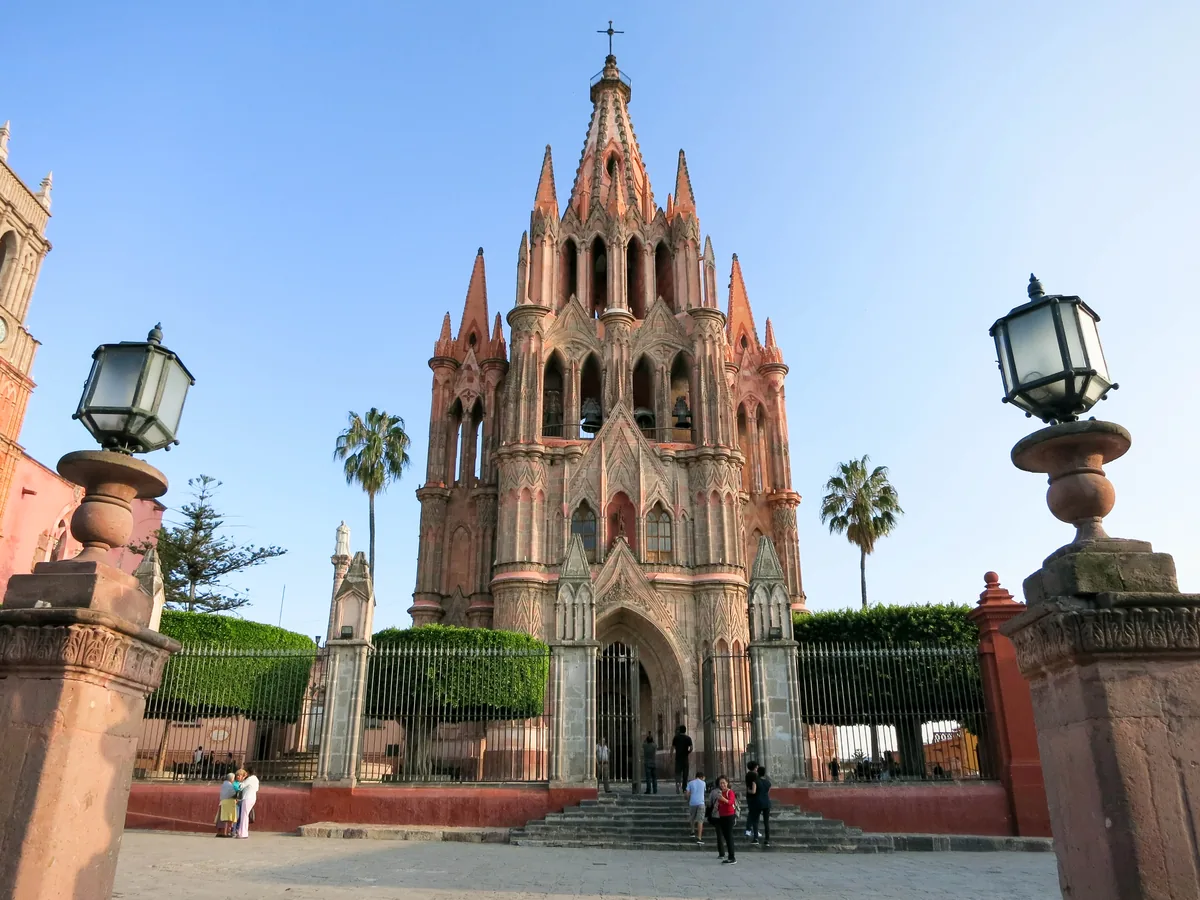
A mason who had never left Mexico looked at postcards of European cathedrals and built this from pink stone, and it became the most recognisable church in the country.
About Parroquia de San Miguel Arcángel
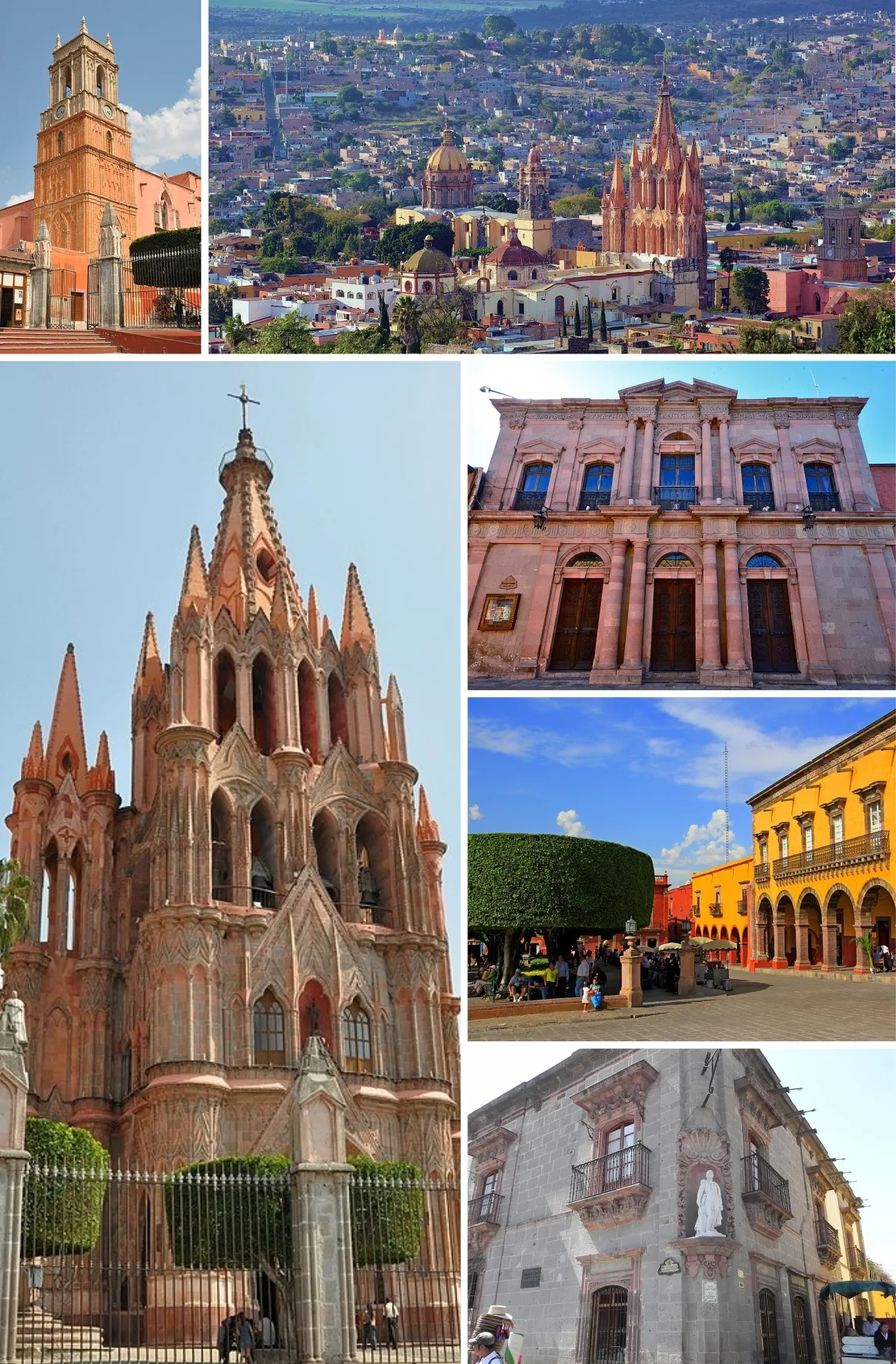
The original 17th-century church was given its current neo-Gothic facade in the 1880s by Zeferino Gutierrez, a self-taught Chichimec stonemason. San Miguel de Allende itself was an important colonial silver town and is now a UNESCO World Heritage Site, partly because of the Parroquia's iconic profile.
What this is
The Parroquia de San Miguel Arcangel is a pink stone church that dominates the skyline of San Miguel de Allende, a colonial city in central Mexico's Bajio region. Its neo-Gothic facade is the work of a self-taught indigenous stonemason named Zeferino Gutierrez, who reportedly used postcards of European cathedrals as his design guide. The church is the visual anchor of a UNESCO World Heritage town.
A Self-Taught Mason's Postcard Cathedral
The original 17th-century church had a modest facade until the 1880s, when Zeferino Gutierrez, a local Chichimec mason with no formal architectural training, was commissioned to rebuild the front. According to local tradition, he drew inspiration from postcards and lithographs of Gothic cathedrals in France and Belgium, translating their pointed arches and spires into the local pink cantera stone. The result is a facade that feels European in outline but distinctly Mexican in material and execution: the pink stone changes tone with the light, going from pale salmon in the morning to a deep rose at sunset. The church faces the Jardin, the town's central square, and the two together form the social centre of San Miguel de Allende. On weekend evenings, the Jardin fills with families, musicians and balloon sellers, and the Parroquia is lit from below, its spires glowing pink against the darkening sky.
The Experience
The church is best seen from the Jardin, the central square, where the full height of the pink facade is framed by laurel trees. Inside, the nave is more traditional Mexican colonial than the facade suggests. But the real experience is the exterior at different times of day: pale in the morning, vivid at golden hour, glowing pink under lights at night. Weekend evenings in the Jardin, with the church lit up and the square full of people, are the quintessential San Miguel moment.
Why It Matters
The Parroquia is one of the most recognisable buildings in Mexico and a remarkable example of vernacular creativity: a self-taught indigenous mason interpreting European Gothic in local materials. It anchors a UNESCO World Heritage townscape.
Why Visit
The most recognisable church in Mexico, a pink stone neo-Gothic creation by a self-taught mason, glowing over the central square of a UNESCO colonial town.
✦ Photo Gallery
Best Season
🌤 October through April for dry, warm weather. Sunset and evening are the best times to see the pink stone change colour. Holy Week and Day of the Dead bring major celebrations.
Quick Facts
Best time to visit
October through April for dry, warm weather. Sunset and evening are the best times to see the pink stone change colour. Holy Week and Day of the Dead bring major celebrations.
Getting there
In San Miguel de Allende, Mexico; reach San Miguel de Allende first, then continue to the site.
Location
San Miguel de Allende, Mexico
Type
attraction
Insider Tips
- 1
Watch the facade at sunset from the Jardin for the best colour.
- 2
Return at night when the church is lit from below.
- 3
Weekend evenings in the Jardin are the quintessential San Miguel scene.
- 4
San Miguel de Allende is about 3.5 hours from Mexico City by car.