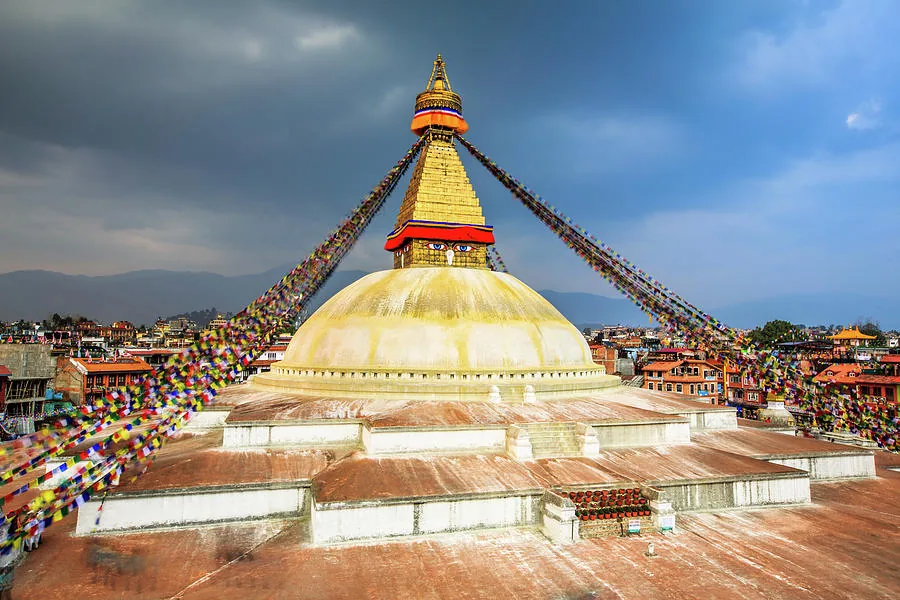
“The all-seeing eyes of the Buddha gaze out in four directions from this hilltop stupa, watched over by hundreds of holy monkeys.”
About Swayambhunath Stupa
Swayambhunath is among the most ancient religious sites in the Kathmandu Valley, with origins traced back many centuries and tied to legends of the valley's creation from a lake. Sacred to both Buddhists and Hindus, it has been rebuilt and added to over the ages. It suffered damage in the 2015 earthquake but was repaired, remaining a living centre of worship and a defining landmark of Kathmandu.
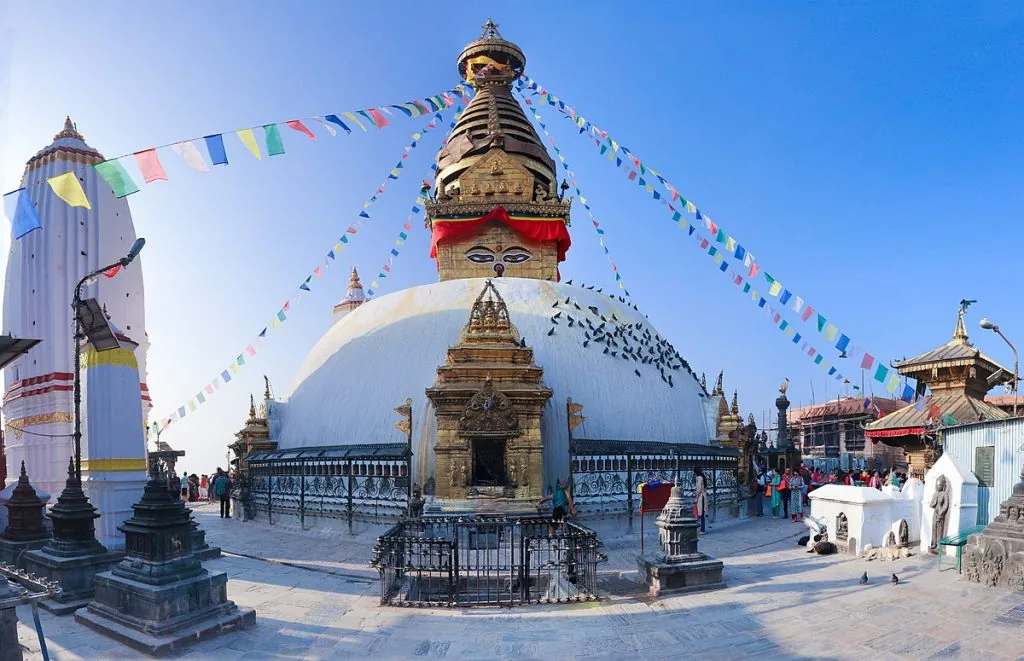
Swayambhunath is one of the oldest and most sacred Buddhist sites in Nepal, a white-domed stupa crowning a forested hill above Kathmandu. Famous for the painted eyes of the Buddha that gaze out in all four directions from its golden spire, and for the troops of monkeys that scamper across its grounds, it is universally known to visitors as the Monkey Temple.
Swayambhunath is one of the oldest and most sacred Buddhist sites in Nepal, a white-domed stupa crowning a forested hill above Kathmandu.
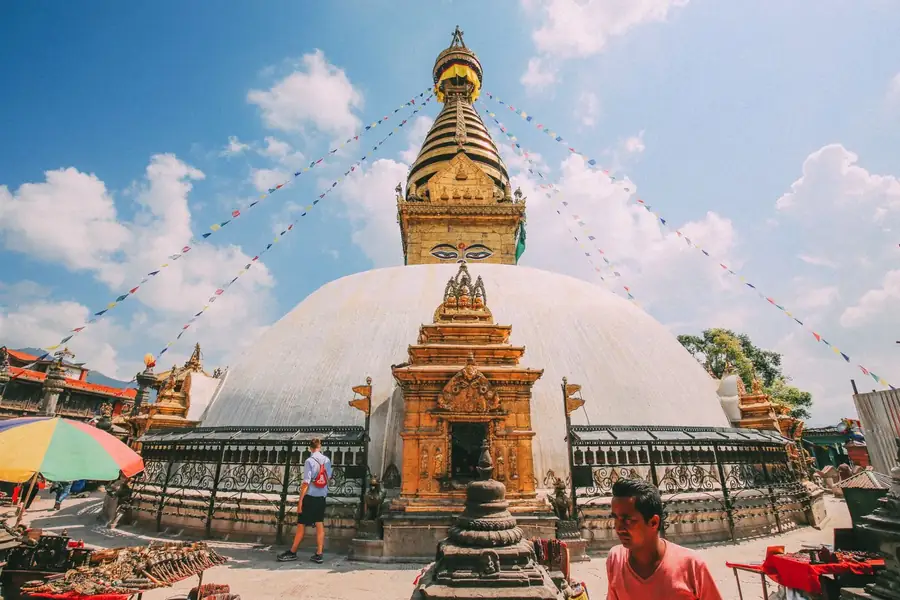
The All-Seeing Eyes
Atop the stupa, on each of the four sides of the gilded tower, a pair of half-closed eyes looks out over the valley, representing the all-seeing wisdom and compassion of the Buddha. Between them, a curl that resembles a question mark is the Nepali number one, symbolising unity, and above sits a third eye. The hill is home to hundreds of holy monkeys, believed to have sprung from the head lice of a bodhisattva in legend, who give the temple its popular name.
The Experience
The ascent follows a long, steep stairway lined with prayer flags, carvings and monkeys to reach the hilltop, where the great white dome, the watching eyes and a forest of smaller shrines and prayer wheels await, with panoramic views over Kathmandu spread below. Pilgrims circle the stupa spinning prayer wheels, incense drifts, and monkeys dart everywhere. The feel is vivid, spiritual and quintessentially Kathmandu.
Why It Matters
Swayambhunath is one of the holiest Buddhist sites in Nepal and a key part of the Kathmandu Valley UNESCO World Heritage Site. Its ancient origins, iconic watching eyes and shared Buddhist-Hindu worship embody the religious harmony and deep spirituality of the valley, making it an essential landmark.
Swayambhunath is one of the holiest Buddhist sites in Nepal and a key part of the Kathmandu Valley UNESCO World Heritage Site.
Why Visit
One of Nepal's oldest and most iconic stupas, the hilltop Monkey Temple with the all-seeing eyes of the Buddha and panoramic views over Kathmandu.
✦ Insider Tips
- 1
Climb the long stairway or take the easier road up the back.
- 2
Watch your belongings and food around the monkeys.
- 3
Go early for clear views over Kathmandu and active worship.
- 4
Walk clockwise around the stupa as worshippers do.