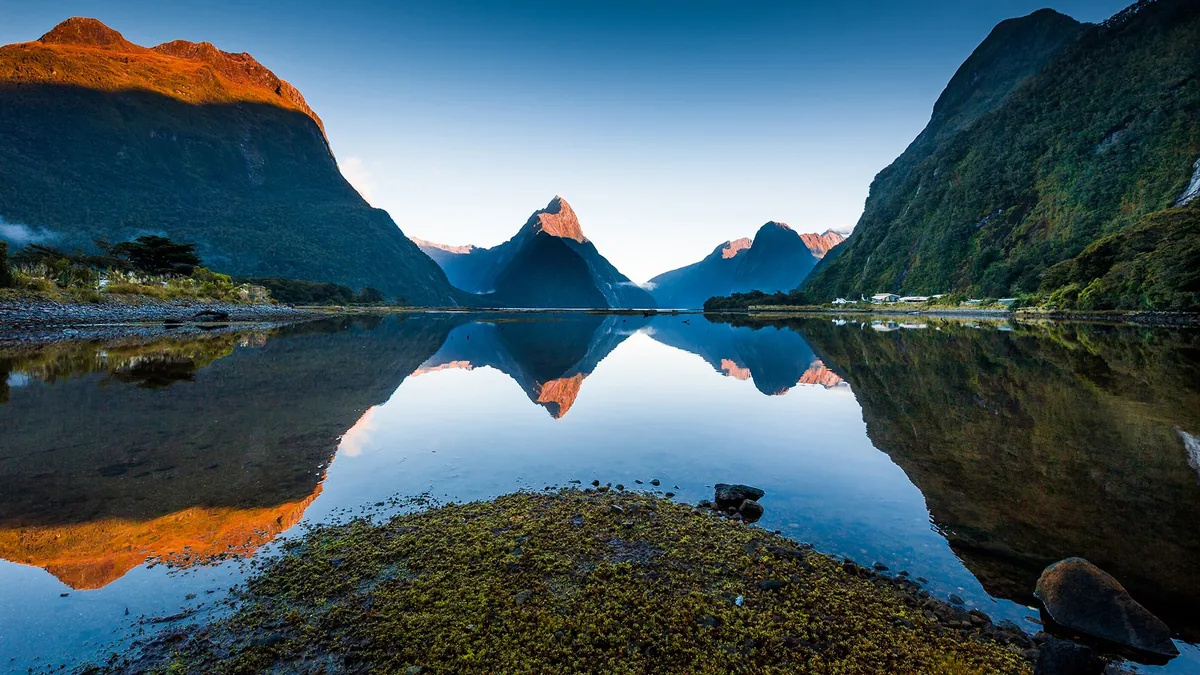
Rain is the true architect here, summoning nearly seven meters of water each year to create a vertical world where waterfalls outnumber the people a thousand to one.
About Piopiotahi / Milford Sound
Maori tribes traveled to these shores for centuries to harvest pounamu, the precious greenstone found in the riverbeds. When Donald Sutherland arrived in 1877, he was so moved by the landscape that he spent the rest of his life as its unofficial guardian, discovering the 580-meter falls that now bear his name. The construction of the Homer Tunnel began during the Great Depression as a public works project, but it took nearly twenty years to complete due to the unforgiving granite and frequent avalanches. This tunnel finally opened the sound to the modern world in 1954, ending its era as a secret reachable only by foot or sea. It now sits as the centerpiece of Te Wahipounamu, a vast UNESCO World Heritage area that protects some of the most primitive forests left on the planet.
What Piopiotahi / Milford Sound in New Zealand
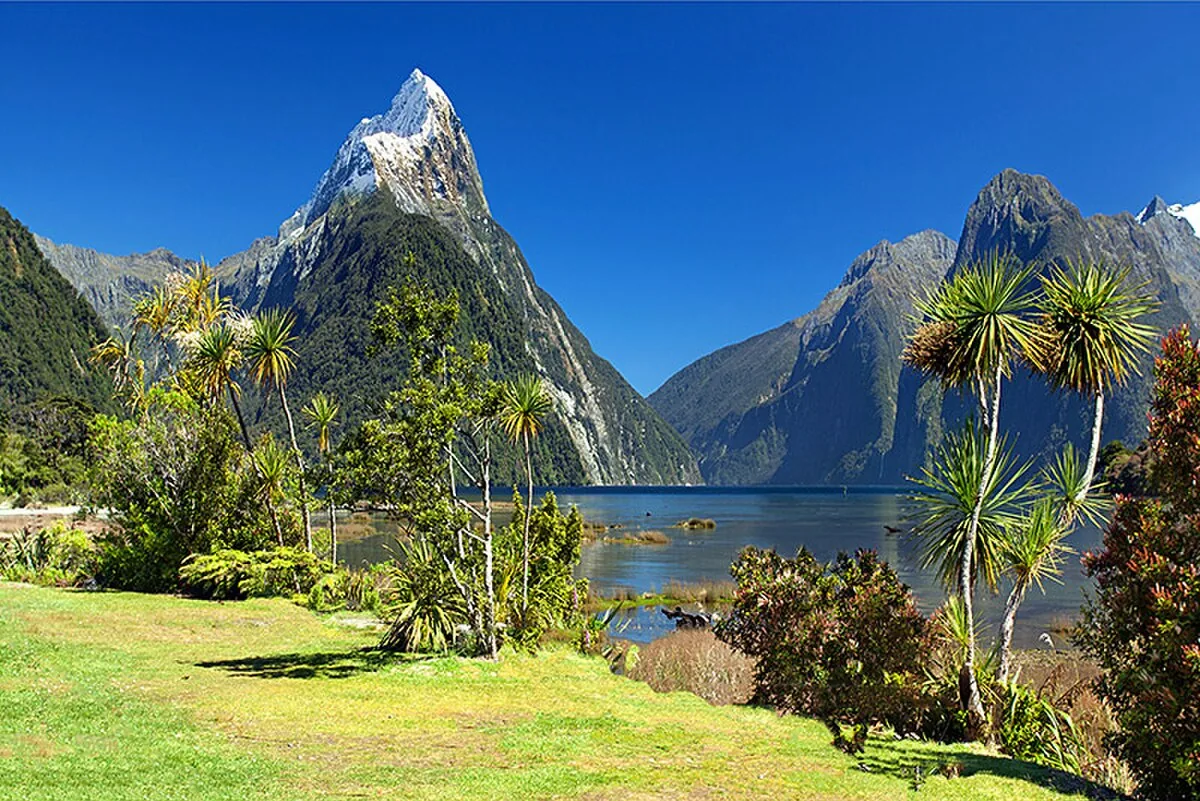
Rain creates a thousand temporary curtains of white water that vanish as quickly as they appear against the sheer, granite faces of the Fiordland wilderness. Piopiotahi, more commonly recognized as Milford Sound, represents the raw, unfinished edge of the world where the Tasman Sea invades a glacial carved canyon. The air air here tastes of salt and ancient dampness. You stand on the deck of a boat. Notice how the massive dark peaks like Mitre Peak seem to lean inward, dwarfing everything in their shadow. The sound layer is dominated by the roar of permanent cascades like Stirling Falls, which creates a rhythmic thunder that vibrates through the hull of any vessel.
Maori oral history tells of Tu-te-raki-whanoa, a god-like figure who hacked these fiords out of the coast with a giant adze to make the land habitable. The name Piopiotahi honors the extinct piopio bird, which allegedly flew here in grief after the legendary hero Maui failed to win immortality for mankind. European explorers like Captain Cook actually missed the narrow entrance twice, fearing the rocky headlands would trap their ships in the treacherous winds. It wasn't until John Grono stumbled upon the opening in 1823 that the outside world began to grasp the scale of the sanctuary. For decades, it remained a remote outpost for sealers and hardy pioneers like Donald Sutherland, who built the first accommodation for travelers arriving via the arduous Milford Track. Today, the balance between preserving its ecological isolation and welcoming millions of curious souls remains the defining challenge for this corner of the South Island.
Leaning over the railing as the boat approaches the base of a waterfall, The physical impact of the 'glacial facial', a fine, freezing spray that coats your skin and clothes in seconds. The standout is the way the light catches the deep emerald hue of the water, a color created by the layer of freshwater runoff that sits on top of the heavier salt sea. The sound of a fur seal barking from a rocky outcrop cuts through the constant white noise of the wind and water. There is a sense of profound insignificance when the captain nudges the bow against a cliff that rises more than a thousand meters straight up into the clouds. The first thing you register is tiny, hardy shrubs clinging to vertical cracks in the stone, surviving on little more than mist and sheer tenacity. The most evocative moment is the sudden silence when the engines cut out, leaving you alone with the drip of the rainforest and the immense gravity of the peaks. The journey to the sound is often as dramatic as the destination itself, involving a four-hour drive from Te Anau along the Milford Road. This route takes you through the Homer Tunnel, a hand-carved passage through solid rock like entering another dimension. Small planes and helicopters fly in from Queenstown when the weather permits, offering a bird's-eye view of the Southern Alps that is utterly transformative. The majority arrive via organized coach tours to avoid the stress of the narrow, winding alpine roads and the limited parking at the wharf. Arriving for the earliest morning cruise or the late afternoon departure ensures you miss the peak midday crowds and see the fiord when the light is at its most cinematic.
The Experience
The sense of Milford Sound is one of heavy, primeval power. What hits is the smell of the air is unlike any other, cold, wet, and oxygen-rich, filtered through miles of untouched beech forest. There is a vibration of the boat's engine in your feet, a low hum that competes with the crashing of the falls. The light is famously temperamental, shifting from a bright, reflective silver on the water to a brooding, charcoal grey that makes the mountains look like giants carved from coal. First, the way the mist clings to the trees, making the landscape look like a charcoal sketch that isn't quite finished. The most striking detail is the sheer verticality of the world; you spend the entire time looking up until your neck aches, overwhelmed by the scale of the rock walls.
Why It Matters
Piopiotahi is New Zealand's most famous natural landmark and a vital sanctuary for rare species like the Fiordland crested penguin. It represents the ultimate triumph of glacial power over the Pacific coast. Culturally, it is a place of deep spiritual importance to Ngai Tahu, serving as a physical link to the creation stories of the South Island.
Why Visit
The reason to visit: you want to see nature without its filters. While other landscapes are pretty, Milford Sound is visceral and intimidating. You come here to feel the spray of a waterfall that hasn't stopped for ten thousand years and to stand in a place that makes the modern world feel like a distant, insignificant dream. It is the only place where the rain is a blessing rather than a curse.
✦ Photo Gallery
Best Season
🌤 Oct-Nov offers the best balance of melting snow in the waterfalls and the arrival of the spring greenery, often with fewer crowds than the mid-summer peak.
Quick Facts
Best time to visit
Oct-Nov offers the best balance of melting snow in the waterfalls and the arrival of the spring greenery, often with fewer crowds than the mid-summer peak.
Getting there
In Milford Sound, New Zealand; reach Milford Sound first, then continue to the site.
Location
Milford Sound, New Zealand
Type
attraction
Insider Tips
- 1
Book the first cruise of the day to see the fiord in the morning mist and potentially spot dolphins before they are startled by the midday boat traffic.
- 2
Bring high-strength insect repellent; the sandflies here are legendary for their persistence and can ruin a moment of quiet contemplation in seconds.
- 3
Hope for rain; the fiord is significantly more dramatic when thousands of temporary waterfalls appear on the cliff faces.
- 4
Stop at the Eglinton Valley on the drive in, the golden tussock fields provide a sense of scale that prepares you for the mountains ahead.
- 5
If the budget allows, an overnight cruise is the only way to experience the absolute silence of the sound once the day-trippers have departed.