Giant crabs with human faces and vivid depictions of the afterlife’s most creative tortures turn this 1930s tycoon’s estate into the world’s most eccentric moral classroom.
About Haw Par Villa
The original villa was a grand Art Deco mansion that was unfortunately demolished during the site's transition to a public park. During the Japanese occupation, the hillside was used as a vantage point for coastal defense, but the statues were largely left untouched, perhaps due to the eerie nature of the displays. The brothers' legacy lives on in the Tiger Balm symbols scattered throughout the park, marking a time when branding and mythology were inseparable in the eyes of the public.
What Haw Par Villa in Singapore is
Surrealism takes a gruesome and moralistic turn at this eight-hectare park, where over a thousand dioramas and statues depict scenes from Chinese mythology and folklore. Known for its 'Ten Courts of Hell,' the site is a technicolor fever dream of demons, deities, and giant crustaceans with human faces. It was never intended to be a mere amusement park but a 'cultural classroom' designed to teach traditional values through visceral, often terrifying imagery. The hillside is a labyrinth of painted plaster and concrete, where the logic of the modern world is suspended in favor of ancient legends and cautionary tales about the afterlife.
“Surrealism takes a gruesome and moralistic turn at this eight-hectare park, where over a thousand dioramas and statues depict scenes from Chinese mythology and folklore.”
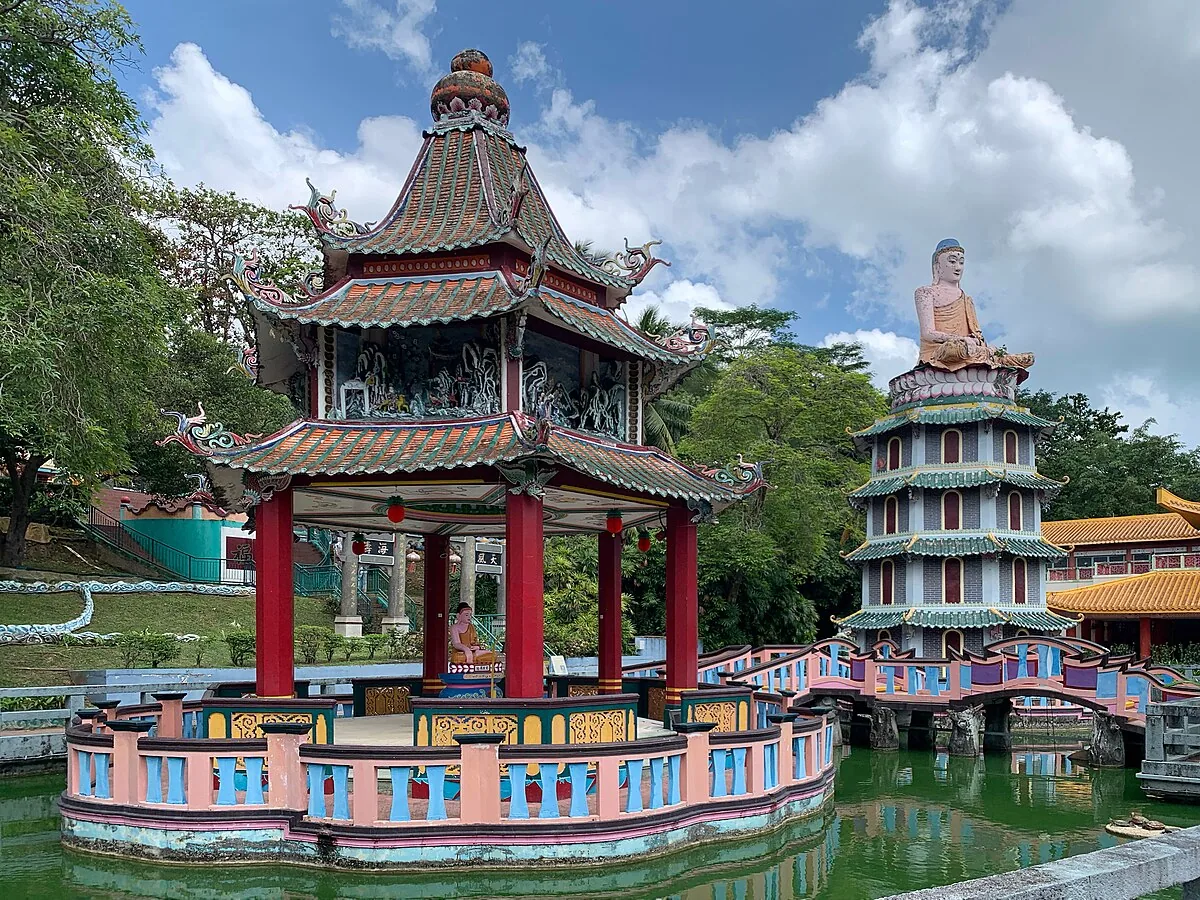
Haw Par Villa, Singapore
built this villa, 1937
Aw Boon Haw and Aw Boon Par, the brothers who made a fortune from the world-famous Tiger Balm ointment, built this villa in 1937 as a gift for the younger brother. Boon Haw, a marketing genius, saw the park as a way to promote his product while preserving Chinese heritage for the local diaspora. During the 1970s and 80s, it was a staple for school field trips, burning images of virtuous behavior and karmic punishment into the memories of generations of Singaporeans. After a period of decline and a failed attempt at corporatization in the 1990s, the park has been restored as a heritage site, leaning into its reputation as one of the strangest and most fascinating cultural relics in the region.
The air is heavy and still
The air is heavy and still as you wind through the narrow paths of the 'Ten Courts of Hell,' housed in the belly of a massive concrete dragon. From somewhere comes the echo of your own footsteps against the damp walls, surrounded by scenes of sinners being ground in mortars or tossed into pits of fire. Right away, the vibrant, almost garish paint on the statues, which is meticulously maintained to preserve the park’s original 1930s aesthetic. Outside, the dioramas take a lighter turn, featuring the Monkey King’s journey to the west and giant, bizarrely anthropomorphic animals. The experience is a jarring mix of high kitsch and genuine historical curiosity, where the grotesque becomes a tool for moral instruction.
The Haw Par Villa MRT station
The Haw Par Villa MRT station on the Circle Line drops you literally at the park's front gates. It is one of the most accessible landmarks in the city, located along Pasir Panjang Road. Admission to the main park is free, though there is a small fee to enter the climate-controlled 'Hell’s Museum' section, which provides a more academic and comprehensive look at death and the afterlife across various cultures.
“The Haw Par Villa MRT station on the Circle Line drops you literally at the park's front gates.”
The Experience
A strange sense of nostalgia and unease as you walk past the 'Virtuous Women' and 'Filial Sons' dioramas, which reflect a social code from a bygone era. The sun hits the painted plaster with an intensity that makes the colors pop, making the scenes of cosmic battle look like frozen frames from a 1950s epic film. First, the small details, a demon's crooked grin or the delicate pattern on a goddess's robe, that reveal the hand-crafted nature of this bizarre wonderland. It is a place that challenges your sense of taste while demanding respect for its sheer, unyielding weirdness.
Why It Matters
This park is a rare surviving example of pre-war vernacular architecture and communal art. It represents the philanthropic and cultural ambitions of the overseas Chinese merchant class and remains a powerful, if eccentric, repository of the myths that shaped the ethical landscape of the region for centuries.
Why Visit
There is absolutely nothing else like it on the planet. It is the antithesis of the polished, sanitized version of Singapore found at Sentosa, offering a raw, weird, and deeply human look at how we choose to tell stories about who we are and what happens when we die.
Insider Tips
- 1
Enter the 'Hell's Museum' if you want a deeper understanding of the philosophies behind the gore; it’s the most well-curated part of the site.
- 2
Bring an umbrella or hat, as there is very little shade between the main dioramas and the concrete paths can get incredibly hot.
- 3
Look for the statues of the Aw brothers themselves, often depicted in their vintage cars, hidden among the mythological figures.
- 4
The park is less crowded on weekday mornings, allowing for a more meditative and less distracting experience of the dioramas.
- 5
Check out the quirky Tiger Balm-themed sculptures that pay homage to the source of the family's incredible wealth.