“Seven different architectural styles collide on a single street where coconut plantations once met the sea, creating a pastel-hued catalog of Singapore’s most unique hybrid culture.”
About Joo Chiat Road
The land was originally a vast swampy expanse where the wealthy elite of the 19th century built villas to escape the city's congestion. Chew Joo Chiat's decision to open his private roads to the public in 1917 catalyzed the development of the terraced shophouses that now define the area. These buildings survived the Japanese occupation and the subsequent urban renewal of the 1970s, largely because the local Peranakan community fought to keep their ancestral homes intact, leading to some of the strictest heritage preservation laws in the country.
What Joo Chiat Road in Singapore is
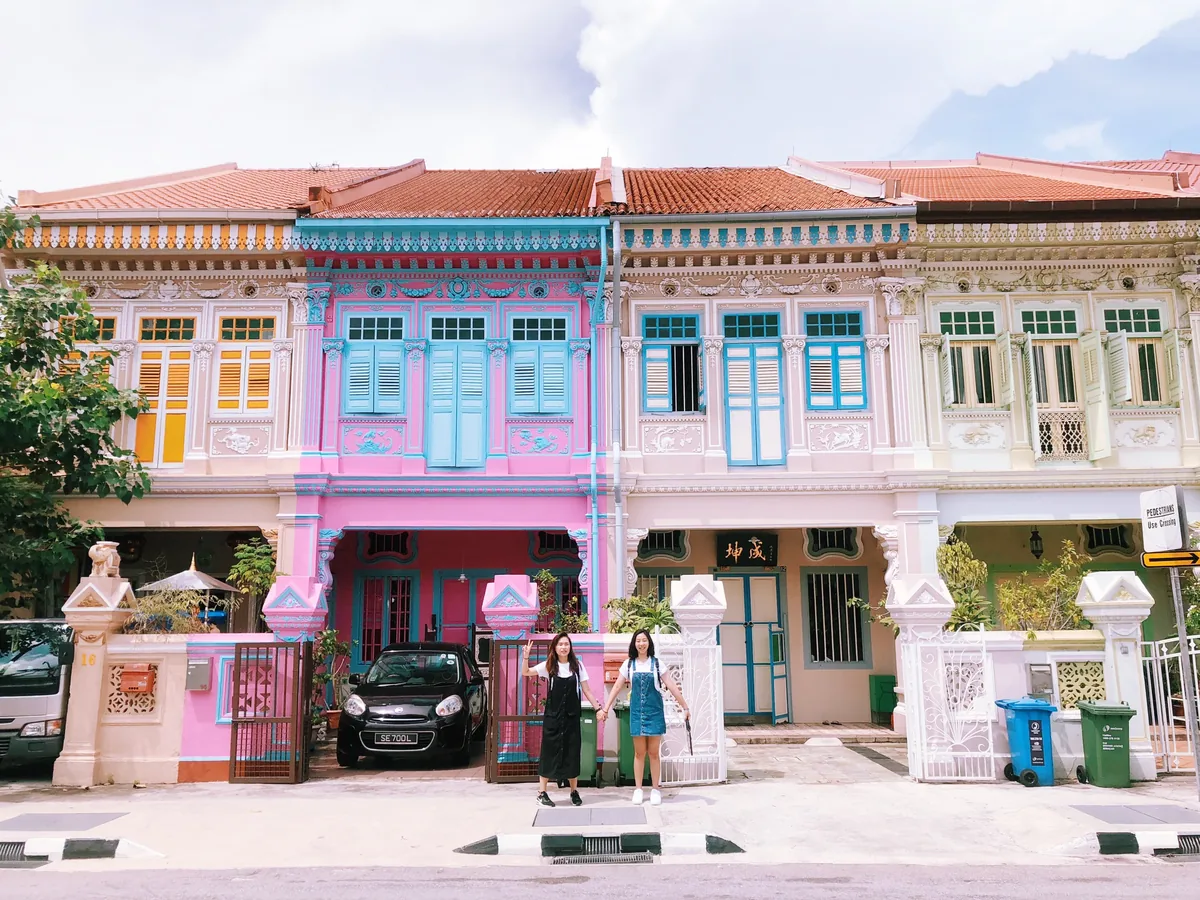
Pastel shophouses with ornate plasterwork stand shoulder-to-shoulder along this stretch of the East Coast, where the scent of laksa broth mingles with the salty sea breeze. This neighborhood remains the spiritual home of the Peranakan community, a culture defined by its intricate fusion of Chinese, Malay, and Indonesian influences. Unlike the gleaming skyscrapers of the central business district, the architecture here feels tactile and deeply lived-in. Ceramic tiles in emerald and saffron hues decorate the five-foot ways, while carved wooden shutters hint at the private lives unfolding behind these candy-colored facades.
Pastel shophouses with ornate plasterwork stand shoulder-to-shoulder along this stretch of the East Coast, where the scent of laksa broth mingles with the salty sea breeze.
Background
Chew Joo Chiat, a wealthy plantation owner known as the King of Katong, bought these lands in the early 20th century when the area was still dominated by coconut groves and seaside retreats. He built a road through his estate to move his produce, but soon the site transformed into a residential enclave for the rising middle class of the Straits Settlements. Unlike the tenement shophouses of Chinatown, the buildings here were designed as spacious family homes for the Peranakan and Eurasian elite. By the 1990s, the street had gained a reputation for a somewhat gritty nightlife, but a concerted effort by residents and the government saw its designation as Singapore's first Heritage Town in 2011, preserving its distinct aesthetic for a new generation.
Morning light hits the intricate floral motifs
Morning light hits the intricate floral motifs on the Koon Seng Road shophouses, turning the street into a vivid gallery of Baroque architecture. The rhythmic clatter of coffee cups at traditional kopitiams, where It smells of charcoal-toasted bread and thick kaya jam. Exploring the side alleys reveals small workshops where craftsmen still hand-sew beaded slippers and intricate kebaya tunics. The experience is dense; one moment you are passing an old-school Chinese pharmacy with dried herbs, the next a sleek boutique roasting artisanal coffee beans. As you walk, The rhythmic sequence of archways that provide a sheltered, shady path through the equatorial heat.
Dakota MRT station on the Circle
Dakota MRT station on the Circle Line offers the easiest rail access, followed by a short bus ride or a fifteen-minute walk. Alternatively, Paya Lebar station is a gateway from the north, allowing you to walk down the length of Joo Chiat Road and see the architecture evolve from industrial to residential. Many visitors prefer a taxi drop-off at the corner of Joo Chiat Road and East Coast Road to start their exploration at the famous laksa stalls and work their way inland.
Dakota MRT station on the Circle Line offers the easiest rail access, followed by a short bus ride or a fifteen-minute walk.
The Experience
The humidity cling to your skin, but it is tempered by the constant visual distraction of ceramic phoenixes and peonies peering down from the rooflines. The sounds are a mix of clacking mahjong tiles from upper floors and the hum of modern scooters zig-zagging through traffic. You register that every shophouse has a personality; some are pristine and museum-like, while others bear the beautiful, weathered patina of salt air and decades of monsoon rain. A quiet afternoon spent watching the world from a plastic stool at a corner stall reveals the true pace of life in this corner of the island.
Why It Matters
This district serves as the definitive guardian of Peranakan identity. It is one of the few places where the architecture, food, and daily rituals of the Straits Chinese are not just displayed in a museum but are part of a functioning, breathing residential neighborhood that resists the homogenization of the modern city.
Why Visit
Worth it because you want to see the side of Singapore that refuses to be a skyscraper. This is where the city's soul resides, tucked away in the intricate beadwork of a slipper or the complex spice profile of a bowl of Katong laksa that has been served the same way for sixty years.
✦ Insider Tips
- 1
Head to the intersection of Koon Seng Road for the most concentrated row of colorful shophouses, but arrive before 9:00 AM to beat the Instagram crowds.
- 2
Most of the traditional Peranakan boutiques are closed on Mondays, so plan your visit for mid-week to see the artisans at work.
- 3
The best laksa in the area is often found in the nondescript corner shops where you see the longest queues of locals, not necessarily the most famous signs.
- 4
Seek out the small Kim Choo Kueh Chang gallery to see how traditional rice dumplings are wrapped in bamboo leaves by hand.
- 5
Keep an eye out for the 'five-foot ways', the covered walkways that offer a glimpse into the architectural ingenuity used to combat tropical rain.