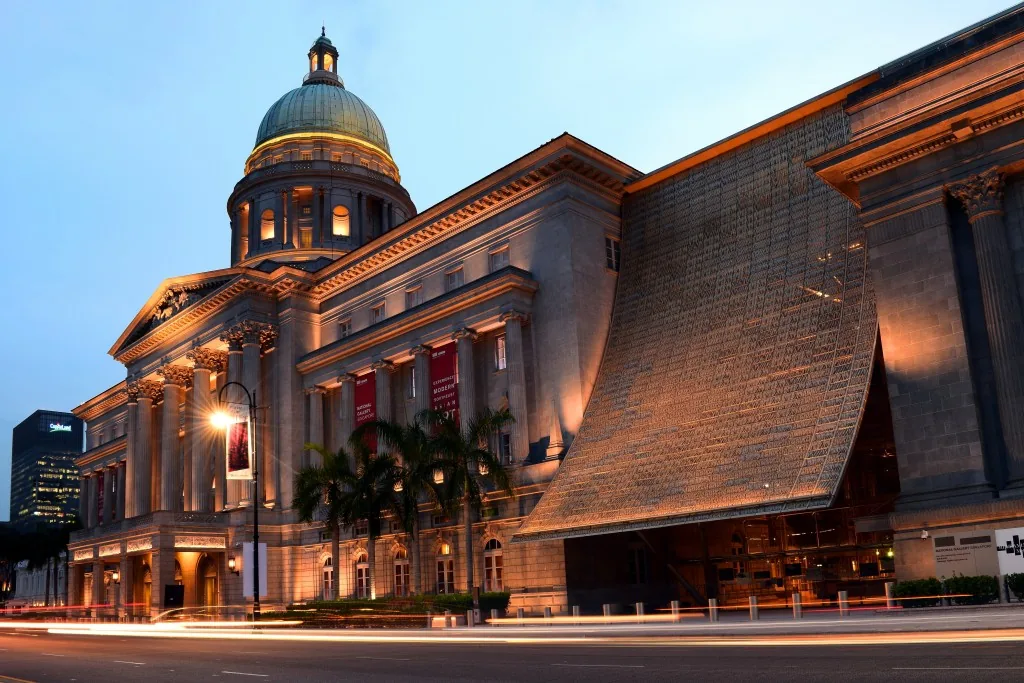
“One single pair of wedding slippers in this collection contains over 15,000 tiny glass beads, each one hand-sewn into a pattern that took months of painstaking labor to complete.”
About Peranakan Museum
The museum occupies the site of the former Tao Nan School, an institution that once educated the sons of wealthy Chinese merchants. The building’s architecture is a product of the hybridity it now celebrates, featuring European neoclassical columns alongside internal layouts designed for Chinese social structures. After the school relocated in 1982, the building served as a wing of the Asian Civilisations Museum before being reimagined as a dedicated home for Peranakan culture, ensuring the stories of the 'Straits Chinese' remained central to the city's narrative.
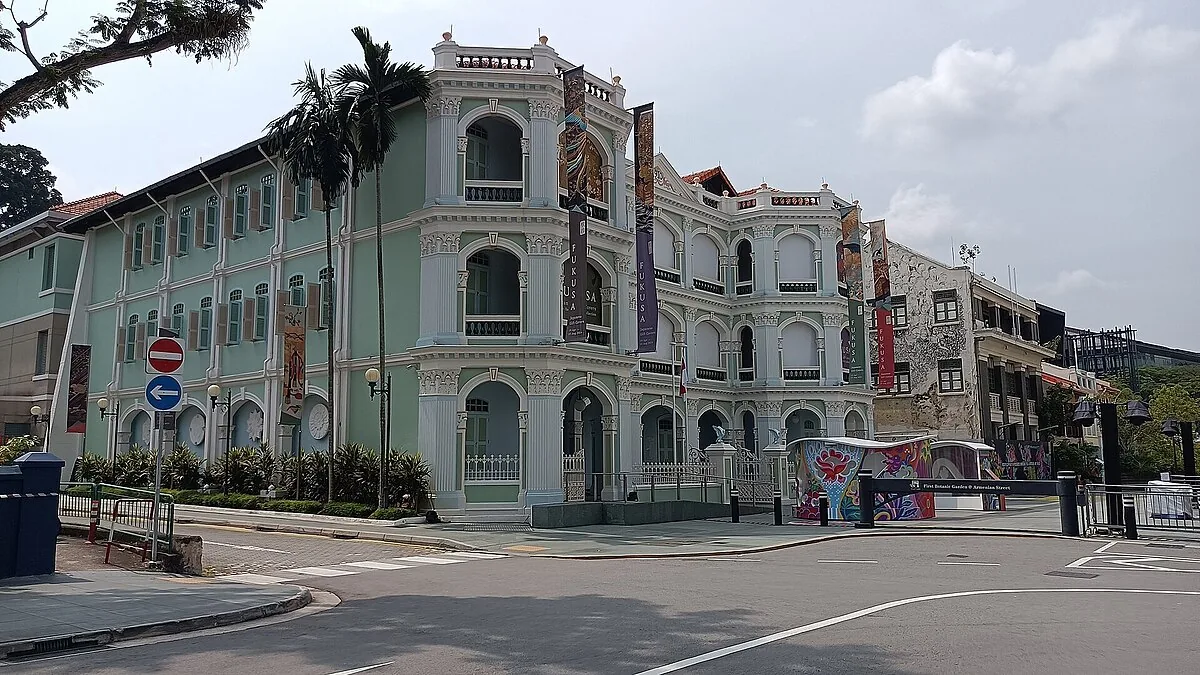
Peranakan Museum in Singapore
Housed in a beautiful neoclassical former school building, this museum is dedicated to the unique hybrid culture of the Peranakans, descendants of Chinese and Indian immigrants who married local Malays. The galleries are a riot of pastel colors, intricate beadwork, and heavy teak furniture, reflecting a community that took the best of several worlds to create something entirely new. It is located on Armenian Street, a quiet, historic enclave that feels a world away from the gleaming skyscrapers of the financial district. The collection is one of the finest in the world, offering a deeply personal look at a culture defined by its love of ritual, food, and ornate craftsmanship.
The galleries are a riot of pastel colors, intricate beadwork, and heavy teak furniture, reflecting a community that took the best of several worlds to create something entirely new.
Nan School, built, 1912
The building itself was formerly the Tao Nan School, built in 1912 to serve the Hokkien community. It was the first modern Chinese school in the Straits Settlements and was designed with high ceilings and wide verandas to suit the tropical climate. In 2008, after a major refurbishment, it opened as the Peranakan Museum. The museum underwent another extensive three-year renovation, reopening in 2023 with a focus on 'Peranakan-ness' as a fluid and evolving identity rather than a static historical fact. The exhibits now include contemporary art and fashion alongside centuries-old family heirlooms, reflecting the community's ongoing influence on modern Singaporean design.
The air inside is crisp
The air inside is crisp and silent, allowing you to focus on the microscopic detail of the beadwork slippers and the shimmering gold of the wedding headdresses. The faint, melodic tinkling of traditional music in the background moving through rooms organized by themes like 'Home,' 'Public Life,' and 'Ritual.' The obsessive level of detail in the 'kamcheng', ornate porcelain jars used for festive occasions, their surfaces covered in phoenixes and peonies. The wedding gallery is particularly evocative, showcasing a twelve-day ceremony that required a staggering array of specialized costumes and jewelry.
City Hall MRT station is the most convenient
City Hall MRT station is the most convenient rail link, located about a five-minute walk through the grounds of the Singapore Management University. Several buses stop on Stamford Road, right next to the museum. If you are exploring the nearby National Museum or Fort Canning Park, the Peranakan Museum is an easy addition to a walking tour of the city's Civic District.
City Hall MRT station is the most convenient rail link, located about a five-minute walk through the grounds of the Singapore Management University.
The Experience
There is a weight of history in the heavy, dark wood of the carved wedding beds, which dominate the upper floor galleries. The lighting is low and dramatic, highlighting the vibrant pinks and greens of the Nyonya porcelain. The subtle evolution of the 'kebaya', the traditional lace tunic, and how it changed from a simple garment to a complex work of art. The museum’s quiet atmosphere encourages you to linger over the small things, like the intricate gold pins used to fasten a woman’s hair or the silver betel nut sets that were once a staple of social etiquette.
Why It Matters
This museum preserves the legacy of a culture that is the quintessential example of globalization before the term existed. It showcases how different ethnic groups can fuse their traditions into a harmonious, beautiful, and distinct identity, providing a historical blueprint for Singapore's modern multi-ethnic society.
Why Visit
What matters is that this is where you find the color of Singapore. While the city can sometimes feel beige and corporate, the Peranakan Museum is a vibrant explosion of pink, turquoise, and gold, offering a glimpse into a lifestyle that was as opulent as it was culturally complex.
✦ Insider Tips
- 1
Look for the contemporary exhibits on the top floor that show how young Peranakan artists are reimagining their heritage today.
- 2
The museum shop is one of the best in the city for high-quality, authentic beadwork and porcelain replicas.
- 3
Take time to read the 'Family Stories' panels; they provide real-world context for the objects on display through the eyes of descendants.
- 4
The building’s central atrium is a great spot for architectural photography, especially when the afternoon sun hits the upper galleries.
- 5
Check the schedule for the free guided tours, which are led by docents who often have personal connections to the culture.