“In a city famous for its strict cleanliness laws, there is one legendary bar where you are actively encouraged to throw your peanut shells onto the floor.”
About Raffles Singapore
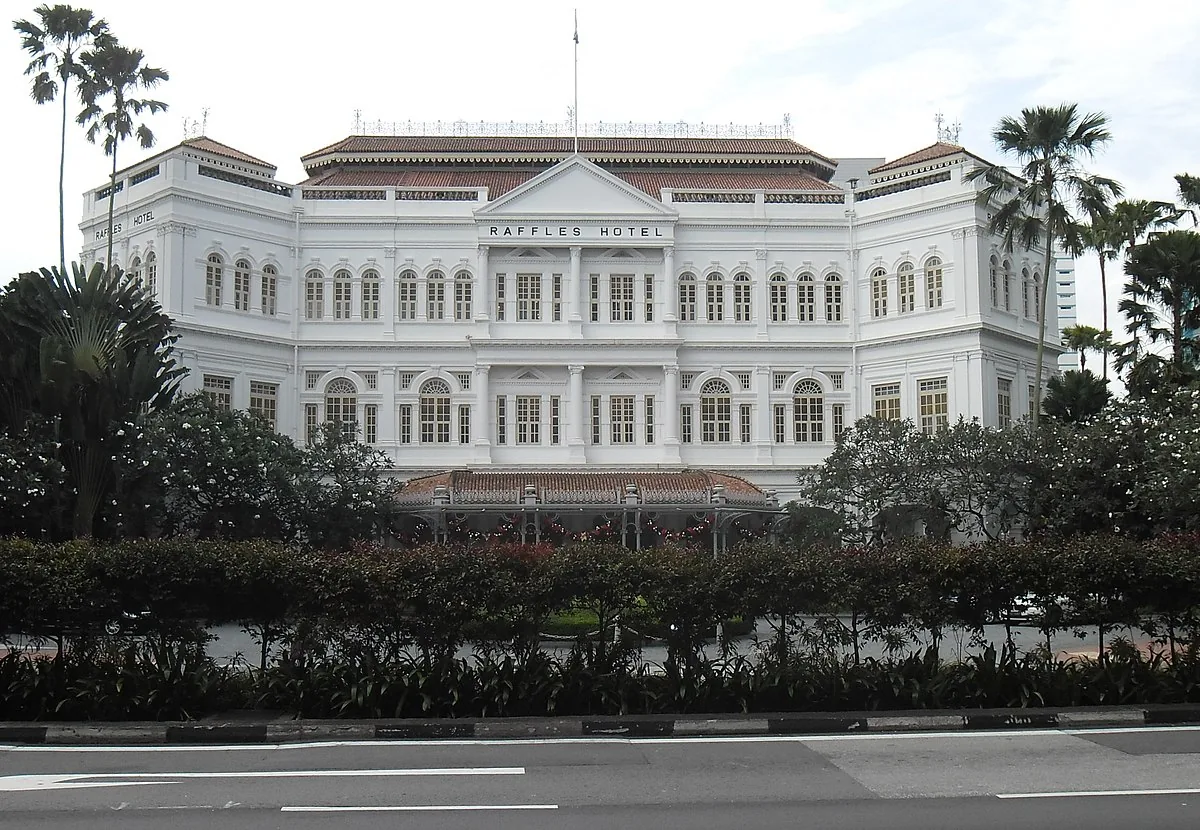
The hotel’s survival is a miracle of heritage preservation. During the fall of Singapore in 1942, legend says the staff buried the hotel's silver and the recipe for the Singapore Sling to keep them out of Japanese hands. After the war, it became a transit camp for released prisoners of war. The most recent restoration, completed in 2019, utilized expert craftsmen to strip away decades of paint and reveal the original moldings and woodwork, ensuring the building looks exactly as it did during its 1920s heyday.
What Raffles Singapore actually is
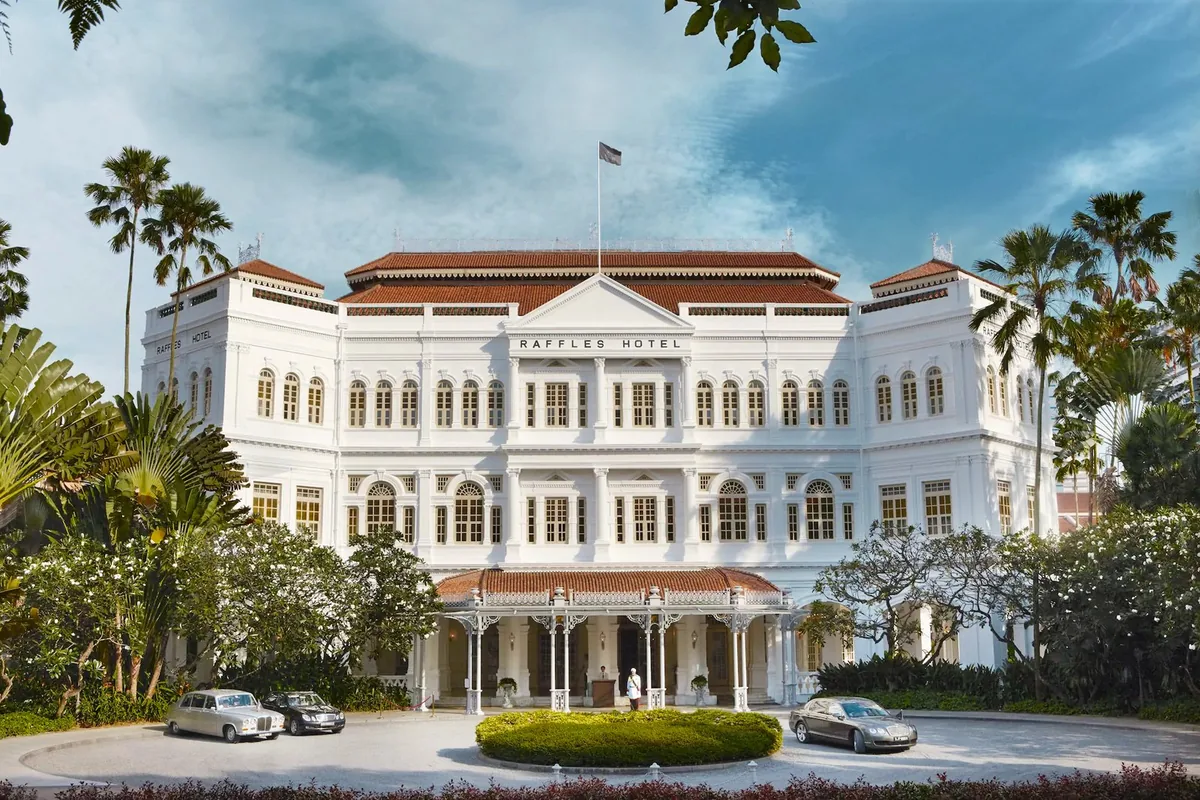
White-washed colonnades and breezy verandas define this 19th-century landmark, which remains the ultimate symbol of colonial-era elegance in the Far East. Established in 1887, the hotel has hosted everyone from Rudyard Kipling and Somerset Maugham to Elizabeth Taylor and the British Royal Family. The architecture is a masterclass in Neo-Renaissance style, with its soaring ceilings, teak floors, and lush tropical courtyards that seem to breathe in the heat of the city. While it has been meticulously modernized, it retains an air of high-society grace that transports you back to a time when travel was a slow, deliberate, and deeply glamorous affair.
White-washed colonnades and breezy verandas define this 19th-century landmark, which remains the ultimate symbol of colonial-era elegance in the Far East.
Planning
The Sarkies Brothers, four Armenian siblings, opened the hotel as a ten-room bungalow on the corner of Beach and Bras Basah roads, which, at the time, was literally on the beach. Over the next few decades, they expanded it into a grand establishment that became the social hub of the British Empire in Southeast Asia. It was at the Long Bar in 1915 that bartender Ngiam Tong Boon created the Singapore Sling, a pink gin-based cocktail designed to look like fruit juice so that ladies could politely drink in public. The hotel survived the Japanese occupation, during which it was renamed the Syonan Ryokan, and was declared a National Monument in 1987 to protect its historical integrity.
The air feels cooler and more
The air feels cooler and more fragrant the moment you step off the street and onto the white marble floors of the lobby. From somewhere comes the rhythmic 'thwack' of a ceiling fan and the distant, polite clatter of silver against china during afternoon tea. Beginning with the Sikh doormen in their pristine white uniforms and turbans, a tradition that has remained unchanged for over a century. In the Long Bar, the atmosphere is more raucous, with the floor covered in peanut shells, the only place in tidy Singapore where littering is not only allowed but encouraged. The courtyard gardens provide a silent retreat where the only sound is the rustle of palm fronds and the splash of a fountain.
City Hall MRT station is just
City Hall MRT station is just a five-minute walk away, while the Esplanade MRT station on the Circle Line offers an even closer approach. The hotel occupies a prominent block in the Civic District, making it easy to find. A large share of visitors enter through the main porte-cochère on Beach Road, though the arcade entrances on North Bridge Road offer a more discreet way to access the shops and the Long Bar.
City Hall MRT station is just a five-minute walk away, while the Esplanade MRT station on the Circle Line offers an even closer approach.
The Experience
What comes is a sense of grandiosity that is tempered by the warmth of the wood and the softness of the light. The Grand Lobby is so quiet you can hear the tick of the antique clocks, while the Writers Bar feels intimate and heavy with the scent of leather-bound books. You register that the modern city disappears once you are inside the courtyard; the skyscrapers are blocked out by the white walls, leaving you in a private, tropical sanctuary. It is a place where time slows down to the pace of a cooling drink and a long conversation.
Why It Matters
Raffles is more than a hotel; it is a living museum of the colonial experience. It represents the historical bridge between the island's origins as a British trading post and its current status as a global metropolis, preserving the stories of the writers and travelers who shaped the Western perception of the East.
Why Visit
Visit to experience a rare piece of history that you can actually touch, sit in, and drink from. It is the only place in Singapore where the ghosts of the literary past feel entirely present, and a single cocktail can tell the story of a century of social change.
✦ Insider Tips
- 1
The Singapore Sling at the Long Bar is expensive, but the price includes the experience and as many peanuts as you can eat.
- 2
Afternoon Tea in the Grand Lobby requires booking weeks in advance, especially for weekend slots.
- 3
Dress code is 'smart casual,' so avoid flip-flops and shorts if you want to enter the main lobby or the restaurants.
- 4
The hotel's museum and arcade are free to enter and offer a wealth of historical photos and memorabilia.
- 5
Check out the 'Billiards Room' where, according to local legend, the last tiger in Singapore was shot in 1902, actually beneath the raised floor of the room.