Thousands of tiny, hand-painted gods climb toward the sky on a single tower, each one a silent witness to a miracle that spared this building from the falling bombs of 1942.
About Sri Veeramakaliamman Temple
Pioneering Indian laborers established this shrine in the late 19th century as a modest clay structure. In 1881, the site was officially formalized, becoming a communal hub for the 'dhobies' or laundrymen who worked in the nearby streams. The temple underwent a massive transformation in 1987, when its iconic six-tier gopuram was completed, adorned with sculptures that depict Kali in her various fierce and benevolent incarnations. This architectural evolution mirrored the rising prosperity and permanence of the Indian diaspora in Singapore.
Serpong Road pulses with a frantic energy, but
Serpong Road pulses with a frantic energy, but the air thickens with the scent of jasmine and burning camphor approaching this vivid bastion of South Indian devotion. Hundreds of painted deities spill over the gopuram, their limbs intertwined in a silent, colorful chaotic dance that defies the orderly glass skyline of the surrounding city. Dedicated to Kali, the goddess of power and destruction of evil, the temple is the spiritual anchor for the Little India district. It remains one of the oldest and most atmospheric religious sites in the nation, offering a sensory overload that feels remarkably grounded in ancient tradition.
“Serpong Road pulses with a frantic energy, but the air thickens with the scent of jasmine and burning camphor approaching this vivid bastion of South Indian devotion.”
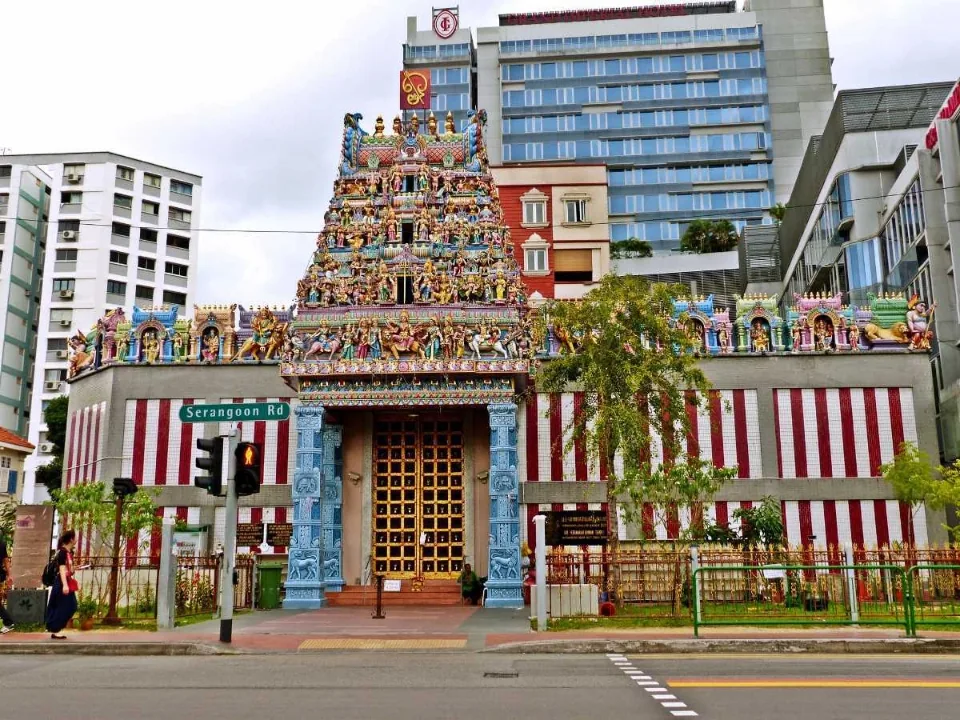
Sri Veeramakaliamman Temple, Singapore
first stones here, 1881
Migrant workers from Bengal and South India laid the first stones here in 1881, seeking a place of worship that mirrored the shrines of their homeland. They chose Kali as their patron, perhaps seeking her protection as they navigated the hardships of life in a colonial trading port. The original structure was humble, but it gained a reputation for being miraculously touched by the divine when it emerged completely unscathed from air raids during World War II. While much of Singapore was leveled or damaged, those seeking shelter within these walls survived, cementing the temple's place in local lore. Major renovations in the 1980s and 2014 brought the intricate sculptures to their current vivid state, utilizing craftsmen brought specifically from South India to ensure authentic detail.
Little India MRT station
Little India MRT station on the North East and Downtown lines sits a short three-minute walk away. Exit toward Serangoon Road and follow the vibrant flower stalls that line the pavement. If coming from the central business district, a taxi drop-off right at the corner of Belilios Road allows you to avoid the busiest pedestrian crowds during the weekend rush.
Visiting Sri Veeramakaliamman Temple
Bare feet on cool marble provide the first sensation of relief from the tropical heat stepping across the threshold. The rhythmic clanging of bells and the low hum of Sanskrit chanting create a soundscape that drowns out the honking taxis outside. You register devotees offering garlands of blood-red hibiscus to the terrifying yet motherly image of Kali, who wears a necklace of skulls and stands over her consort, Shiva. During the midday puja, the priest waves lamps of flaming ghee, casting dancing shadows against the ornate ceiling. The back of the temple offers a quieter space where the smell of incense lingers heavily in the still air, providing a moment for silent observation.
The Experience
The floor feels smooth and slightly gritty with fine sand as you navigate between clusters of worshippers. You hear the sharp crack of a coconut being smashed against a stone, a symbolic act of breaking the ego to reveal a sweet heart. Above you, the ceiling is a shifting mix of geometric patterns and mythological scenes that demand you tilt your head back until your neck aches. In the late afternoon, the sunlight slants through the entrance, illuminating the blue smoke of joss sticks in long, ethereal beams.
Why It Matters
This temple is a living born from the spiritual resilience of the South Asian community in Southeast Asia. It represents a specific cultural fusion where centuries-old Vedic rituals are practiced within a high-tech global city, proving that ancestral identity can survive and thrive despite rapid modernization.
Why Visit
This place pulls because this is the raw, beating heart of Little India. While other temples might feel like museums, this one is an active, thrumming site of daily life where the intensity of the devotion is as colorful as the statues on the roof.
Insider Tips
- 1
Remove your shoes and place them in the designated racks outside; carrying them in your hand or bag is considered disrespectful.
- 2
Check the temple's closing times as it usually shuts between 12:30 PM and 4:00 PM for the deities' rest period.
- 3
Dress modestly by covering your shoulders and knees, or borrow a wrap from the entrance if one is available.
- 4
Ask permission before photographing people in prayer, though photos of the architecture are generally welcomed.
- 5
Visit the small stall just outside the gates to buy a sprig of jasmine; the scent stays with you for hours.