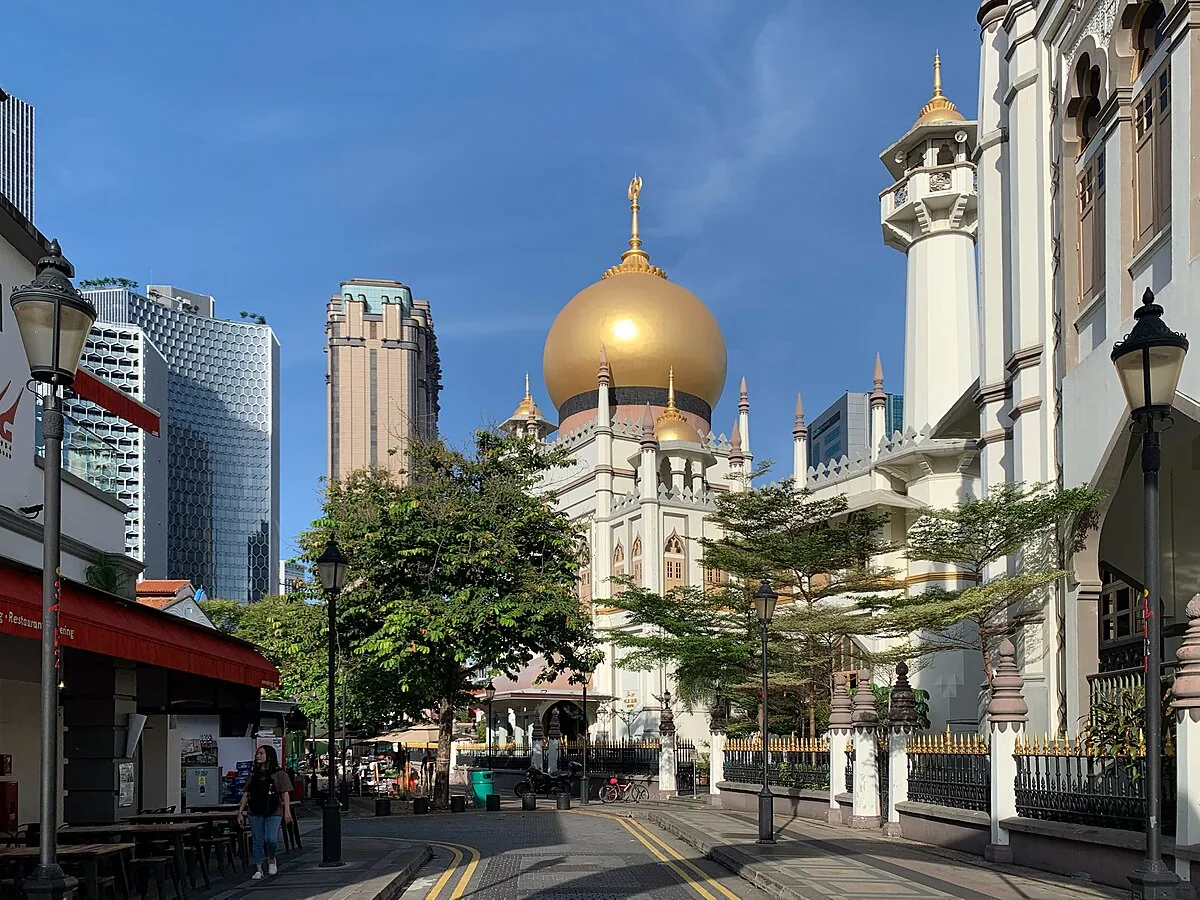
The base of the mosque's massive golden dome is built from thousands of recycled glass soy sauce bottles, a gift from the city's poorest residents who wanted to contribute to their house of God.
About Sultan Mosque
In its earliest form, this was granted to the Sultan in exchange for his recognition of the British presence on the island. The current Indo-Saracenic structure replaced the earlier, more traditional Malay-style mosque in 1932 after an eight-year construction period. It survived the Japanese occupation and the subsequent urban redevelopment of the surrounding area, remaining the spiritual heart of the Malay-Muslim community throughout the nation's transition to independence.
Commissioned by Sultan Mosque
Gold-domed and imposing, the Sultan Mosque is the focal point of the historic Kampong Gelam district. Its massive domes are visible from several blocks away, anchoring a neighborhood of narrow lanes filled with textile shops and Middle Eastern restaurants. The architecture is a striking blend of Indo-Saracenic and classical elements, featuring intricate minarets and a vast prayer hall that can accommodate five thousand worshippers. The walk down Bussorah Street toward the entrance, the mosque appears framed by rows of palm trees, creating an image that feels more like a scene from an old travelogue than a modern metropolis.
The past
Sultan Hussain Shah of Johor built the original mosque in 1824 with the help of a grant from the British East India Company. By the early 20th century, the growing Muslim community required a larger space, and architect Denis Santry was commissioned to design the current structure in 1924. In a gesture of communal solidarity, even the poorest members of the congregation donated what they could; look closely at the base of the black rings under the gold domes and you will see they are made of glass soy sauce bottles, a humble contribution from the common folk that allowed them to participate in the building's grandeur. It was gazetted as a national monument in 1975, reflecting its status as the premier mosque in the country.
A deep sense of calm pervades the prayer
A deep sense of calm pervades the prayer hall, where the floor is covered by a massive, plush carpet donated by a prince of Saudi Arabia. Sound-wise is the hauntingly beautiful call to prayer, the Adhan, echoing through the streets five times a day, momentarily pausing the commerce of the surrounding bazaar. The light filters through stained-glass windows, casting soft colors onto the ornate calligraphy that adorns the walls. The diverse mix of people, from local Malay families to pilgrims from across the Islamic world, all moving with a quiet purpose. The outdoor courtyard provides a space to observe the intricate stonework and the contrast between the mosque’s historic silhouette and the sleek skyscrapers in the distance.
Bugis MRT station on the East
Bugis MRT station on the East West and Downtown lines is the nearest stop, about a seven-minute walk through the packed streets of North Bridge Road. Alternatively, Jalan Besar MRT is equally close if you prefer a walk through the colorful shophouses of the Rochor area. The mosque is situated at the end of the pedestrianized Bussorah Street, which is the most scenic approach for photography.
The Experience
You feel the soft give of the carpet beneath your feet as you enter the silent, cavernous prayer hall. The surroundings are slightly cooler here, circulating through high arches that provide natural ventilation. The intricate floral motifs and the absence of any human images, in accordance with Islamic tradition. During the fasting month of Ramadan, the surrounding streets transform into a night market, and the smell of roasting meat and sweet spices fills the air as the community prepares to break their fast under the shadow of the minarets.
Why It Matters
This mosque is the pillar of Islamic heritage in Singapore and a symbol of the Sultanate that once ruled the region. It represents the historical and ongoing contribution of the Muslim community to the city's multicultural fabric and serves as a primary site for major religious festivals and interfaith dialogues.
Why Visit
Visit to see the soy sauce bottles at the base of the dome, a detail that tells a moving story of faith and community that is often missed by those looking only at the gold. It is the most evocative piece of architecture in Kampong Gelam, offering a bridge to the city's pre-colonial and royal past.
✦ Photo Gallery
Best Season
🌤 The month of Ramadan is the most atmospheric time, as the evening bazaar creates a festive energy that is unique to this part of the city.
Quick Facts
Best time to visit
The month of Ramadan is the most atmospheric time, as the evening bazaar creates a festive energy that is unique to this part of the city.
Getting there
In Kampong Glam, Singapore; reach Kampong Glam first, then continue to the site.
What's nearby
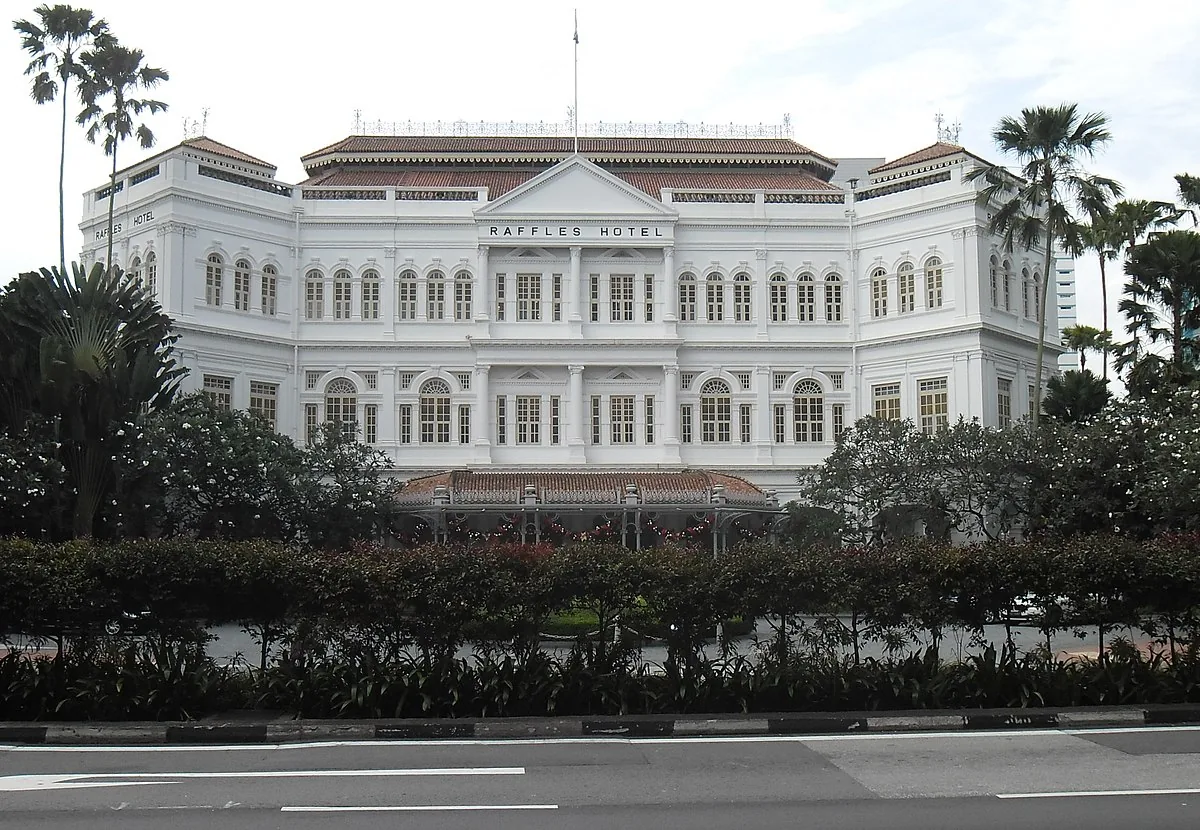
Sri Veeramakaliamman Temple, Raffles Singapore and National Gallery Singapore are also in the area.
Location
Kampong Glam, Singapore
Type
attraction
Coordinates
1.3022°, 103.8590°
Insider Tips
- 1
Check the visiting hours before you go; the mosque is closed to non-Muslims during prayer times and on Friday mornings.
- 2
Robes and headscarves are provided free of charge at the visitor entrance to ensure you meet the modesty requirements.
- 3
Walk to the very end of Bussorah Street to get the most iconic, symmetrical photo of the main dome and minarets.
- 4
Speak in whispers inside the prayer hall, as there are almost always people engaged in private meditation or study.
- 5
The small museum area near the entrance offers fascinating context on the Haji pilgrims who once used this area as their departure point for Mecca.