“This hilltop city is called the 'City of Three Cultures' for the Christians, Muslims and Jews who built it together.”
About Casco Histórico de Toledo
Toledo was a major city under the Romans, Visigoths and Moors, and after the Christian reconquest in 1085 it became a renowned centre of learning where scholars of three faiths translated and shared knowledge. This convivencia left synagogues, mosques and churches side by side. Toledo served as a Spanish capital and was home to the painter El Greco; its historic core is a UNESCO World Heritage Site.
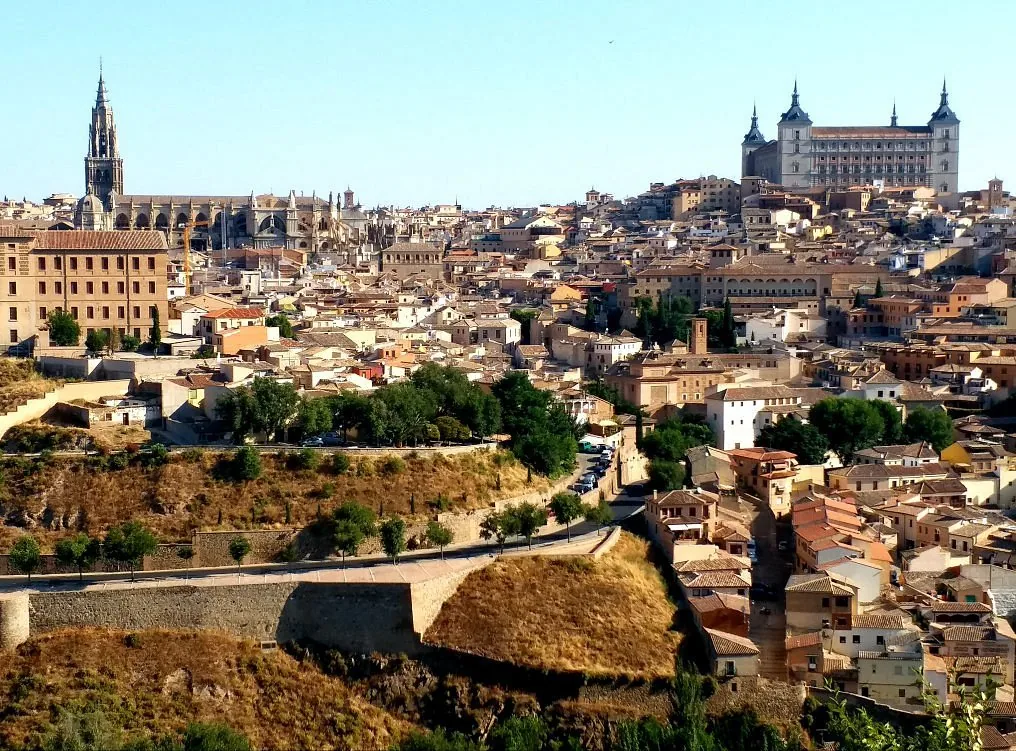
The historic centre of Toledo, perched on a hill within a loop of the Tagus River near Madrid, is one of the most remarkable old cities in Spain, a UNESCO World Heritage Site famous as the 'City of Three Cultures'. Its labyrinth of narrow streets preserves the intertwined legacy of Christians, Muslims and Jews who lived and built here together for centuries.
Its labyrinth of narrow streets preserves the intertwined legacy of Christians, Muslims and Jews who lived and built here together for centuries.
The City of Three Cultures
For much of the Middle Ages, Toledo was a place where Christian, Muslim and Jewish communities coexisted and their cultures mingled, leaving a unique architectural heritage: synagogues built in Moorish style, mosques turned into churches, Mudejar brickwork, and a towering Gothic cathedral. Once the capital of Visigothic and then Christian Spain, the whole hilltop city is a living museum of this layered history, enclosed by ancient walls above the river.
The Experience
You wander a maze of steep, narrow lanes that open onto the great Gothic cathedral, the Moorish-style synagogues, old mosques, and the workshops of the swordsmiths for which Toledo is famous, with the El Greco museum and viewpoints over the Tagus gorge. The dense layering of cultures and centuries in one walkable hilltop city makes Toledo endlessly rewarding, especially in the golden evening light.
Why It Matters
The historic centre of Toledo is one of Spain's most important and atmospheric heritage cities, a UNESCO World Heritage Site that uniquely preserves the meeting of Christian, Muslim and Jewish cultures. Its monuments and townscape make it an essential window onto the country's rich and complex past.
Its monuments and townscape make it an essential window onto the country's rich and complex past.
Why Visit
The 'City of Three Cultures', a UNESCO-listed hilltop maze near Madrid where Christian, Muslim and Jewish heritage meet in synagogues, mosques and a great cathedral.
✦ Insider Tips
- 1
Visit the great Gothic cathedral and the Moorish-style synagogues.
- 2
Seek out works by El Greco, who lived and worked here.
- 3
Take in views of the city from across the Tagus gorge.
- 4
Stay overnight to enjoy it after the day crowds leave.