At this cathedral, a giant incense burner is swung on ropes in a huge arc across the church by teams of men.
About Catedral de Santiago de Compostela
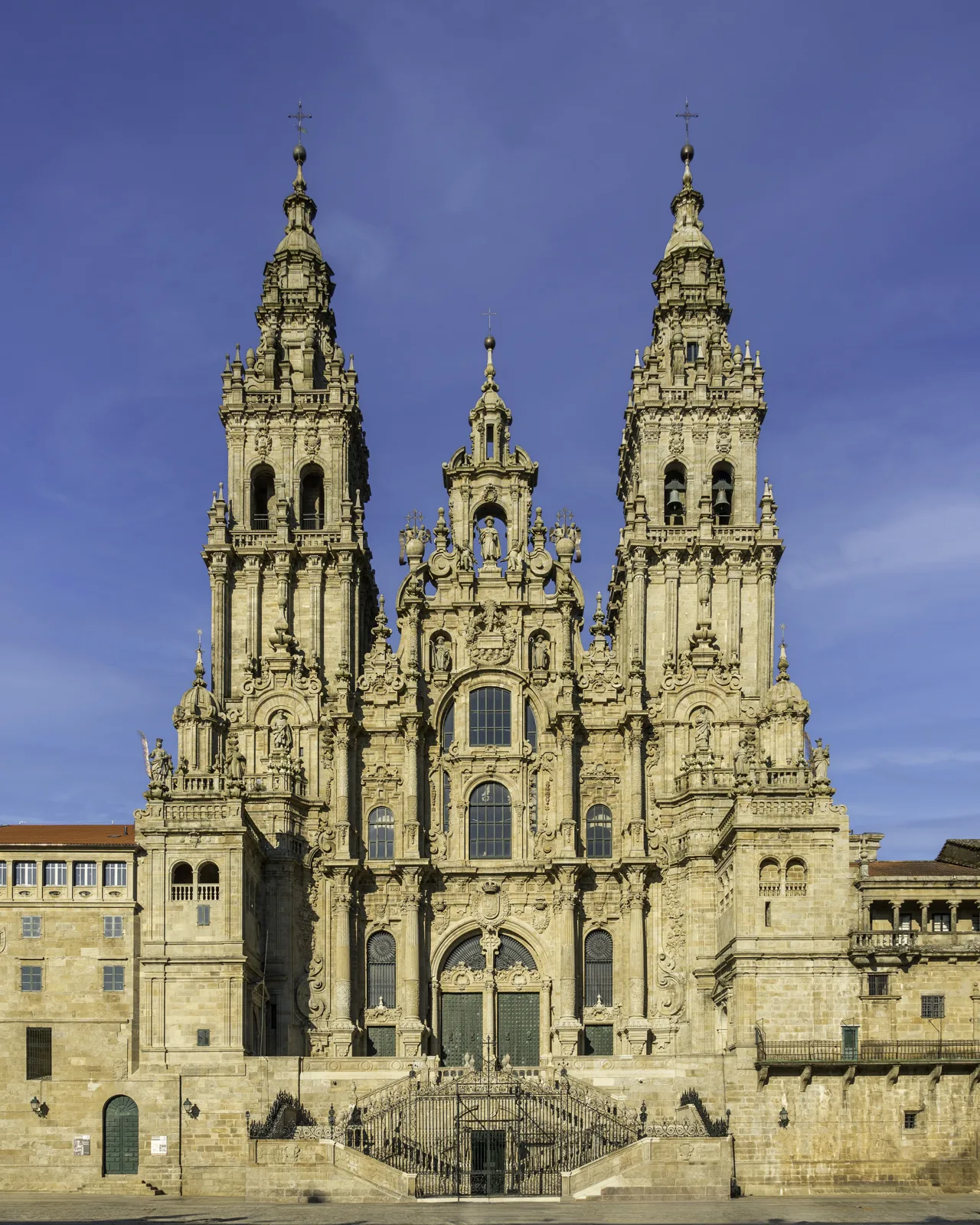
The cathedral was built from the 11th century over the reputed tomb of Saint James, becoming the focus of the Camino de Santiago, one of the most important Christian pilgrimages of the Middle Ages. Its Romanesque structure, including the celebrated carved Portico de la Gloria, was later cloaked in an ornate Baroque facade. The pilgrimage and the cathedral remain alive today, a UNESCO World Heritage Site.
Catedral de Santiago de Compostela
The Cathedral of Santiago de Compostela in northwestern Spain is the goal of the famous Camino de Santiago pilgrimage and one of the great churches of Christendom. Believed to hold the tomb of the apostle Saint James, it has drawn pilgrims along the Way of Saint James for over a thousand years, its Romanesque heart wrapped in a magnificent Baroque facade.
“The Cathedral of Santiago de Compostela in northwestern Spain is the goal of the famous Camino de Santiago pilgrimage and one of the great churches of Christendom.”
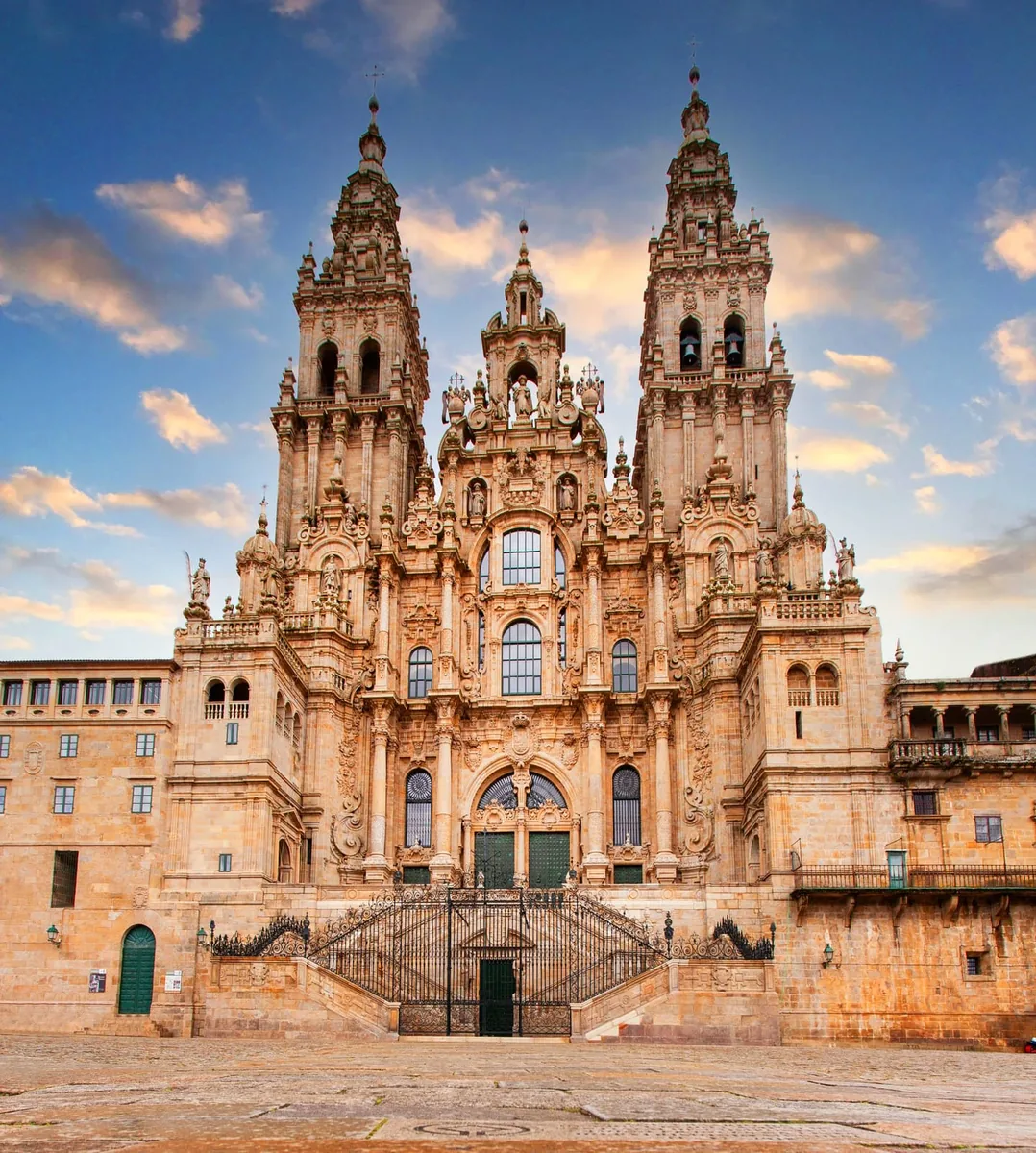
Catedral de Santiago de Compostela, Spain
The End of the Way of Saint James
Since the Middle Ages, pilgrims have walked across Europe along the Camino de Santiago to reach this cathedral, said to enshrine the relics of Saint James the apostle, whose shrine made the city one of the three great pilgrimage destinations of medieval Christendom alongside Rome and Jerusalem. At high feasts, a giant incense burner, the botafumeiro, is swung in a vast arc across the transept by teams of men, a spectacular ritual that fills the church with smoke.
The Experience
You arrive, perhaps after walking the Camino yourself, into the great square before the Baroque facade, then enter to see the Romanesque interior, the ornate high altar over the apostle's shrine, and, on feast days, the remarkable sight of the botafumeiro censer swinging in a huge arc through clouds of incense. The sense of arrival, devotion and history makes reaching the cathedral a deeply moving experience for pilgrims and visitors alike.
Why It Matters
The Cathedral of Santiago de Compostela is one of the holiest and most historically significant churches in the world, the endpoint of a pilgrimage that shaped medieval Europe. A UNESCO World Heritage Site, it remains a living centre of faith and a symbol of the enduring Camino de Santiago.
Why Visit
The goal of the Camino de Santiago, a great pilgrimage cathedral holding the shrine of Saint James, with the spectacular swinging botafumeiro censer on feast days.
Insider Tips
- 1
Time a visit for when the giant botafumeiro censer is swung.
- 2
See the Romanesque Portico de la Gloria carvings.
- 3
It is the endpoint of the Camino de Santiago pilgrimage.
- 4
Galicia is rainy; bring weather protection.