“This 2,000-year-old Roman theatre is so well preserved that it still hosts performances every summer.”
About Teatro Romano de Mérida
The theatre was built around 16 to 15 BC for Emerita Augusta, founded by Augustus for veteran soldiers and made the capital of the Roman province of Lusitania. Lavishly built and decorated, it fell into ruin and was buried over the centuries before being rediscovered and excavated in the early 20th century. Its restoration revealed the splendid columned stage, and it is part of Merida's UNESCO World Heritage ensemble.
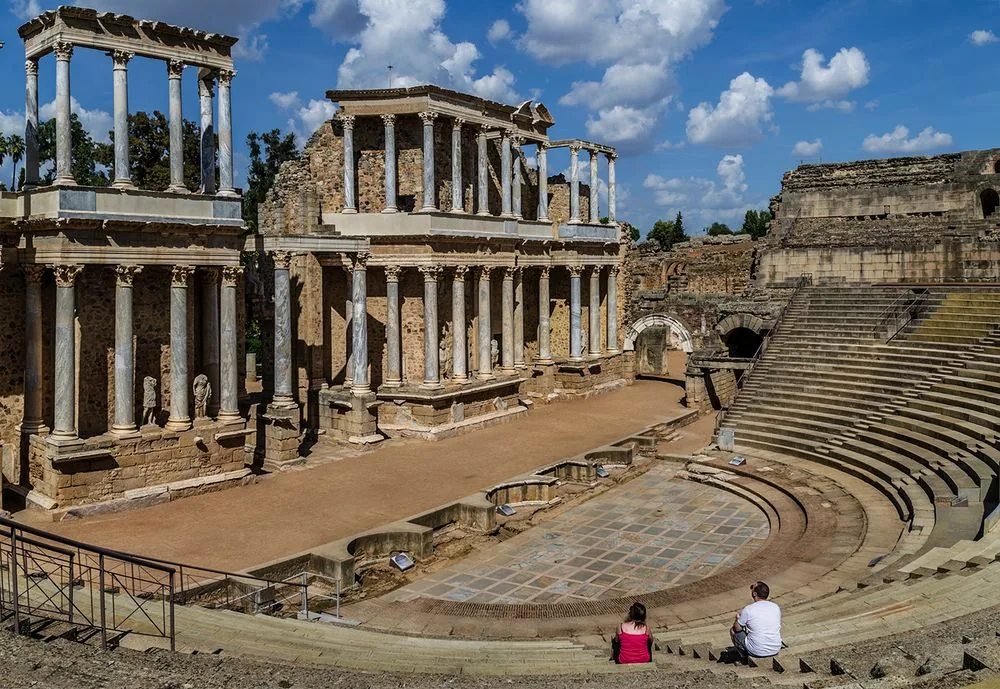
The Roman Theatre of Merida, in western Spain , is one of the best-preserved and most spectacular Roman theatres in the world, the centrepiece of the extensive Roman ruins of ancient Emerita Augusta. Built over two thousand years ago and still used for performances today, its stage backdrop of soaring columns and statues is a magnificent survival of Roman grandeur.
The Roman Theatre of Merida, in western Spain , is one of the best-preserved and most spectacular Roman theatres in the world, the centrepiece of the extensive Roman ruins of ancient Emerita Augusta.
A Roman Theatre Still in Use
Commissioned around 16 to 15 BC by Marcus Agrippa, the right-hand man of the emperor Augustus, the theatre served the important Roman colony of Emerita Augusta, a city for retired legionaries. Its most striking feature is the scaenae frons, the monumental stage backdrop, with two tiers of marble Corinthian columns and statues of gods and emperors. After lying buried for centuries, it was excavated and restored, and it now hosts a renowned summer classical theatre festival.
The Experience
Entering the great semicircular theatre and gaze at the magnificent two-tiered colonnaded stage backdrop, with its marble columns and statues set against the sky, then climb the tiered seating where Roman audiences once sat. The scale and preservation are extraordinary, and attending a play during the summer festival, in a theatre used for the same purpose two millennia ago, is unforgettable. The surrounding Roman ruins extend the experience.
Why It Matters
The Roman Theatre of Merida is one of the finest surviving monuments of the Roman world and the jewel of Spain's most important Roman city, a UNESCO World Heritage Site. Its remarkable preservation and continued use make it a living link to classical antiquity and a centrepiece of Spanish heritage.
The Roman Theatre of Merida is one of the finest surviving monuments of the Roman world and the jewel of Spain's most important Roman city, a UNESCO World Heritage Site.
Why Visit
One of the world's best-preserved Roman theatres, with a magnificent columned stage, still hosting a summer festival, amid the Roman ruins of Merida.
✦ Insider Tips
- 1
Admire the columned scaenae frons stage backdrop.
- 2
Attend the summer classical theatre festival if you can.
- 3
Explore the wider Roman ruins of Merida nearby.
- 4
Spring and autumn are coolest for daytime visits.