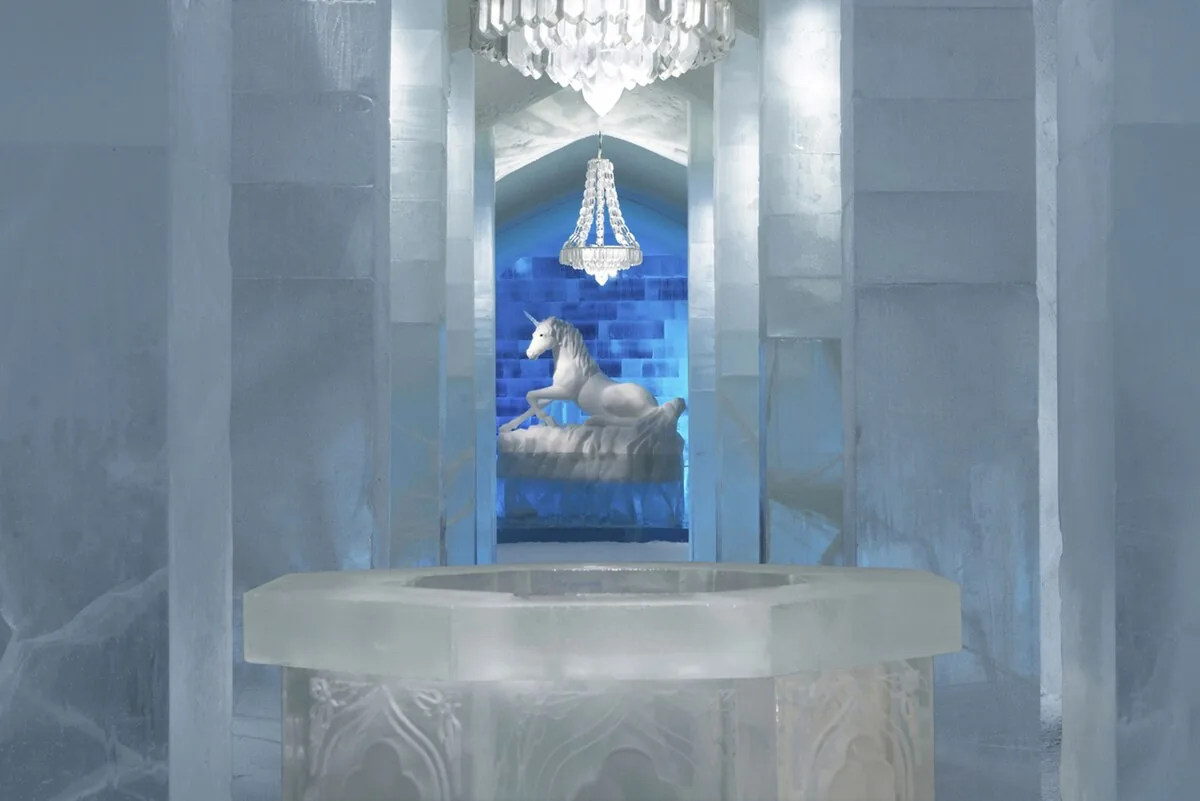
The sky here stays clear when the rest of the Arctic is clouded over, creating a 'blue hole' that serves as nature's most reliable theater for the Northern Lights.
About Abisko National Park
Abisko’s geological history is etched in the limestone of its canyon, which was formed by the melting of massive glaciers at the end of the last Ice Age. The park's importance grew in the early 1900s as a center for permafrost and climate research, a role it still holds today through the Abisko Scientific Research Station. The rail line that brought the world to Abisko was originally built to transport iron ore from Kiruna, but it inadvertently created one of the most sustainable ways to visit the Arctic. Over the decades, Abisko has evolved from a remote outpost to a global beacon for travelers seeking the Aurora, while successfully maintaining its status as a protected wilderness.
In the far north of Swedish Lapland
In the far north of Swedish Lapland, the landscape is dominated by a giant, U-shaped mountain pass known as Lapporten, the 'Route into Lapland.' Abisko National Park sits in its shadow, a 77-square-kilometer wilderness of subarctic tundra, birch forests, and the deep, cold waters of Lake Torneträsk. Because of a unique meteorological phenomenon known as the 'Abisko Blue Hole,' the park enjoys more clear nights than almost anywhere else in the Arctic, making it the premier destination for viewing the Aurora Borealis. The landscape is raw and prehistoric, with the Abiskojåkka river cutting a dramatic limestone canyon through the heart of the park. It is a place of absolute elemental power, where the light changes from the golden glow of the midnight sun in summer to the ethereal indigo of the polar night in winter.
“' Abisko National Park sits in its shadow, a 77-square-kilometer wilderness of subarctic tundra, birch forests, and the deep, cold waters of Lake Torneträsk.”
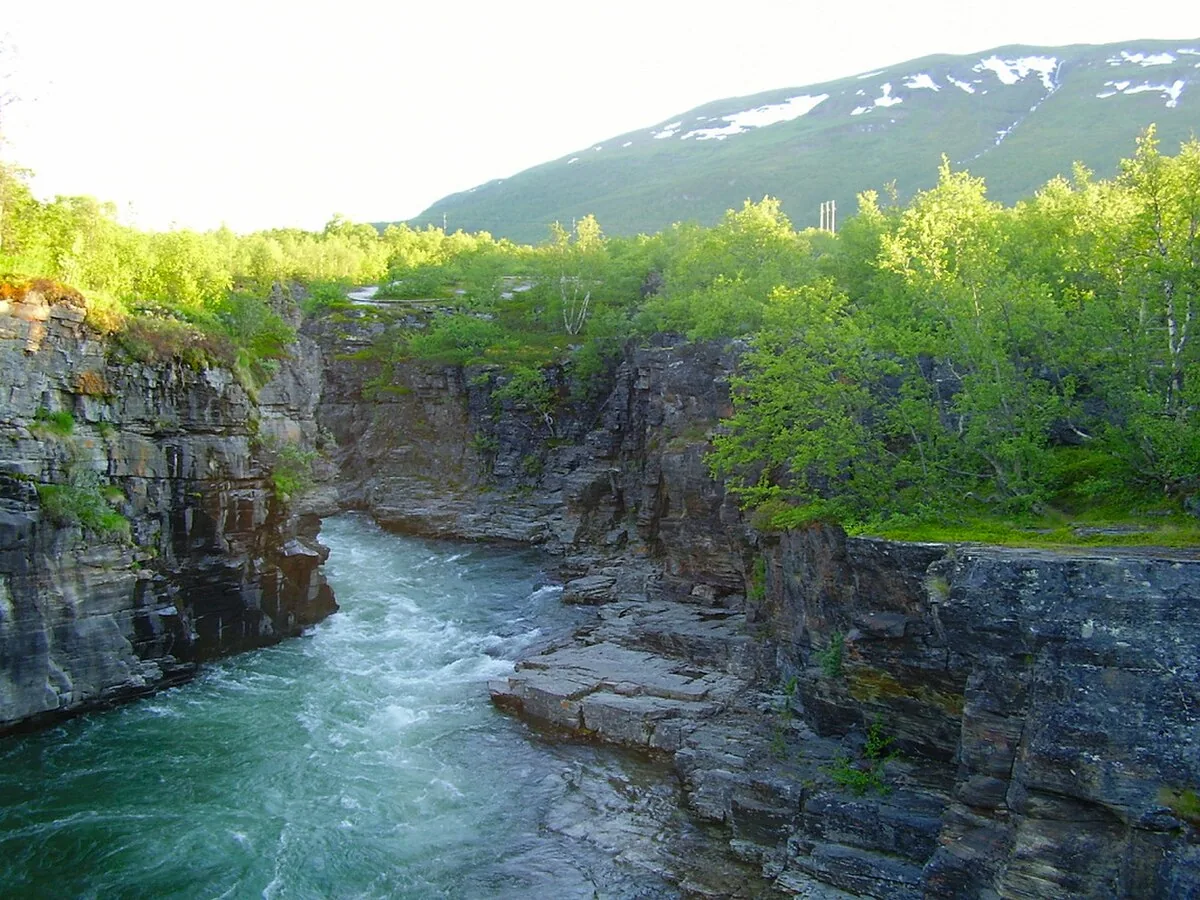
Abisko National Park, Sweden
Practical details
Abisko was one of the first nine national parks established in Sweden in 1909, originally created to protect a pristine Arctic environment for scientific research. For the local Sámi people, this land has been a vital part of their reindeer herding routes for centuries, and their presence is still woven into the park’s cultural fabric. The construction of the Kiruna-Narvik railway at the turn of the 20th century opened the park to the world, bringing the first intrepid hikers and scientists to the Abisko Turiststation. Today, the park is the starting point for the Kungsleden (King's Trail), Sweden's most famous long-distance trekking route, which stretches 440 kilometers south through the mountains.
The air in Abisko feels different; it
The air in Abisko feels different; it is crisp, dry, and so pure it almost has a taste. Beginning with the sound of the Abiskojåkka river long before seeing it, a constant, low-frequency roar as it thunders through its rocky gorge. Along the canyon walls, The spray of the water on your face and notice the intricate patterns worn into the limestone over thousands of years. In the winter, the silence is profound, broken only by the crunch of your crampons on the frozen lake. The highlight is taking the chairlift to the Aurora Sky Station at night, where you sit in the dark and wait for the sky to explode in ribbons of green and violet light that reflect off the snow-covered peaks.
Abisko is remarkably accessible
Abisko is remarkably accessible for a subarctic wilderness. The 'Arctic Circle Train' runs directly from Stockholm to Abisko Turiststation, a scenic 17-hour journey that is an experience in itself. Alternatively, you can fly into Kiruna and take a 90-minute bus or train ride north. The park is designed for exploration, with the main station located right at the park entrance, offering everything from gear rentals to guided tours and a cozy restaurant that overlooks the lake and the iconic Lapporten mountains.
“Abisko is remarkably accessible for a subarctic wilderness.”
The Experience
Right away, the dwarf birches that hug the ground, their leaves turning a brilliant, fiery gold during the brief 'Ruska' season in September. The ground is a springy mosaic of moss, lichen, and crowberries that feels like walking on a thick carpet. During the summer, the midnight sun turns the mountains a surreal shade of pink at 2:00 AM, and you lose all sense of time. In the winter, you notice how the extreme cold sharpens the stars until they look like diamonds. The moment the Aurora finally appears, it often starts as a faint gray mist before suddenly pulsing into a vivid, moving curtain of light that makes you forget the sub-zero temperatures.
Why It Matters
Abisko is a vital ecological sanctuary and a key site for global climate monitoring. It represents the successful integration of high-level scientific research with eco-tourism. For many, it is the spiritual heart of the Swedish mountains, symbolizing the vast, unpeopled beauty of the Far North and the enduring culture of the Sámi people.
Why Visit
If you want to see the Northern Lights, you go to Abisko for the highest statistical chance of success. But you stay for the prehistoric landscape. It is the only place where you can hike through a canyon, walk across a frozen Arctic sea, and stand at the start of a 400-kilometer trail all in the same afternoon. It is the Arctic made accessible without losing its wild edge.
Insider Tips
- 1
Book the Aurora Sky Station chairlift weeks in advance; it is the most popular activity and has limited capacity.
- 2
The tap water here is some of the purest on Earth, don't bother buying bottled; just fill up from any stream.
- 3
If the Sky Station is sold out, walk down to the shore of Lake Torneträsk for a reflection of the Aurora that is just as beautiful.
- 4
Wear wool layers only; synthetic materials often freeze and become stiff in the extreme Abisko cold.
- 5
The 'Abisko Blue Hole' isn't a myth, but it doesn't guarantee lights, check the Kp-index apps frequently during your stay.