“Sweden's royal family lives in the 'Versailles of the North,' a palace where the 18th-century theater machinery still works and the gardens are as precise as a clock.”
About Drottningholm Palace
Drottningholm represents the peak of Swedish Baroque architecture, but its survival into the modern era is its true miracle. The Court Theatre was boarded up and forgotten after the death of King Gustav III in 1792, acting as a giant time capsule. It wasn't rediscovered until 1921, with its original hand-painted scenery and candle-lit lighting systems still intact. The Chinese Pavilion was a surprise birthday gift from King Adolf Fredrik to Queen Lovisa Ulrika in 1753, built in secret and assembled in a single night. Since 1981, the palace has served as the primary residence of the current monarchs, moving them out of the more formal Royal Palace in the city center.
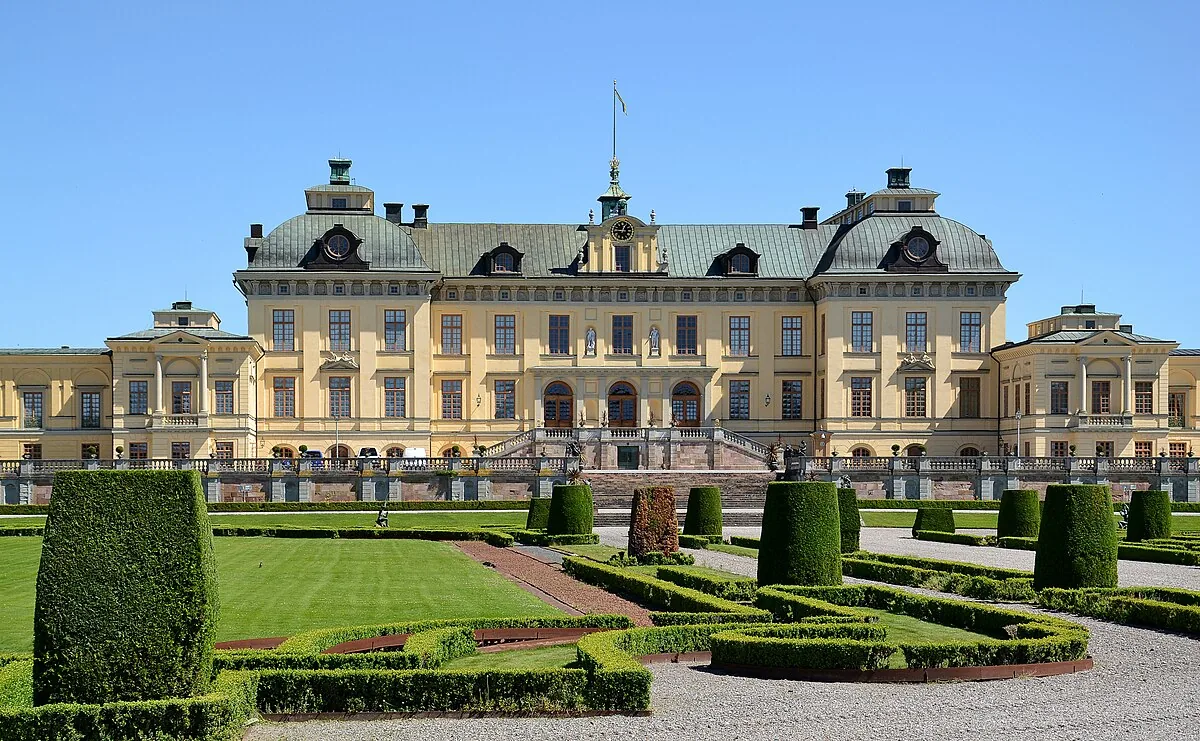
Drottningholm Palace
On the banks of Lake Mälaren sits a cream-colored tribute to the glory of the 17th century. Drottningholm Palace is the private residence of the Swedish Royal Family and a UNESCO World Heritage site that has been dubbed the 'Versailles of the North.' It is a masterpiece of Baroque architecture, where the symmetry of the gardens meets the fluid beauty of the water. The palace is a study in regal restraint; while it possesses the grand staircases and gilded ceilings of its European counterparts, it feels more intimate and connected to the surrounding nature. The air air here is fresh with the scent of mown grass and lake water, and the silence of the formal gardens is broken only by the occasional cry of a peacock or the distant chugging of a historic steamboat. Here history is not just preserved, but lived in.
On the banks of Lake Mälaren sits a cream-colored tribute to the glory of the 17th century.
Commissioned by Queen Hedvig
The palace was built in the late 1600s for Queen Hedvig Eleonora, designed by the architects Nicodemus Tessin the Elder and Younger. It was intended to project the power and sophistication of the Swedish Empire at its height. In the 18th century, Queen Lovisa Ulrika added the exquisite Court Theatre and the Chinese Pavilion, transforming the estate into a center of Enlightenment culture. While many European palaces were looted or destroyed, Drottningholm remained remarkably untouched, preserving its original interiors and furniture. The Court Theatre is particularly significant, as it still uses its original hand-cranked wooden stage machinery from the 1760s, making it one of the few places on earth where you can see Baroque opera exactly as it was performed three centuries ago.
Approaching the palace from the water,
The perfect reflection of its multi-windowed facade in the lake. Through the state rooms, the transition from the heavy, masculine Baroque of the lower floors to the light, airy Rococo of the upper levels. The formal garden is a highlight, where the manicured hedges and bronze fountains create a geometric maze that leads the eye toward the horizon. First, the contrast in the English Garden nearby, where the paths wander through wilder woods and over rustic bridges. The Chinese Pavilion, hidden in a remote corner of the park, provides a splash of exotic color with its red walls and lacquered details. A sense of quiet privilege wandering the grounds, knowing that the King and Queen are likely just a few hundred yards away in the private wing.
Know before you go
The most atmospheric way to reach Drottningholm is by taking the historic 19th-century steamboat from Stockholm City Hall; the one-hour route through the islands of Lake Mälaren is an essential part of the experience. Alternatively, you can take the metro to Brommaplan and transfer to a local bus for a faster, twenty-minute trip. The palace is open to the public year-round, though the Theatre and Chinese Pavilion have more limited seasonal hours. The gardens are free to enter and are a popular spot for locals to walk their dogs or enjoy a royal-scale picnic.
Alternatively, you can take the metro to Brommaplan and transfer to a local bus for a faster, twenty-minute trip.
The Experience
The first beat is the squeak of the original parquetry floors and the way the light catches the silver-threaded tapestries in the Queen's bedroom. The gardens don't feel like a museum; they feel like an extension of the forest, with the transition between the formal French hedges and the wild Swedish woods being almost seamless. Those who come overlook the 'Guard's Tent' near the Chinese Pavilion, a building painted to look like fabric but made entirely of wood and tin. The most memorable moment is standing on the lakeside promenade as the sun sets, watching the palace turn a warm, glowing gold while the white swans glide across the water.
Why It Matters
Drottningholm is the best-preserved example of a royal residence inspired by Versailles in Northern Europe. It represents the height of the Swedish 'Golden Age' and is a vital link to the country's cultural history, particularly through its unique Baroque theater. Its UNESCO status recognizes the entire ensemble, palace, theater, and gardens, as a pinnacle of human creativity and landscape design.
Why Visit
The rare chance to see a royal estate that is still a family home. While many palaces feel cold and hollow, Drottningholm feels vibrant and cared for. It is the only place in Scandinavia where you can experience the absolute luxury of the 1700s and then disappear into a wild forest garden in the same afternoon.
✦ Insider Tips
- 1
Book the boat from City Hall in advance during summer; the historic vessels have limited capacity and sell out fast.
- 2
Check the schedule for a theater performance; seeing an opera with the original 18th-century scenery is a once-in-a-lifetime experience.
- 3
Walk past the palace to the 'English Garden' to see the Royal burial ground on a small, peaceful island.
- 4
The private wing of the palace is clearly marked, respect the boundaries, as it is the King's actual residence.