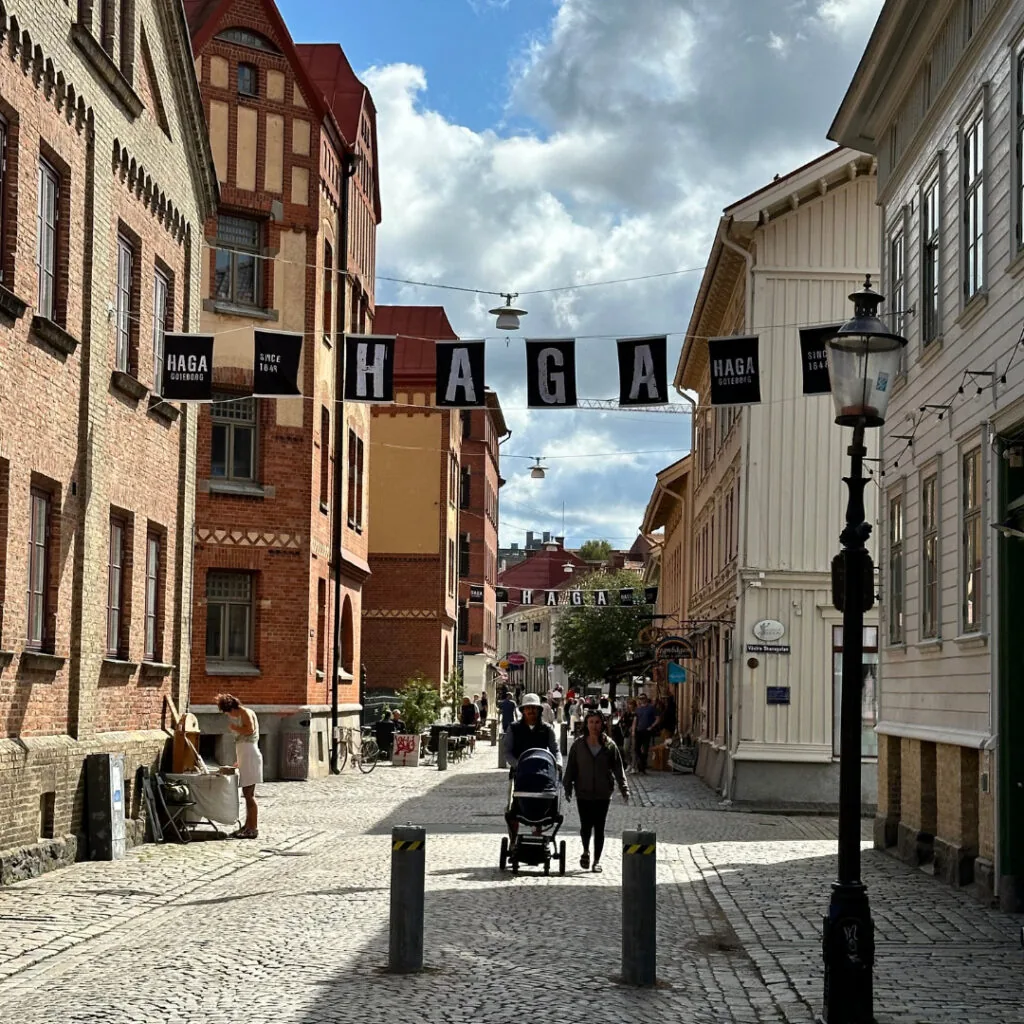
Fire laws once forbade wooden houses, so residents built the first floor out of stone to cheat the rules, creating the world's most charming architectural loophole.
About Haga District
Haga's Landshövdingehus (County Governor's houses) were a revolutionary solution to the housing crisis of the late 1800s. Because wood was cheap but fires were common, the law only allowed two-story wooden buildings. By building a stone basement that functioned as a full ground floor, architects could squeeze in a third level while technically following the law. This gave Haga its distinct vertical look. The district was also the center of Gothenburg’s labor movement, with many of the first unions and socialist meetings taking place in its cramped cellars. Today, those same cellars house high-end chocolate shops and architectural offices, a product of the district's radical gentrification.
What Haga District actually is
Gothenburg’s oldest suburb is a neighborhood of wooden 'Landshövdingehus' houses and oversized cinnamon buns. Haga was originally a working-class district outside the city walls, defined by its unique architecture: a first floor of stone with two floors of wood above, a clever design used to bypass 19th-century fire regulations. Today, the district’s main thoroughfare, Haga Nygata, is a pedestrianized dream of cobblestones and gas lanterns, lined with independent boutiques and some of the city's most beloved cafes. The area here smells of roasted coffee and the sweet yeast of the 'Hagabullen,' a pastry so large it requires two hands to eat. The pace of life slows down to a crawl, and the local concept of 'fika' is practiced with religious devotion among the ivy-covered facades and hidden courtyards.
Commissioned by Queen Kristina
Haga was established in the mid-1600s by order of Queen Kristina, originally meant as a settlement for people who worked in the nearby docks and industries. Over the centuries, it was a crowded and impoverished area, characterized by its labyrinthine streets and communal living. In the 1970s, the district was slated for total demolition as part of a modern urban renewal project. However, the local community fought a fierce battle to save their heritage, and Haga became one of the first major successes in Swedish architectural preservation. The result is a neighborhood that feels authentic and lived-in, having avoided the glass-and-steel fate that erased similar districts in other Swedish cities.
Walking down Haga Nygata, The rhythmic
Walking down Haga Nygata, The rhythmic clatter of heels on the uneven cobblestones and the vibrant displays of hand-poured candles and Swedish ceramics in the shop windows. The presence of the warmth from the crowded cafes, where locals sit outside even in winter, huddled under wool blankets with steaming cups of coffee. The district is dominated by the Skansen Kronan fortress, which looms on a hill above the wooden houses; climbing its steep stairs offers a panoramic view of the orange-tiled roofs and the harbor beyond. Right away, the quiet of the side streets, where small art galleries and vintage bookstores hide in the shadows of the stone-and-wood houses. The light at mid-afternoon is particularly beautiful, catching the pastel colors of the window shutters and the weathered textures of the century-old timber.
Haga is centrally located in Gothenburg
Haga is centrally located in Gothenburg, an easy ten-minute walk from the Järntorget square or the city’s main shopping district. It is served by several tram lines (including 1, 3, and 6) that stop at Hagakyrkan or Järntorget. The district is best explored entirely on foot, as many of the streets are either too narrow for cars or strictly pedestrian-only. It is a natural bridge between the city center and the bohemian vibes of the Linné district, making it a perfect hub for a day of walking.
The Experience
Right away, the sheer size of the cinnamon buns in the window of Café Husaren, an iconic sight that has become a local symbol. The district doesn't feel like a museum; it feels like a vibrant village in the middle of the city. The majority overlook the tiny back courtyards, which are often open to the public and contain small communal gardens and hidden staircases. Audible here of the city traffic disappears once you turn onto the main street, replaced by the low hum of conversation and the ringing of bicycle bells. The light at twilight turns the district into a moody, Victorian-feeling scene, especially when the gas-style lamps flicker on.
Why It Matters
Haga is the architectural soul of Gothenburg. It represents the triumph of community preservation over destructive modernism and serves as the best-preserved example of 19th-century Swedish urban planning for the working class. It is the spiritual home of the Swedish 'fika' culture, embodying the values of heritage, coziness, and community.
Why Visit
Haga is the only place in Gothenburg where you can feel the city’s 17th-century roots without the modern noise. It is the perfect place for people-watching and discovering the 'slow' side of Swedish life. It’s where you go to get lost in a side alley, buy a handmade wool sweater, and eat a pastry the size of your head.
✦ Photo Gallery
Best Season
🌤 December is spectacular for the Haga Christmas Market, where the traditional wooden houses are decorated with pine garlands and the smell of glögg fills the air.
Quick Facts
Best time to visit
December is spectacular for the Haga Christmas Market, where the traditional wooden houses are decorated with pine garlands and the smell of glögg fills the air.
Getting there
In Gothenburg, Sweden; reach Gothenburg first, then continue to the site.
Location
Gothenburg, Sweden
Type
attraction
Insider Tips
- 1
Share the 'Hagabullen' with a friend; it is genuinely too large for one person to finish without regret.
- 2
Climb to Skansen Kronan for the best view, but bring a jacket as it is always windy on top of the hill.
- 3
Check out the small independent toy shops on the side streets for unique, high-quality Swedish gifts you won't find in malls.
- 4
Many of the shops close earlier than in the city center (around 6:00 PM), so plan your shopping for the afternoon.
- 5
Visit the Haga Church (Hagakyrkan) at the entrance of the district for its beautiful, understated 19th-century interior.