The world’s most ubiquitous furniture brand started with a teenage boy selling matches from a bicycle in a town so small it wasn't on most maps.
About IKEA Museum
The IKEA Museum stands in the footprint of the 1958 flagship, a structure designed by architect Claes Knutson to be the ultimate temple of retail. Its white facade and large windows represented a break from the dark, cluttered furniture shops of the early 20th century. Throughout the 1960s and 70s, this site was the testing ground for the 'IKEA way,' from the first restaurant designed to keep hungry shoppers from leaving, to the sprawling warehouse where customers did the heavy lifting. The transition to a museum in 2016 allowed the company to archive over 20,000 items, creating a definitive timeline of how global domestic life has shifted over nearly seven decades.
What IKEA Museum actually is Älmhult might seem an unlikely site for a global pilgrimage, yet this quiet town in southern Sweden holds the DNA of the modern home. The IKEA Museum occupies the very first store opened by Ingvar Kamprad in 1958, a building that stripped away the elitism of design to focus on the grit of flat-pack reality. Passing through the stark, functionalist halls, you encounter the evolution of the domestic landscape, from the mid-century obsession with teak to the primary colors of the 1980s. A crisp, clinical cleanliness, punctuated by the nostalgic scent of Swedish meatballs drifting from the restaurant. It represents a physical manifestation of Democratic Design, where the goal was never just to sell furniture, but to solve the spatial puzzles of the average person’s life.
“What IKEA Museum actually is Älmhult might seem an unlikely site for a global pilgrimage, yet this quiet town in southern Sweden holds the DNA of the modern home.”
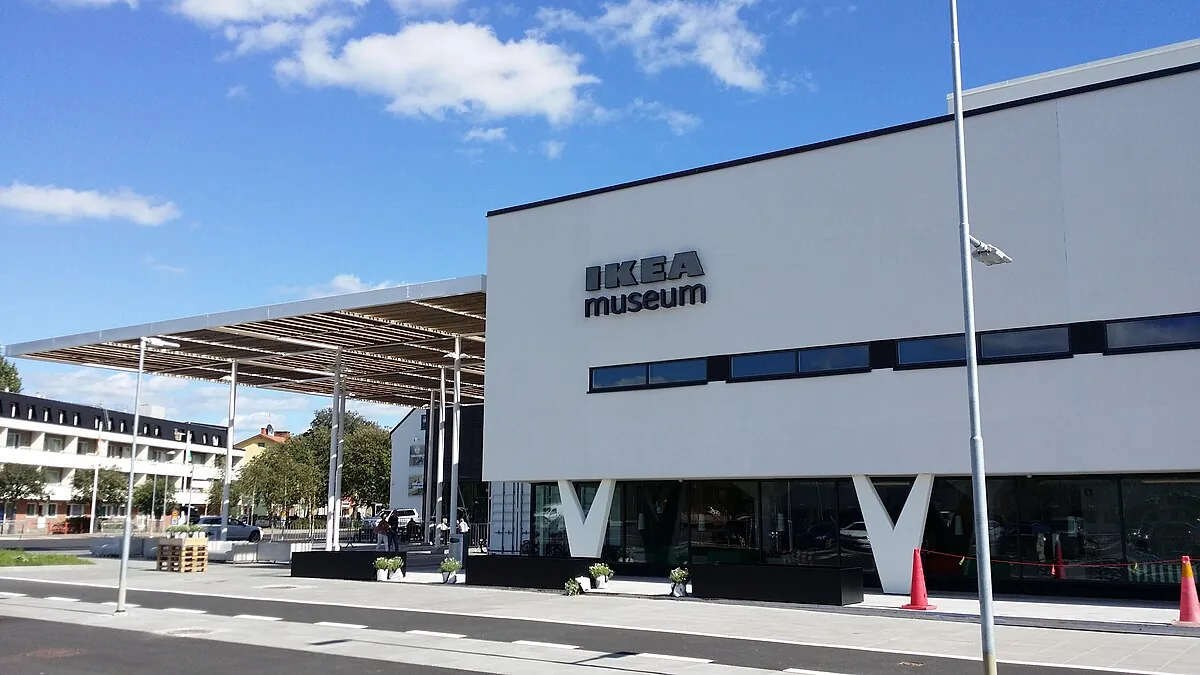
IKEA Museum, Sweden
Ingvar Kamprad started his empire at age seventeen
Ingvar Kamprad started his empire at age seventeen, selling matches and pens from his bicycle before moving into the furniture trade. The 1950s in Sweden were a time of rapid social change, and Kamprad realized that the growing middle class needed furniture that was affordable, functional, and easily transported. This specific building in Älmhult became the laboratory for his ideas, including the famous self-service warehouse and the flat-pack concept that revolutionized shipping. When the original store closed in 2012, the company decided to preserve the site as a museum to document its massive cultural impact. It chronicles the failures just as much as the successes, showing early experiments with materials and designs that never quite made it to the showroom floor.
Älmhult is easily reached by train from Malmö Älmhult is easily reached by train from Malmö or Copenhagen, with the journey taking roughly ninety minutes through the pine forests of Småland. The museum is a five-minute walk from the station, and the town itself is essentially built around the IKEA campus. A dedicated hotel sits directly across from the museum, allowing visitors to fully immerse themselves in the brand's culture.
Visiting IKEA Museum
Stepping into the main gallery feels like walking into the collective memory of the Western world. From the start, the 'Period Rooms' that recreate decades of home life, where you can sit on vintage sofas and flip through catalogs that predate the internet. The lighting is bright and even, mimicking the showroom floor, but the atmosphere is more scholarly and reflective. There is a strange sense of intimacy as you examine the personal belongings of Kamprad, including his modest desk and the early ledgers written in meticulous hand. The most engaging section deals with the 'Democratic Design' process, where you see how a single Billy bookcase is engineered for both durability and cost. Toward the end, the experience turns personal, inviting you to share your own stories of assembling furniture and the domestic dramas that often accompany it.
The Experience
First, the peculiar silence of people staring at a sofa they grew up with, a moment of recognition that turns a corporate brand into a personal history. The textures change as you move from the coarse wool of the 1950s to the sleek plastics of the 2000s. A large share of visitors overlook the intricate technical drawings in the basement that show the engineering behind a simple hinge. The clatter of a 1970s television playing Swedish commercials adds a layer of sonic nostalgia that grounds the exhibits in their specific era. A weight of the company's influence when you realize almost every object in the room exists in millions of homes simultaneously.
Why It Matters
This site is a monument to the Swedish concept of 'Folkhemmet', the idea that the state, and by extension the market, should provide a high quality of life for everyone. It bridges the gap between high-concept Scandinavian design and the practicalities of mass production. It is a cultural archive of the late 20th century that explains how we live today.
Why Visit
Visit to see the Billy bookcase as an artifact rather than a commodity. This isn't a shopping trip; it is a deep dive into the sociology of the home. You will gain a new respect for the sheer logistical genius required to put a table in every house on the planet while exploring a town that remains the spiritual heartbeat of Swedish industry.
Insider Tips
- 1
The museum restaurant serves unique dishes that aren't available in standard IKEA stores, including locally sourced Småland specialties.
- 2
Look for the 'IKEA through the ages' catalog digital archive where you can search for the specific furniture you owned as a child.
- 3
Check out the workshop area where you can try your hand at the 'democratic design' process and understand the five pillars of the brand.
- 4
The gift shop sells exclusive re-released vintage items that you cannot find in any other IKEA location globally.
- 5
Stay at the IKEA Hotel nearby for a full immersion; it is the only one of its kind and follows the same design principles as the museum.