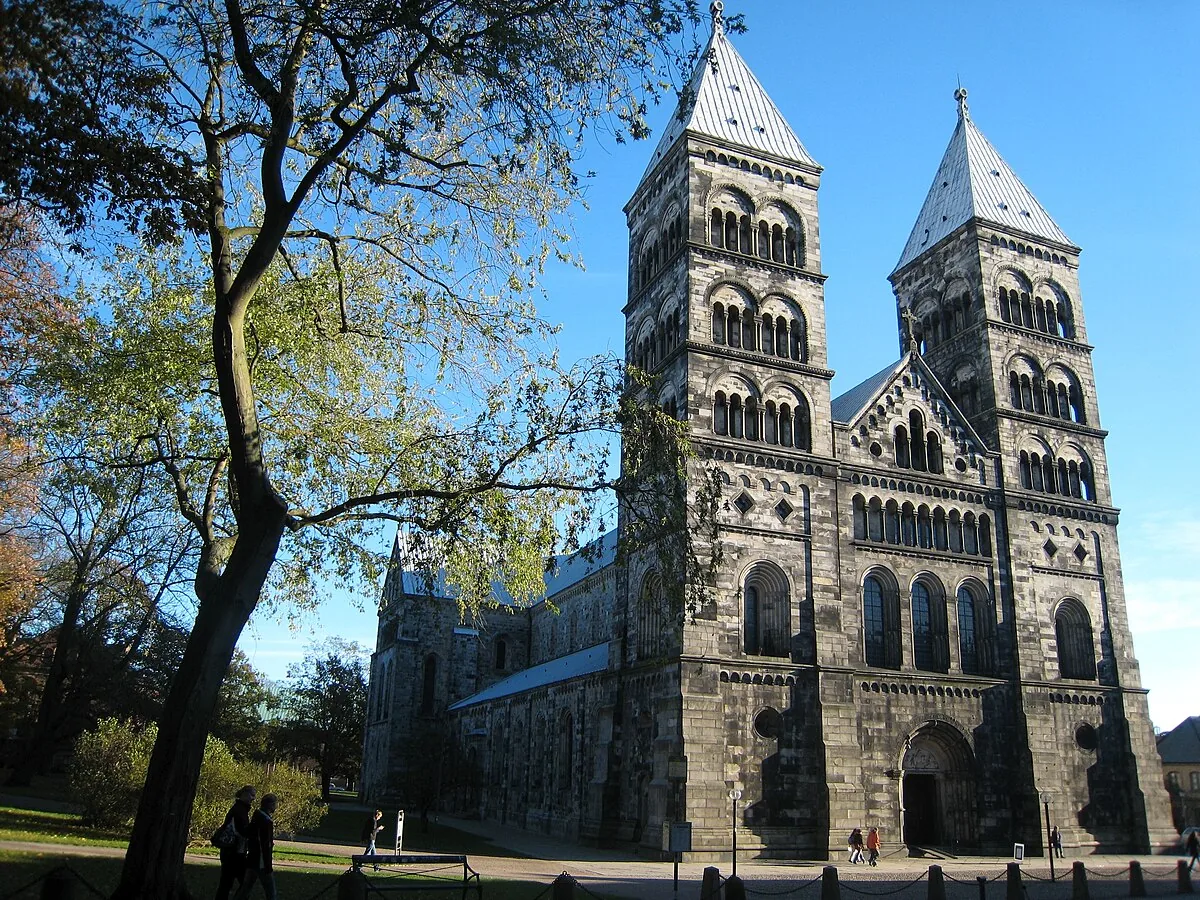
Inside the coldest part of the crypt, a petrified giant has been holding up the foundations of Scandinavia's oldest cathedral for nearly a thousand years.
About Lund Cathedral
The cathedral was the first great stone building in the region, a project of Archbishop Eskil that took decades to complete. It was built in the Rhenish Romanesque style, featuring a unique double-choir layout that reflected its high status in the medieval church. In 1424, the magnificent astronomical clock was installed, a masterpiece of medieval technology that calculated the phases of the moon and the dates of future Easters. Following the 1658 Treaty of Roskilde, the cathedral became Swedish, but it retained its Danish architectural soul. The 19th-century renovations were controversial, as they removed many Baroque additions to return the church to a 'pure' Romanesque form that it arguably never actually possessed.
Lund Cathedral
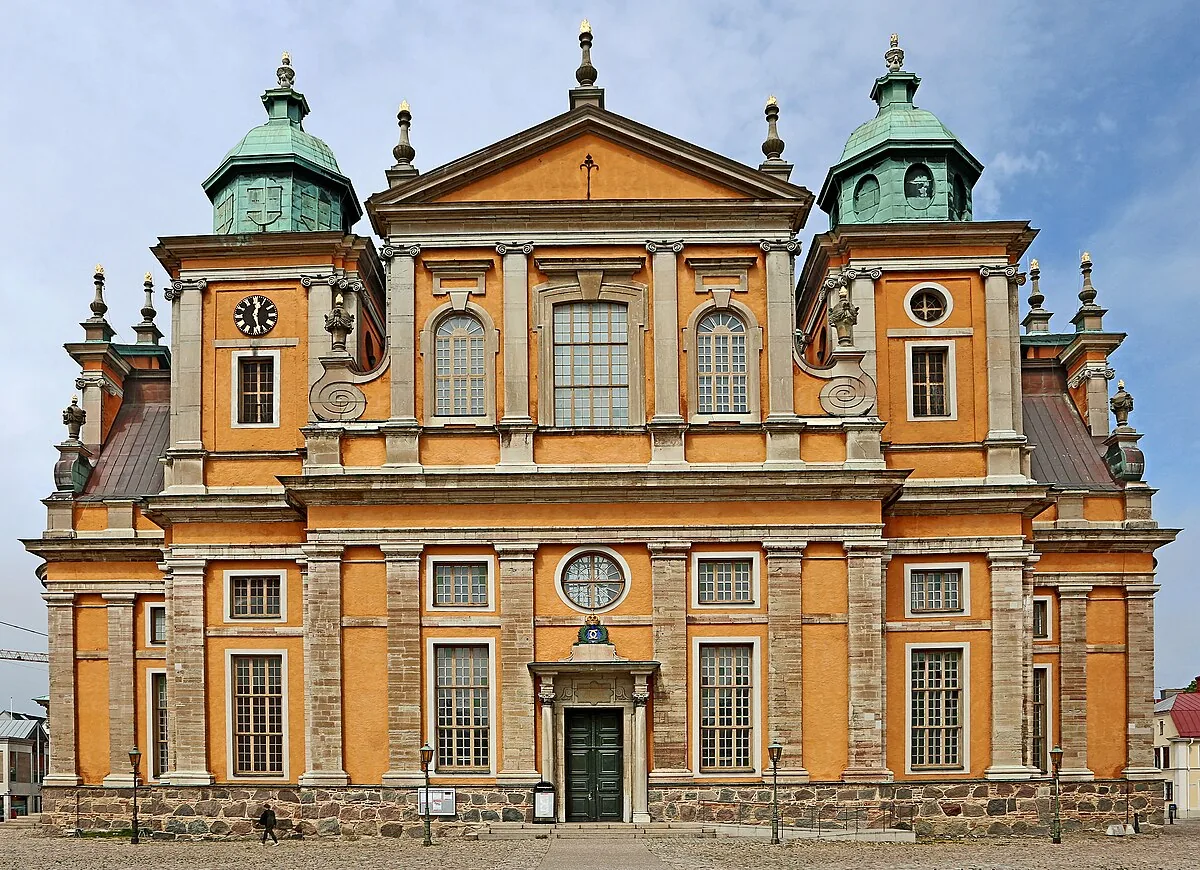
Lund Cathedral is a towering fortress of sandstone that has anchored the spiritual life of Scandinavia since the early 12th century. This Romanesque giant, with its twin towers known as 'Lund's Boys,' is the most visited church in Sweden and born from a time when this city was the religious capital of the entire North. Passing through the arched entrance, the scale of the architecture shifts from the imposing exterior to an interior of somber, shadowed majesty. The place is cool and smells of damp stone and centuries of prayer, while the light is filtered through stained glass to hit the polished granite floors in muted jewel tones. It is a place of deep time, where the crypt feels like a subterranean cathedral in its own right, held up by pillars that carry the weight of both the stone and the legends of giants.
Consecrated in 1145, the cathedral
Consecrated in 1145, the cathedral was built when Lund was part of the Kingdom of Denmark and was the seat of the Archbishop of all Scandinavia. Its construction used light-colored sandstone from nearby Berga, which has weathered into a distinctive gray-gold hue over nine hundred years. The most famous legend associated with the building is that of Finn the Giant, who is said to have built the cathedral after losing a bet with a holy man; his stone figure still clings to a pillar in the crypt today. Throughout the Reformation and the subsequent wars between Sweden and Denmark, the cathedral remained a stable center of power. In the 19th century, Helgo Zettervall led a massive restoration that gave the towers their current appearance, ensuring the building would remain the defining feature of the Lund skyline.
The past
The highlight of any visit is the 14th-century astronomical clock, 'Horologium Mirabile Lundense.' The crowd gathering twice a day as the wooden figures of the Three Wise Men emerge to the sound of 'In Dulci Jubilo' played on a mechanical organ. The sound is delicate and metallic, a stark contrast to the booming acoustics of the main nave. The walk down into the crypt, There is a sudden drop in temperature and a shift in atmosphere; it is silent and prehistoric, with the massive stone carvings of Finn and his wife Gerda providing a haunting presence in the shadows. What draws the eye is the way the light catches the contemporary altar in the center of the cathedral, a minimalist contrast to the intricate medieval woodcarvings of the choir stalls. The space feels alive with the hum of the university city outside, yet it maintains an unshakable core of medieval gravity.
Lund is a ten-minute train ride
Lund is a ten-minute train ride from Malmö and less than an hour from Copenhagen, making the cathedral incredibly accessible for day-trippers. The building sits in the very center of the pedestrianized university district, surrounded by the cobblestone streets of the Lundagård park. Walking from the train station takes about five minutes through the historic center. The cathedral is a functioning place of worship, so while entry is free, visitors are encouraged to be mindful of the regular services and concerts that take place throughout the week.
The Experience
The first beat is the smell of ancient dust and the way the sandstone feels strangely soft to the touch near the doorways. The crypt is the heart of the experience, where the forest of pillars creates a subterranean labyrinth that feels older than the church itself. Most people overlook the bronze doors by Carl Milles at the entrance, which are modern but capture the cathedral's long history in relief. The moment the astronomical clock begins its mechanical dance, the entire cathedral feels like it is briefly connected to the clockwork of the heavens. There is a transition from the crowded student life of the park into the heavy, hushed silence of the stone aisles.
Why It Matters
Lund Cathedral is the premier example of Romanesque architecture in Scandinavia and a site of immense historical importance for both Sweden and Denmark. It represents the Christianization of the North and the intellectual foundations of the nearby university. Its astronomical clock is one of the few working examples of its kind left in Europe, bridging the gap between medieval faith and early science.
Why Visit
The crypt alone, which is perhaps the most atmospheric room in all of Sweden. While other cathedrals focus on height and light, Lund is about depth and weight. It is a place where you can physically touch the legends of the Vikings and the scholars of the Middle Ages in a single afternoon.
✦ Photo Gallery
Best Season
🌤 December is particularly moving, as the cathedral’s Lucia processions and Christmas concerts take full advantage of the building’s incredible seven-second echo.
Quick Facts
Best time to visit
December is particularly moving, as the cathedral’s Lucia processions and Christmas concerts take full advantage of the building’s incredible seven-second echo.
Getting there
In Lund, Sweden; reach Lund first, then continue to the site.
What's nearby
IKEA Museum is also close by.
Location
Lund, Sweden
Type
attraction
Coordinates
55.7042°, 13.1933°
Insider Tips
- 1
The astronomical clock plays at 12:00 PM and 3:00 PM on weekdays (1:00 PM and 3:00 PM on Sundays), be there ten minutes early.
- 2
Look for the small 'pavement maze' in the Lundagård park outside, which was used by medieval pilgrims.
- 3
Don't miss the 14th-century choir stalls; look closely to find the tiny, humorous carvings of devils and animals hidden under the seats.
- 4
If you visit during a weekday morning, you might catch the choir rehearsing, which is a free and world-class musical experience.