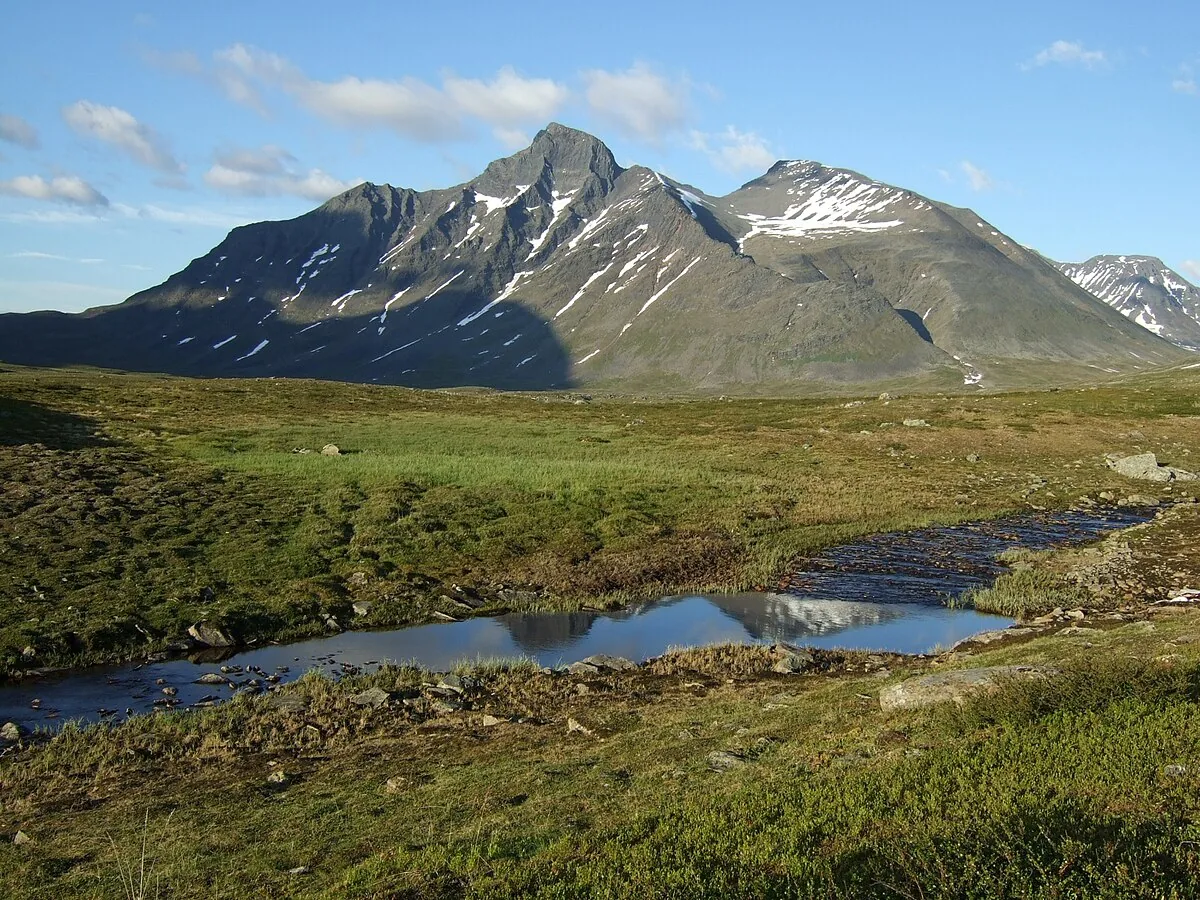
There are no trails, no signs, and no rescue teams in Sarek; it is a two-thousand-square-kilometer high-stakes wager between you and the Arctic elements.
About Sarek National Park
Sarek was one of the first national parks in Europe, but it has remained largely unchanged since the end of the last Ice Age. The Sámi people of the Sirkas and Tuorpon communities have used these valleys for reindeer husbandry for generations, and their ancient hearths and corrals are the only 'structures' you will find. The park's boundaries were drawn to include the most rugged part of the Scandinavian Mountains, protecting the massive biodiversity of the Rapa Valley, which houses some of the largest moose in the world. Because the park is so difficult to access, it has become a vital sanctuary for the 'Big Four' Swedish predators: the wolf, the brown bear, the lynx, and the wolverine.
What Sarek National Park actually is
Sarek is often called 'Europe's last true wilderness,' a 2,000-square-kilometer expanse of jagged peaks, glacial valleys, and rushing turquoise rivers where there are no marked trails, no cabins, and no cell service. Located in the far north of Swedish Lapland, this is a landscape that demands total self-reliance and deep respect. Six of Sweden's thirteen highest peaks are here, along with nearly a hundred glaciers that continue to carve the deep Rapadalen valley. The room is unimaginably clear, carrying only the scent of wet rock and cold tundra. It is a place of brutal, staggering beauty, where the weather can shift from sun to blizzard in minutes and the only paths are those worn into the moss by the thousands of reindeer that migrate through the high passes.
Why it matters
Part of the UNESCO World Heritage site Laponia, Sarek has been the home and grazing land of the Sámi people for millennia. Unlike other national parks that were developed for tourism, Sarek was intentionally left undeveloped after its establishment in 1909 to preserve its character as a pristine high-alpine region. The park’s modern 'discovery' is often attributed to the scientist Axel Hamberg, who spent over thirty summers here in the early 20th century, building tiny research huts and meticulously mapping the glaciers. His work provided the foundation for our understanding of the Arctic climate, but even his presence barely scratched the surface of this vast, indifferent terrain. Today, it remains the ultimate test for the experienced trekker, a place where the human presence is fleeting and insignificant.
Walking in Sarek, The lack of human sound; there is only the roar of the Rapa River and the occasional whistle of a golden eagle. The ground is a difficult mosaic of spongy marsh, slippery scree, and dense willow thickets that can take hours to navigate. A mark of the constant presence of the mountains, which loom over you with a scale that feels almost claustrophobic in the narrower valleys. The light in the summer is an unending, silvery glow that makes the glacial silt in the rivers shimmer like mercury. First, the absence of footprints, except for those of moose and lynx, giving you the rare, unsettling sensation of being the only human in the world. The highlight is reaching the Skierfe cliff, which offers a dizzying, vertical view down into the braided delta of the Rapadalen, a scene so prehistoric it feels like it belongs in another geological epoch.
Reaching the borders of Sarek is an expedition in itself. Most trekkers take the night train from Stockholm to Gällivare or Jokkmokk, followed by a bus to the mountain stations of Saltoluokta or Ritsem. From there, you must hike or take a boat across the lakes to even enter the park. There are no roads, no bridges over the major rivers, and no emergency shelters. Anyone entering Sarek must be an expert in map and compass navigation and carry at least ten days of supplies, as the nearest help is often several days' hike away. This isolation is precisely what keeps the park so pristine and so intimidating.
The Experience
The peculiar silence of a glacier 'breathing,' a low, rhythmic sound of moving ice and melting water. Here, the is so thin and pure that the distant peaks look deceptively close, a trick of the light that has led many hikers astray. People generally overlook the tiny Arctic flowers, like the mountain avens, which cling to the rocks in the face of gale-force winds. The feeling of crossing a glacial river, with the ice-cold water pulling at your knees and the silt-covered stones shifting under your feet, is a moment of pure, terrifying presence. The light at 3:00 AM under the midnight sun is a ghostly, shadowless white that makes the entire park feel like a dreamscape.
Why It Matters
Sarek is the crown jewel of the Swedish wilderness and a vital component of the Laponia World Heritage site. It represents the successful preservation of a large-scale ecosystem where natural processes continue without human interference. It is a living laboratory for glaciology and a sacred landscape for the Sámi, standing as a record of what the world looked like before the arrival of the machine age.
Why Visit
Visit Sarek only if you are looking to lose yourself. This is not a place for 'sights' or 'photos'; it is a place for an internal shift. It is the only place in Europe where you can walk for a week without seeing another soul, a fence, or a power line. It is the ultimate antidote to the modern world, offering a silence so profound it becomes a physical sensation.
✦ Photo Gallery
Best Season
🌤 Late August to early September is the only window; the mosquitoes are dead, the autumn colors are beginning to burn red, and the rivers are at their lowest after the summer melt.
Quick Facts
Best time to visit
Late August to early September is the only window; the mosquitoes are dead, the autumn colors are beginning to burn red, and the rivers are at their lowest after the summer melt.
Getting there
In Laponia, Sweden; reach Laponia first, then continue to the site.
What's nearby
Abisko National Park is also close by.
Location
Laponia, Sweden
Type
attraction
Coordinates
67.2833°, 17.7000°
Insider Tips
- 1
River crossings are the most dangerous part of Sarek; never cross alone and always do so at the widest, shallowest point of the delta.
- 2
Pack a high-quality satellite messenger (like a Garmin inReach), as there is zero cell coverage once you leave the mountain stations.
- 3
The 'Sarek socks' (thick wool) are not a suggestion; your feet will be wet for the entire trip, and wool is the only thing that will keep them warm.
- 4
Climb Skierfe from the north to get the iconic view without the technical climbing required by the face.
- 5
Expect to move at half your usual hiking speed; the lack of trails and the dense 'bushwhacking' through willows make for slow progress.