“A 19th-century man feared his country was losing its soul to factories, so he bought 150 buildings and moved them to a hill in Stockholm to save the past.”
About Skansen
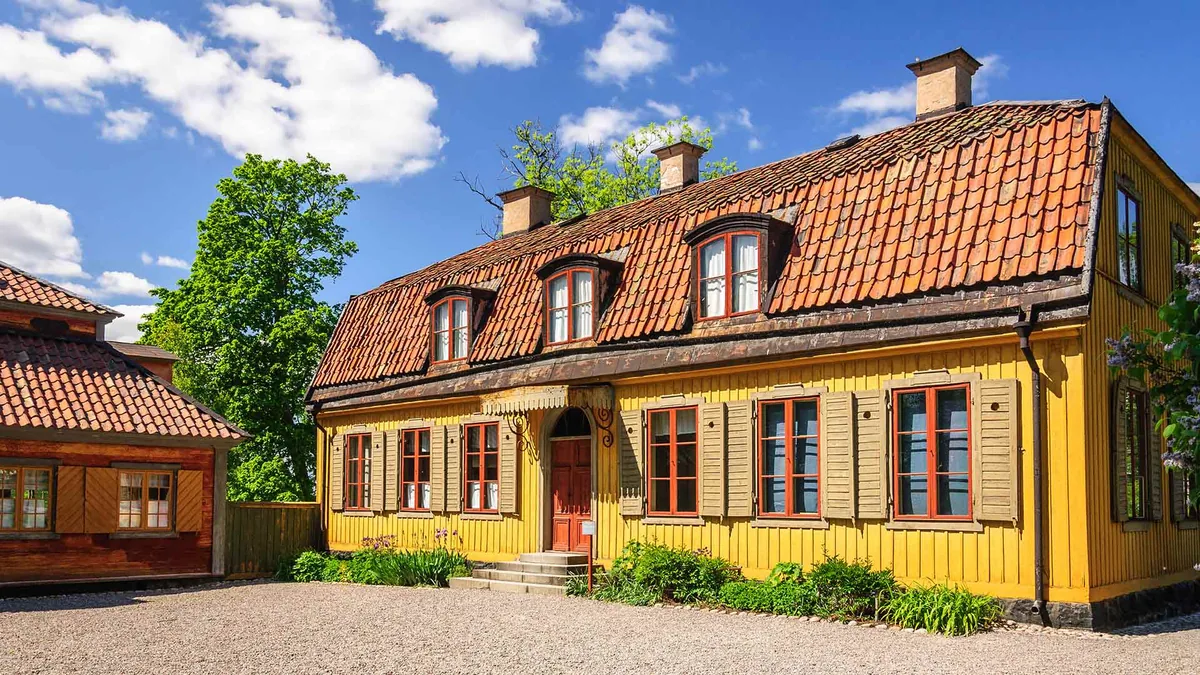
Artur Hazelius began his collection with a single cottage from Dalarna, and by the time Skansen opened, it was already a national sensation. He was a pioneer in what we now call 'living history,' believing that people would only care about the past if they could see, touch, and smell it. Throughout the 20th century, Skansen added a zoo and the Baltic Sea Science Center, broadening its mission to include environmental conservation. Despite these modern additions, the core remains the 'Town Quarter,' which accurately recreates an 1830s Swedish town with its apothecaries, bakeries, and workshops, many of which still use the original tools and recipes.
On the hill of Djurgården, five centuries
On the hill of Djurgården, five centuries of Swedish life are gathered into a single 75-acre park. Skansen is the world's oldest open-air museum, a living village of more than 150 historic buildings that were dismantled across Sweden and painstakingly reassembled here. The industrial age hasn't yet arrived; you walk from the sod-roofed farmhouses of Lapland to the elegant manors of Skåne in a matter of minutes. The environment smells of woodsmoke, freshly baked rye bread, and the pungent scent of the Nordic zoo, which houses moose, wolves, and bears. It is a sensory bridge to a pre-urbanized Sweden, where the staff in period costume don't just act, but actually perform the daily tasks of their ancestors, from glassblowing to traditional tanning.
On the hill of Djurgården, five centuries of Swedish life are gathered into a single 75-acre park.
Getting there
Artur Hazelius founded Skansen in 1891, driven by a desperate fear that Sweden’s traditional culture was being erased by the rapid onset of the Industrial Revolution. He traveled the country, buying entire farmsteads, workshops, and even a 1730s wooden church, moving them piece by piece to Stockholm. Hazelius wanted to create a place where the soul of the nation could be preserved, not in dusty cabinets, but in the open air. Over the years, Skansen has evolved from a romanticized vision of the past into a vital educational center. It is also the site of Sweden's most important national celebrations, including the first televised Midsummer and New Year’s Eve festivities, making it the country’s unofficial town square.
Walking the gravel paths of Skansen,
Walking the gravel paths of Skansen, the topography mirrors the geography of Sweden, with the northern farms perched on the highest ground. A hint of the heat radiating from the furnace in the glassblower’s workshop and hear the rhythmic clatter of the loom in the weaver’s cottage. The animals in the Nordic zoo are a highlight; seeing a massive moose up close in a birch grove is a record of the wildness that still exists just outside the cities. Starting with the intricate details of the Delsbo farmstead, where the walls are painted with elaborate folk art. The light in the late afternoon filters through the trees, casting a nostalgic glow over the red-painted cottages and the wooden windmills that stand like silent guardians of the past.
Skansen is located on the island
Skansen is located on the island of Djurgården, easily reached from central Stockholm by the historic Line 7 tram or the ferry from Slussen. It is a pleasant 30-minute walk along the Strandvägen promenade. The museum is a massive site with multiple entrances, but the main gate near the Nordic Museum is the most atmospheric starting point. Be prepared for hills and uneven paths; while most of the park is accessible, the authentic historic layouts mean that some of the older farmhouses have steep steps and narrow doorways.
Skansen is located on the island of Djurgården, easily reached from central Stockholm by the historic Line 7 tram or the ferry from Slussen.
The Experience
The first beat is the taste of 'snus' and the smell of strong coffee in the worker’s dwellings, small details that make the history feel lived-in rather than curated. The silence of the Seglora Church, with its painted wooden ceilings and smell of old timber, provides a moment of profound peace. People generally overlook the small garden plots behind the cottages, which are planted with historic varieties of vegetables and flowers that were common in the 1700s. The light at twilight during the Christmas market turns the park into a fairy-tale scene of torches and lanterns, where the breath of the reindeer is visible in the cold winter air.
Why It Matters
Skansen is the grandfather of all open-air museums and a model for cultural preservation worldwide. it is more than a tourist attraction; it is the keeper of the Swedish folk identity. It preserves the 'intangible heritage' of the country, the songs, dances, and crafts that would have otherwise vanished in the transition to modern life.
Why Visit
It is the only place in the world where you can travel through five centuries of a nation’s history in a single afternoon. It is the perfect antidote to the sleek, modern glass of downtown Stockholm, offering a grounded, earthy experience that is as educational as it is beautiful. It is the heart of Swedish tradition in the middle of a modern capital.
✦ Insider Tips
- 1
Buy a warm 'bulle' (cinnamon bun) from the bakery in the Town Quarter; they are still baked in a traditional wood-fired oven.
- 2
The funicular railway is a great way to save your legs and get a panoramic view of Stockholm as you ascend.
- 3
Check the schedule for the 'daily life' demonstrations, as the workshops are far more interesting when the craftsmen are actually working.
- 4
Visit the Skogaholm Manor to see how the Swedish elite lived in the 1700s compared to the humble farmers nearby.