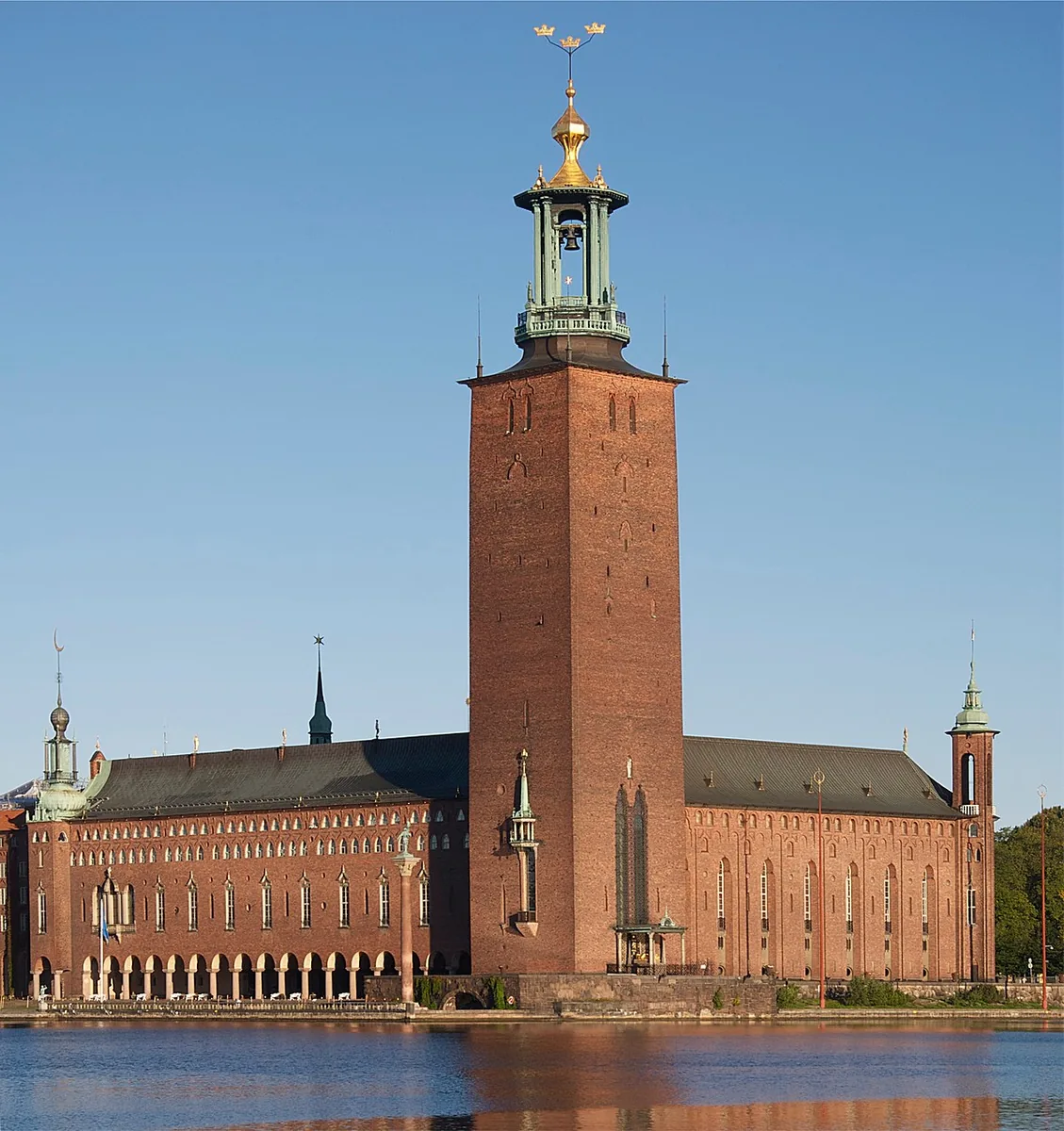
Eight million bricks and eighteen million gold tiles were used to build a city hall that looks like a Venetian palace but feels like a Viking longhouse.
About Stockholm City Hall
The City Hall was built on the site of the Eldkvarn mill, which burned down in a spectacular fire in 1878. Östberg’s vision for the site was to create a 'house for the citizens' that felt both regal and accessible. He famously decided to leave the 'Blue Hall' as red brick after seeing how beautiful the light looked on the raw material, ignoring his original plan to paint it blue. The building was inaugurated on Midsummer’s Eve in 1923, exactly 400 years after the city's liberation. Since then, it has become the global stage for the Nobel Prize, with the banquet held in the Blue Hall and the ball in the Golden Hall, cementing its place as Sweden's most prestigious interior.
What Stockholm City Hall actually is
On the eastern tip of Kungsholmen, eight million hand-laid red bricks rise from the water to form Stockholm’s most iconic silhouette. The Stockholm City Hall (Stadshuset) is a masterpiece of National Romanticism, a building that looks as if it were plucked from a Venetian lagoon and replanted in the cold Baltic. Designed by Ragnar Östberg and completed in 1923, it is the administrative heart of the city and the world-famous venue for the Nobel Prize banquet. The building is centered around two massive courtyards: the open 'Borgargården' and the covered 'Blue Hall,' which, despite its name, is the warm, textured red of exposed brick. This space is often full of the 106-meter tower’s carillon, which rings out over the water, and sea breeze that rolls in from Riddarfjärden.
Commissioned by Prince Eugen
Ragnar Östberg spent fifteen years perfecting the City Hall, viewing it as a total work of art. He was inspired by the Doge's Palace in Venice but wanted to create something uniquely Swedish, using materials and craftsmanship from across the country. The bricks were fired in local kilns to a specific shade of dark red, and the interior was decorated by the finest Swedish artists of the era, including Prince Eugen. The building’s most famous space, the Golden Hall, is lined with 18 million mosaic tiles made of real gold leaf sandwiched between glass, depicting the history of Sweden and the 'Queen of Lake Mälaren.' It was a project that celebrated the 400th anniversary of Gustav Vasa’s entry into Stockholm, marking the city's transition into a modern, confident capital.
Walking through the courtyards, The rhythmic
Walking through the courtyards, The rhythmic arches and the intricate sculptures that populate the corners of the building. You come across a sheer scale of the Blue Hall, where the Nobel laureates walk down the grand staircase every December; the steps are wide and shallow, specifically designed to allow women in long evening gowns to descend gracefully. Moving into the Golden Hall, the atmosphere shifts as the light reflects off the gold mosaics, creating a shimmering, otherworldly glow that feels more like a Byzantine palace than a government office. The Council Chamber, which is built to resemble the interior of a Viking longhouse, with a ceiling of exposed wooden beams. The highlight for many is the climb up the tower, where the wind whistles through the belfry and the entire city of Stockholm opens up beneath you in a panorama of islands and spires.
The City Hall is a ten-minute
The City Hall is a ten-minute walk from Stockholm Central Station, making it one of the most accessible landmarks in the city. It is also served by several bus lines and the nearby City Terminal. While the exterior and the gardens are free to explore, the interior can only be seen via guided tours, which run frequently in multiple languages. During the summer, it is highly recommended to book tower tickets in advance, as the number of visitors allowed up the narrow stairs is strictly limited for safety reasons.
The Experience
The opening is the way the light from the lake ripples across the ceiling of the Prince's Gallery, where Prince Eugen spent years painting a fresco of the Stockholm waterfront. The building doesn't feel like a cold government institution; it feels like a gallery of Swedish craft, where every door handle and light fixture was designed with intention. Those who come overlook the 'Centaur' sculpture in the garden, which offers a perfect framing for a photo of the Gamla Stan skyline. The feeling of standing at the 'Blue Hall' staircase is one of immense historical weight, especially when you realize you are walking the same path as the world's greatest scientists and writers. Audibly, the of your footsteps echoing on the stone floor is a record of the building's massive, hollow volumes.
Why It Matters
Stockholm City Hall is the definitive example of the National Romantic style, a movement that sought to create a modern Swedish identity through traditional craftsmanship. It is a symbol of Swedish democracy and the country’s contribution to global intellectual life through the Nobel Prize. Architecturally, it is one of the most successful buildings of the 20th century, blending historical references with a functional, civic purpose.
Why Visit
See this because is the room where the world's most brilliant minds gather once a year. It is the best place to understand the Swedish obsession with detail and quality. From the gold-encrusted walls to the view from the tower, it offers a sense of grandeur that is uniquely Scandinavian, restrained on the outside, but dazzlingly rich on the inside.
✦ Photo Gallery
Best Season
🌤 June is perfect; the City Hall gardens are in full bloom, and the light on the red bricks at the 10:00 PM sunset is a deep, glowing crimson that you will never forget.
Quick Facts
Best time to visit
June is perfect; the City Hall gardens are in full bloom, and the light on the red bricks at the 10:00 PM sunset is a deep, glowing crimson that you will never forget.
Getting there
In Stockholm, Sweden; reach Stockholm first, then continue to the site.
What's nearby
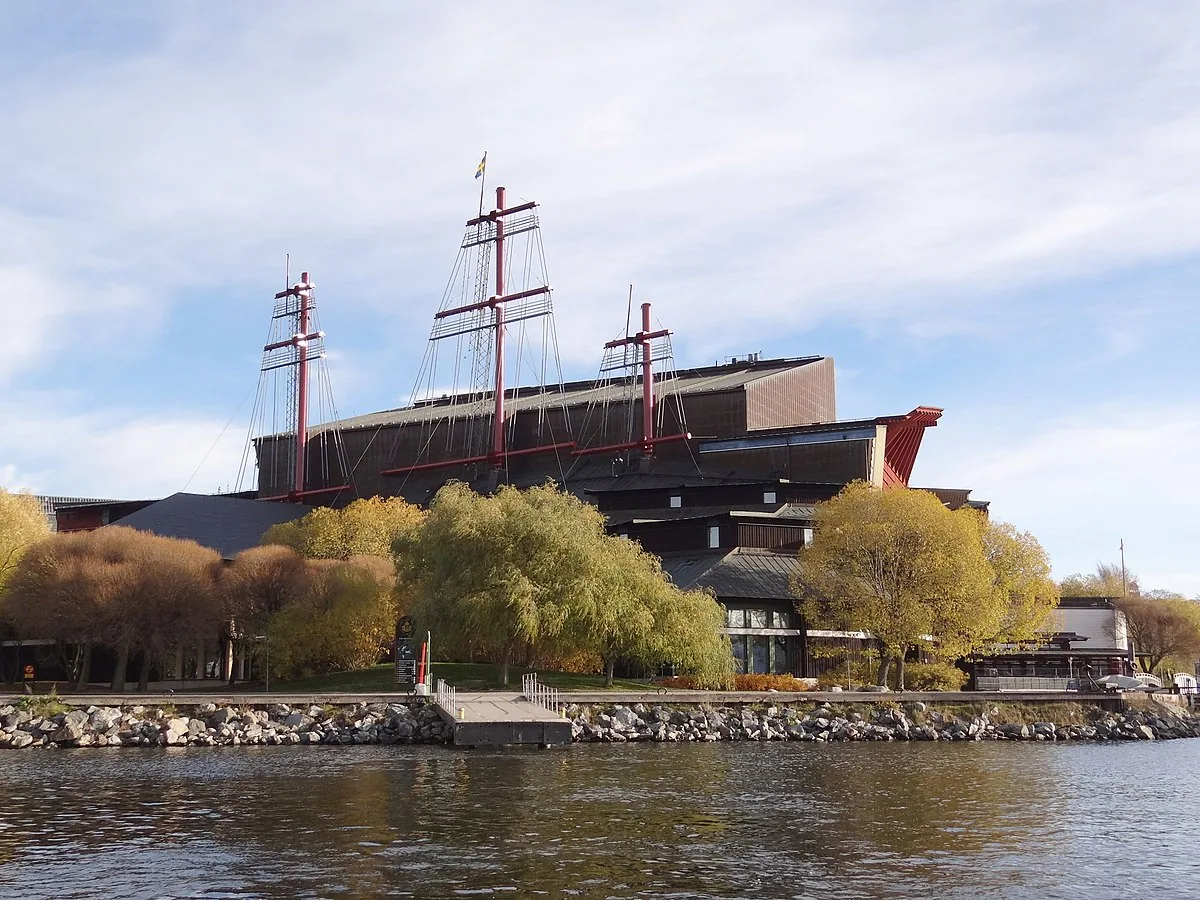
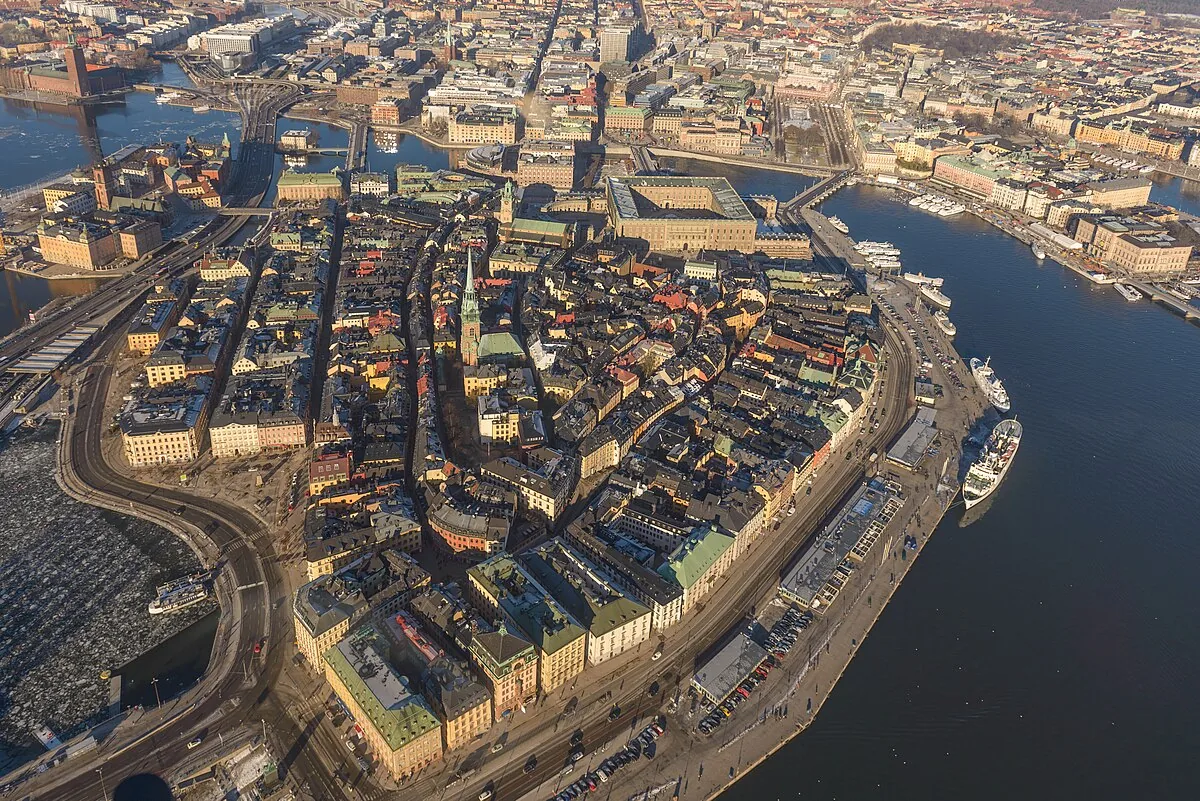
Gamla Stan, Stockholm Public Library and Vasa Museum are also in the area.
Location
Stockholm, Sweden
Type
attraction
Coordinates
59.3275°, 18.0550°
Insider Tips
- 1
The tower climb is strenuous and involves many stairs and ramps, but the view from the top is the absolute best in Stockholm.
- 2
Check the Nobel banquet menu at the 'Stadshuskällaren' restaurant in the basement; they can serve you the exact meal from any Nobel year of your choice.
- 3
Arrive thirty minutes before the first tour of the day to secure a spot, as the tours are popular and cannot always be booked online.
- 4
Look for the 'Stockholm girl' in the Golden Hall mosaics; she is the personification of the city, sitting between the East and the West.
- 5
The garden (Stadshusparken) is the best spot in the city to watch the sunset over the water toward the Södermalm cliffs.