“Three thousand years ago, sailors carved their dreams of war and the sea into the granite of Bohuslän, creating a coastline of ghosts that now sits miles from the water.”
About Tanum Rock Carvings
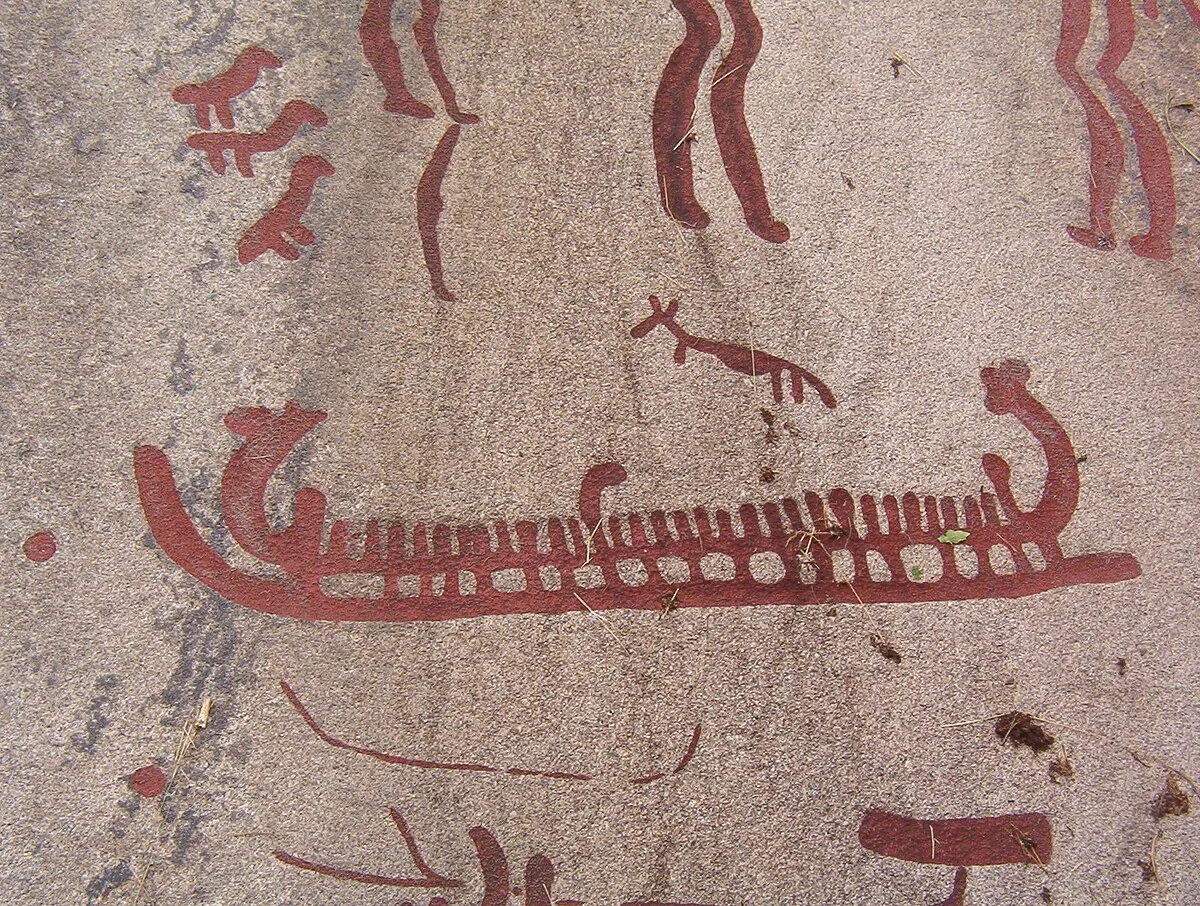
The Tanum carvings were created between 1700 BC and 300 BC, spanning the entirety of the Nordic Bronze Age. The most iconic site, the Vitlycke panel, contains over 300 individual figures, including the famous 'Loving Couple,' which hints at prehistoric fertility rites. While the red paint you see today is a modern addition for the sake of tourism, archaeologists have found traces of original pigments, suggesting the stones were once even more colorful. The area was a central meeting point for various tribes, acting as a sacred landscape where trade, ritual, and justice were likely performed in front of these permanent witnesses. As the land rose and the sea receded, the sites were abandoned, remaining hidden under moss and soil for nearly two thousand years.
What Tanum Rock Carvings actually is
Deep in the granite heart of Bohuslän, the rocks speak in a language of bronze and blood-red pigment. The Tanum Rock Carvings are a sprawling outdoor gallery of prehistoric life, where over 600 panels etched into the smooth glacial stone depict a collection of longships, ritual battles, and mysterious solar symbols. These petroglyphs, some dating back 3,000 years, were carved by a maritime society that viewed these sloping outcrops as the threshold between the land, the sea, and the divine. The granite is cool to the touch and surprisingly smooth, a result of the massive ice sheets that retreated millennia ago. Today, the most famous panels are filled with red ochre to make them visible, turning the gray hills into a vibrant, ancient comic strip that captures the anxieties and ambitions of the Nordic Bronze Age.
Deep in the granite heart of Bohuslän, the rocks speak in a language of bronze and blood-red pigment.
The people of Tanum did not leave behind
The people of Tanum did not leave behind a written history, so they carved their stories into the landscape itself. These carvings were made by pecking into the hard granite with quartz tools, a laborious process that suggests these images held immense social or religious weight. As it happens, when these were made, the sea level was much higher; the rocks that now sit in lush green fields were once at the water's edge, serving as a symbolic coastline where travelers and gods might meet. They were rediscovered by modern eyes in the 18th century, but it wasn't until the 20th century that their global significance was fully realized. Since 1994, they have been protected by UNESCO as a unique record of European Bronze Age life, offering a rare glimpse into a culture that was sophisticated, warlike, and deeply connected to the rhythm of the seasons.
Walking between the sites at Vitlycke or Aspeberget
Walking between the sites at Vitlycke or Aspeberget, the sunlight at different times of day changes the readability of the stones. In the harsh noon sun, the etchings can disappear, but during the 'blue hour' of dusk, the shadows deepen and the figures seem to dance across the granite. There is a silence of the surrounding forest, which contrasts with the chaotic energy of the carvings, some panels feature over a hundred figures in a single scene. What registers is the detail of the 'Great God' at Vitlycke, a towering figure that looms over a scene of smaller warriors and animals. The area is often smelling of wild thyme and damp moss, and the sound of the wind through the pines provides a somber soundtrack to your exploration of these ancient marks. Tanumshede is located in West Sweden, approximately a two-hour drive north of Gothenburg or south from Oslo. The Vitlycke Museum is the primary entrance and information center, providing context before you head out to the rocks. While there are local buses from the Tanum train station, a car is highly recommended to reach the more remote and quiet carving sites like Litsleby or Gerum. Most of the main paths are well-maintained wooden boardwalks designed to protect the fragile rock surfaces from the friction of modern footwear.
The Experience
Right away, the size of the ships, some with thirty oarsmen, and realize that the sea was the only world that mattered to these people. The granite feels solid and eternal, yet the carvings themselves are surprisingly delicate, almost like lace across the stone. Most people overlook the smaller, unpainted carvings found away from the main museum, which require you to squat down and let your eyes adjust to the subtle textures. The moment you stand alone at the Litsleby site and look at the four-meter-long spear-bearer, you feel a direct, wordless connection to a human hand that moved across this exact spot thirty centuries ago. The light of a cloudy day is actually better for seeing the unpainted grooves, as it reduces the glare of the granite.
Right away, the size of the ships, some with thirty oarsmen, and realize that the sea was the only world that mattered to these people.
Why It Matters
Tanum is the largest and most concentrated collection of Bronze Age rock art in Northern Europe. It serves as a vital bridge to a pre-literate society, documenting their seafaring technology, social hierarchies, and spiritual beliefs. It is proof of the human need to leave a permanent mark on the world, proving that the desire for legacy is as old as the stone itself.
Why Visit
Visit Tanum to step outside the curated museums of the city and into a landscape that has been a gallery for three millennia. It is the only place where you can stand in the middle of a modern farm and see a detailed blueprint of a Bronze Age navy. It offers a sense of perspective that few other sites can match, placing your own life in a timeline that stretches back to the dawn of Scandinavian culture.
✦ Insider Tips
- 1
Visit at night with a strong flashlight; shining it at a low angle across the rock reveals hidden carvings that are invisible during the day.
- 2
Start at the Vitlycke Museum but spend most of your time at the Litsleby site for a much more quiet and spiritual experience.
- 3
Do not step on the rocks directly; the acid from your skin and the grit on your shoes can erode the carvings faster than centuries of rain.
- 4
Check the museum's schedule for guided 'night tours,' where they use artificial lighting to bring the 'Night God' figures to life.
- 5
Bring a pair of binoculars to see the detail on the higher sections of the rock faces without having to approach too closely.