“These were Zanzibar's first public baths, a Persian-style hammam built for ordinary townspeople by a sultan who imported Persian architects to construct them.”
About Hamamni Persian Baths
Sultan Barghash bin Said had the baths built between 1870 and 1888, naming them Hamamni after the Persian hammam tradition. They served the public for decades, charging a fee for entry, with separate timings for men and women. After modern plumbing reached Stone Town the baths fell out of use, and they are now preserved as a historic monument.
What Hamamni Persian Baths actually is
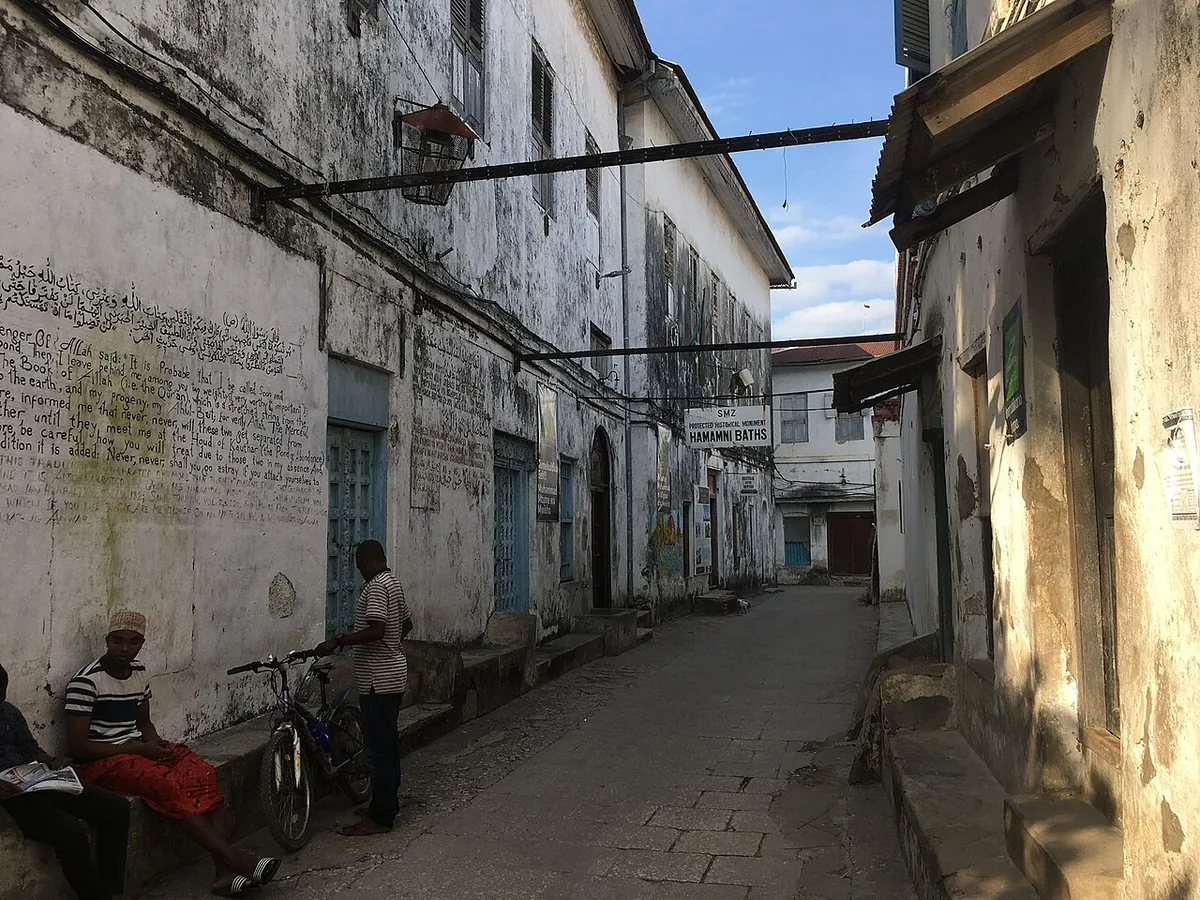
The Hamamni Persian Baths are the oldest surviving public bathhouse in Zanzibar, a complex of vaulted stone rooms hidden in the lanes of Stone Town. Built in the late 19th century in Persian style, they once offered hot and cold rooms, washing chambers and resting areas to the people of the town, fed by a network of wells and underground channels.
The Hamamni Persian Baths are the oldest surviving public bathhouse in Zanzibar, a complex of vaulted stone rooms hidden in the lanes of Stone Town.
A Persian Gift to the Town
The baths take their name from hammam, the word for a public bathhouse across the Persian and wider Islamic world. They were commissioned by Sultan Barghash and built by Persian architects, giving ordinary Zanzibaris access to a grand bathing complex of the kind found in Shiraz or Isfahan. They no longer hold water, but the cool, echoing rooms still show the channels, pools and arched ceilings of a working hammam.
The Experience
A local keyholder lets you into the dim, cool complex, leading you through the changing rooms, the hot and cold chambers, the barber's room and the channels that once carried water from distant wells. With no water now, it takes imagination, but the vaulted stone rooms and clever hydraulics make clear how sophisticated 19th-century Zanzibar was.
Why It Matters
The Hamamni Baths show the Persian influence woven through Zanzibar's cosmopolitan culture, alongside its Arab, Indian, African and European threads. As the island's first public baths, they also reveal a sultan investing in civic amenities for ordinary townspeople, not just palaces for himself.
The Hamamni Baths show the Persian influence woven through Zanzibar's cosmopolitan culture, alongside its Arab, Indian, African and European threads.
Why Visit
Zanzibar's atmospheric first public bathhouse, a quiet, lesser-known corner of Stone Town that reveals the island's Persian heritage and 19th-century ingenuity.
✦ Insider Tips
- 1
Find the local keyholder nearby to unlock and guide you through the rooms.
- 2
There is no water now, so picture the channels and pools in use.
- 3
It is tucked in the Stone Town lanes; a guide or map helps you find it.
- 4
Combine it with the nearby Anglican cathedral and old slave market.