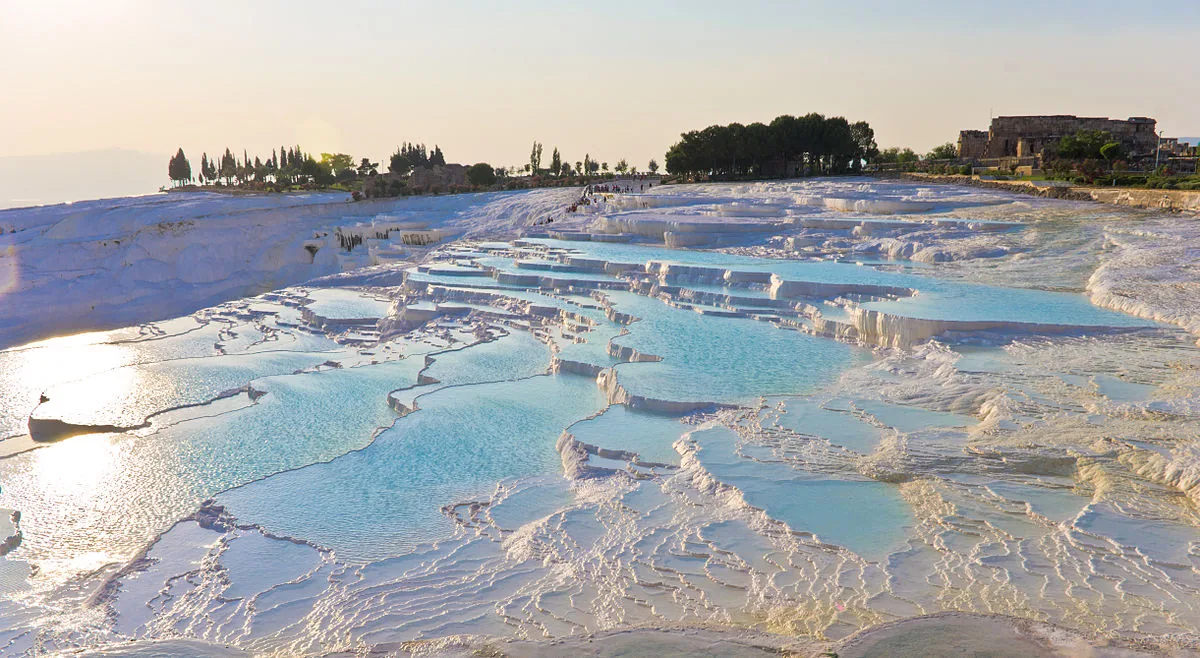
Stone staircases descend directly into the turquoise depths of the Mediterranean, inviting you to follow a path that has been underwater for eighteen hundred years.
About Kekova
The Lycians were a fiercely independent federation of city-states who perfected a unique style of funerary architecture, often carving tombs that imitated wooden houses. When the earth buckled during the Roman era, much of this artistry was submerged, effectively freezing the town of Dolchiste in time. During the Byzantine period, the site saw a brief revival as a naval station before the constant threat of Arab raids drove the remaining population into the fortified heights. Today, the ruins serve as a biological and historical sanctuary, where the lack of modern development has allowed the ancient stone to remain the dominant feature of the landscape.
What Kekova actually is
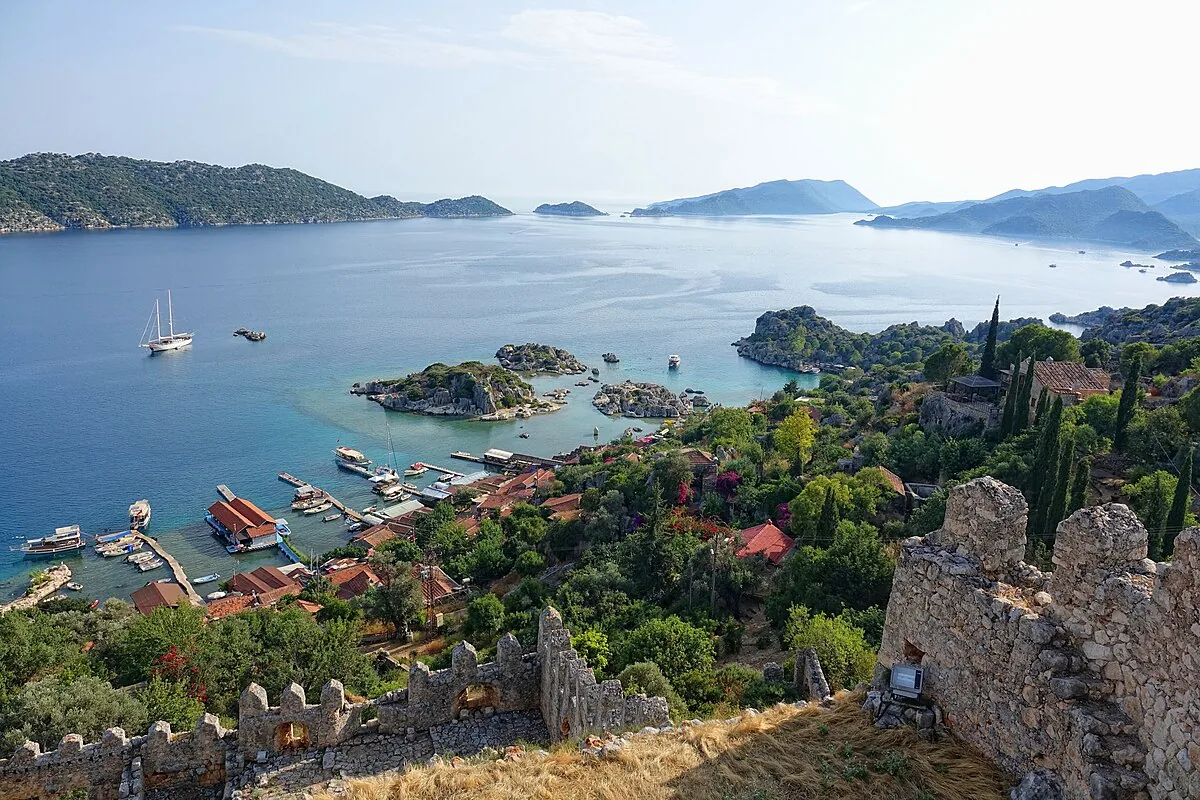
Crystal clear turquoise water laps against half-submerged stone staircases that lead to nowhere but the deep. Kekova is a ghostly geography where the Lycian coast decided to sink beneath the waves, leaving a trail of sunken rooms and silted harbors visible just inches below your boat's hull. The region encompasses a small island and the mainland villages of Kaleköy and Üçağız, forming a protected marine park where history feels fluid. Unlike the dry, dusty ruins of the interior, these remains are washed by the salt of the Mediterranean, their marble foundations now encrusted with sea life. It remains a place of profound maritime silence, accessible only by the rhythmic splash of an oarsman or the gentle hum of a slow-moving gulet.
“Crystal clear turquoise water laps against half-submerged stone staircases that lead to nowhere but the deep.”
Kekova, Turkey
Tectonic shifts during the second century AD turned
Tectonic shifts during the second century AD turned the thriving Lycian settlement of Dolchiste into a liquid graveyard. A series of violent earthquakes tilted the island of Kekova, plunging its packed harbor and residential quarters into the sea. While the inhabitants fled to the mainland, they left behind a remarkably preserved footprint of their daily lives. In the middle ages, the Knights of Rhodes occupied the towering castle that still sits atop the hill at Kaleköy, building their fortifications directly over ancient Lycian foundations. Across centuries, the area remained a quiet fishing outpost, its sunken treasures known only to local sponge divers until modern heritage laws prohibited swimming directly over the archaeological remains to prevent looting and erosion.
A sharp, invigorating scent of salt spray and crushed thyme from the rocky hillsides. The rhythmic slap of water against the side of the boat and the distant, high-pitched cry of gulls circling the Byzantine church ruins. Peering over the side of a glass-bottomed vessel, The geometric precision of Roman dockyards and the jagged outlines of amphorae wedged into the seabed. The intense, radiant heat of the Turkish sun reflecting off the white limestone, cooled only by the occasional sea breeze. The light at midday penetrates deep into the water, turning the submerged walls into a shimmering, turquoise maze. Climbing to the fortress at Kaleköy, the view opens up to reveal a coastline where stone sarcophagi sprout from the water like strange, ancient mushrooms.
Reaching this aquatic sanctuary requires
Reaching this aquatic sanctuary requires a journey to the harbor towns of Kaş or Demre, where daily boat tours depart for the island. People typically prefer the village of Üçağız as a starting point, as it sits directly on the bay and offers a more intimate connection to the local pace of life. Roads to these villages are winding and narrow, threading through the rugged Taurus Mountains with dramatic coastal drop-offs that demand a focused driver.
“Reaching this aquatic sanctuary requires a journey to the harbor towns of Kaş or Demre, where daily boat tours depart for the island.”
The Experience
A strange sense of vertigo as your boat drifts inches above a submerged doorway, realizing that people once walked through that space with dry feet. Audibly, the of the Mediterranean is a constant, soothing backdrop that makes the sight of the sunken city feel more like a dream than an archaeological visit. First, the tiny, colorful fish darting in and out of the cracks in the Roman masonry, reclaiming the city for the sea. The most striking moment occurs in the village of Kaleköy, where you must navigate through a cluster of ancient tombs to reach a cafe selling homemade peach ice cream. It is a rare place where the transition between the world of the dead and the world of the living is entirely seamless.
Why It Matters
Kekova is a rare example of a submerged landscape that remains accessible without the need for scuba gear. It provides a unique visual record of the seismic vulnerability of the Mediterranean basin and preserves a specific Lycian-Roman architectural hybrid. Culturally, it represents the resilience of coastal life, where communities have adapted to a sinking world for two millennia.
Why Visit
Visit Kekova because it is the only place in the world where you can take a boat trip through a living museum. While other ruins are static and fenced off, these are part of the sea. It offers a sense of discovery that feels much more like an adventure than a history lesson, especially when you spot a sarcophagus floating in the middle of a bay.
Insider Tips
- 1
Rent a private sea kayak from Üçağız to paddle along the edge of the sunken city at your own pace without the noise of a motor.
- 2
Climb to the very top of the Simena Castle to see the world’s smallest ancient theatre, which is carved directly into the bedrock.
- 3
Look for the single Lycian sarcophagus that stands alone in the water near the shore of Kaleköy; it is the most iconic photograph in the region.
- 4
Ensure your boat tour is licensed to visit the 'Sunken City' specifically, as strict conservation rules limit how close vessels can get to the northern shore.
- 5
Try the local sage tea (ada çayı) gathered from the hillsides, which is served in almost every waterfront guesthouse in the bay.