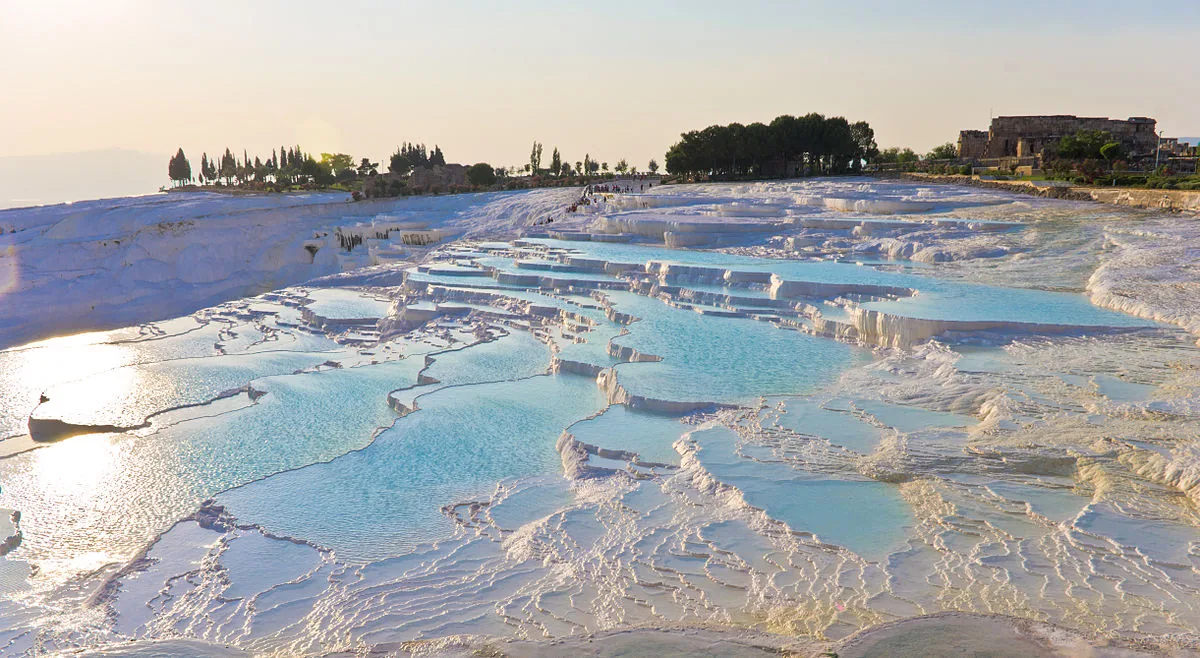
Gigantic stone heads, severed from their bodies by centuries of earthquakes, sit like silent spectators on a mountain peak to witness every sunrise since the reign of the Caesars.
About Mount Nemrut
Antiochus I was a master of political survival, navigating the treacherous waters between two superpowers. His kingdom was eventually absorbed by Rome, and his mountain sanctuary fell into a long slumber of neglect. The statues were originally eight to nine meters tall, seated on massive thrones with their names and the king's lineage inscribed in Greek on the back. These inscriptions provided the key to unlocking the history of Commagene, a kingdom that might otherwise have been a mere footnote in the annals of the ancient world.
What Mount Nemrut actually is
High above the Euphrates valley, the decapitated heads of gods gaze eternally across the Taurus Mountains, their stone eyes fixed on a horizon they have watched for two millennia. Mount Nemrut is less a mountain and more a colossal ego rendered in rock, the final resting place of a king who believed himself equal to the heavens. At the summit, a man-made tumulus of crushed limestone rises fifty meters high, flanked by east and west terraces where giant seated statues once stood in perfect alignment. Time and tremors have sent the heads of Apollo, Zeus, and Heracles tumbling to the gravel, where they sit now in a haunting, silent assembly. The scale of the ambition here is dizzying, a lonely sanctuary of wind and stone like the very edge of the world.
“High above the Euphrates valley, the decapitated heads of gods gaze eternally across the Taurus Mountains, their stone eyes fixed on a horizon they have watched for two millennia.”
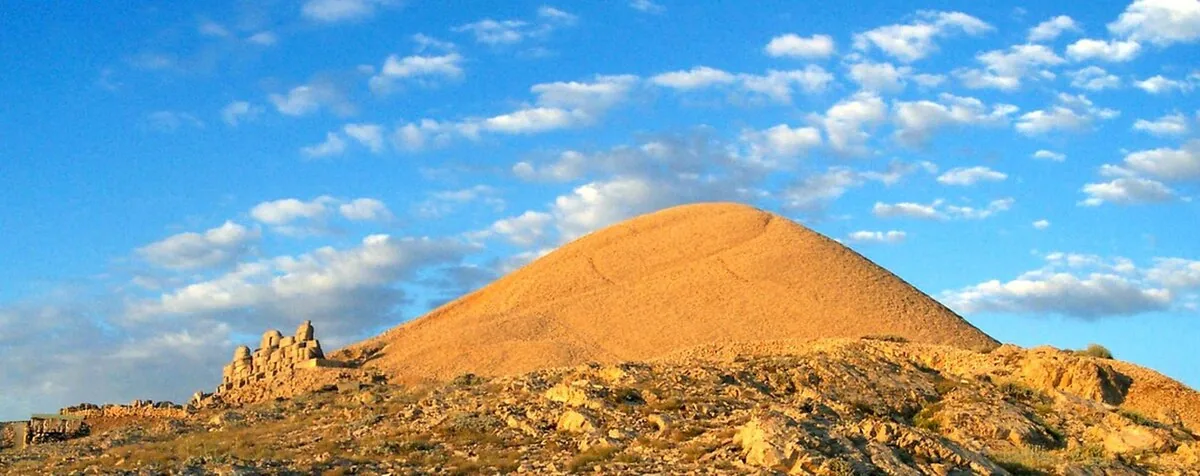
Mount Nemrut, Turkey
Commissioned by King Antiochus
King Antiochus I of Commagene, a small but wealthy buffer state between Rome and Parthia, commissioned this funerary complex in 62 BC. He traced his lineage back to both Alexander the Great and the Persian King Darius, and he intended this 'hierotheseion' to cement his place among the immortals. The site was forgotten for centuries until a German engineer stumbled upon it in 1881 while surveying routes for the Ottoman Empire. Archaeologists found that the king had blended Greek and Persian iconographies, creating a unique syncretic pantheon. Despite modern geophysical surveys, the actual burial chamber of Antiochus remains hidden deep beneath the millions of loose stones that form the tumulus, protected by the sheer weight of the mountain he built for himself.
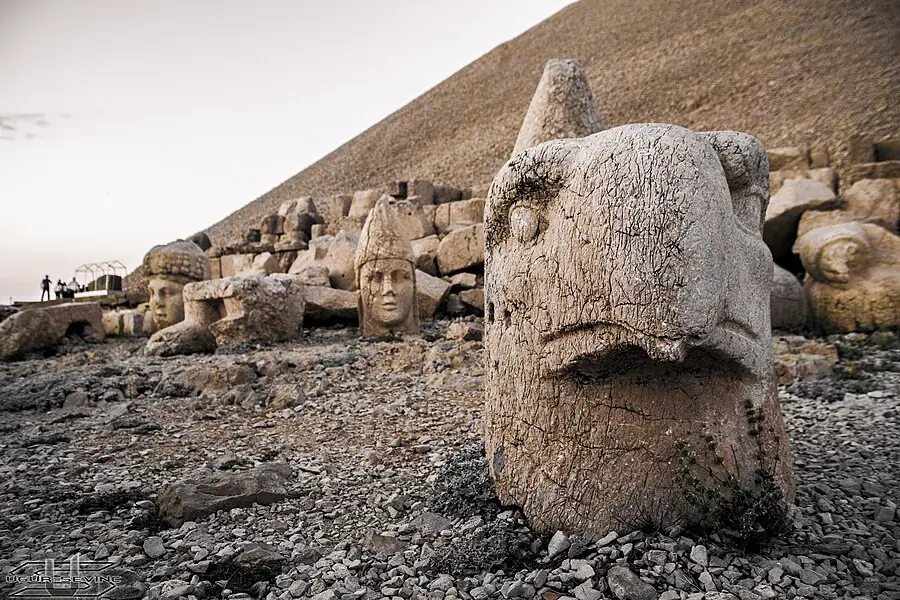
Mount Nemrut, Turkey
The air at 2,134 meters is thin and carries a persistent, biting chill even in mid-summer. From somewhere comes the low, mournful whistle of the wind whipping through the stone crevices and the crunch of loose limestone shifting under your boots. Watching the sunrise from the East Terrace, The grey stone gradually blush with a deep, bruised orange before turning a brilliant pale gold. The giant heads, some twice the height of a man, cast long and distorted shadows that stretch toward the valley floor. Something like a strange, heavy stillness here, as if the mountain is holding its breath. The silence is only broken by the distant, muffled voices of other travelers, which seem insignificant against the backdrop of such ancient, weathered majesty. Adıyaman or Kahta serve as the primary bases for excursions, with most visitors opting for a pre-dawn drive to catch the light. The road is steep and winds through desolate, beautiful highlands before reaching a car park near the summit. From there, a paved but punishingly steep twenty-minute hike leads you to the terraces. While public transport to the mountain is non-existent, local guesthouses in Kahta coordinate shared shuttles that leave at 3:00 AM to ensure you reach the gods before the sun does.
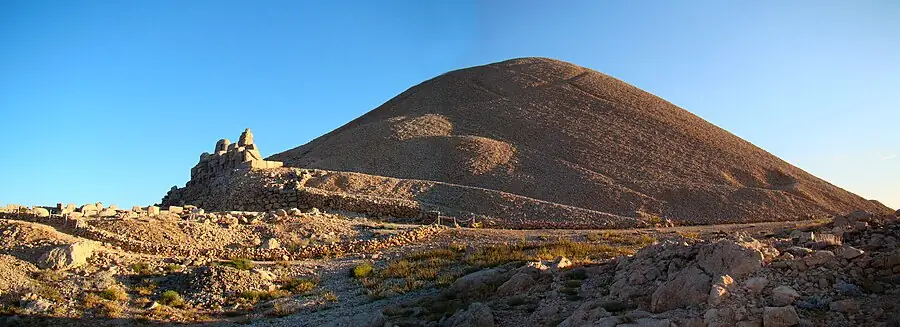
Mount Nemrut, Turkey
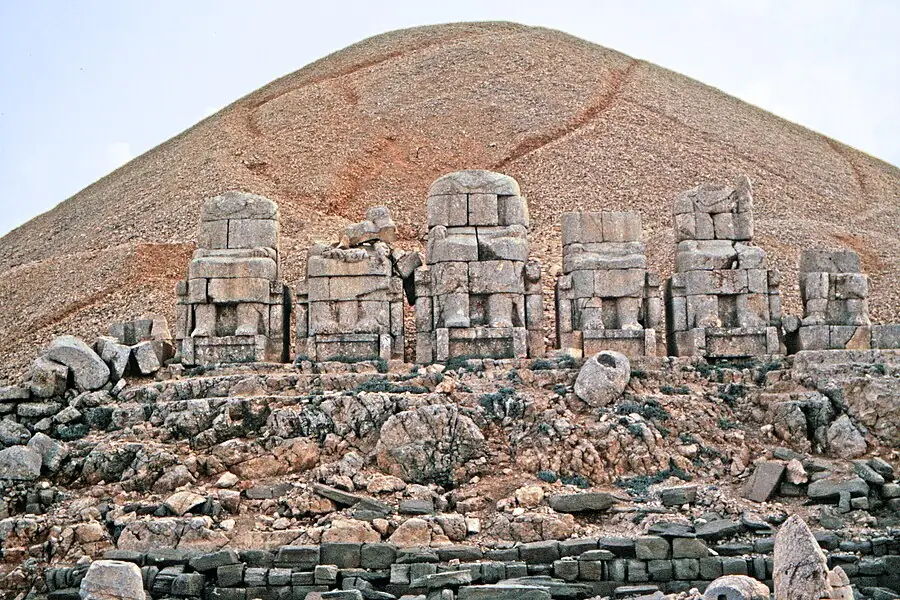
Mount Nemrut, Turkey
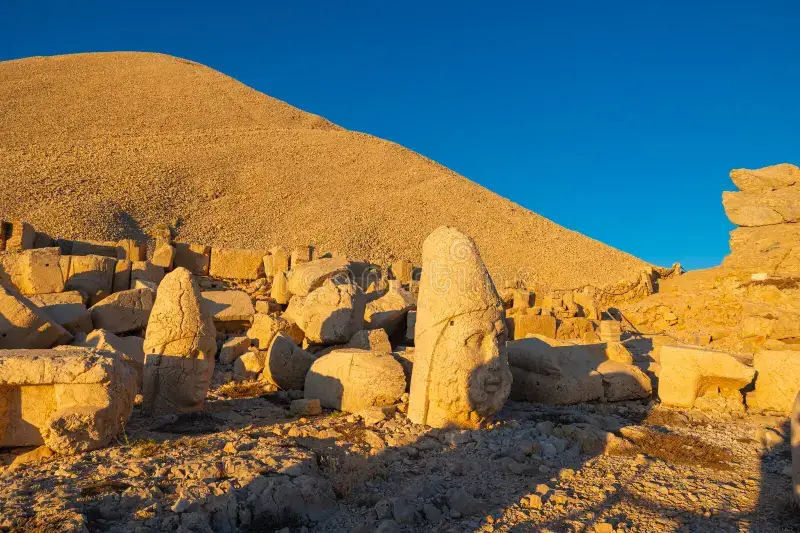
Mount Nemrut, Turkey
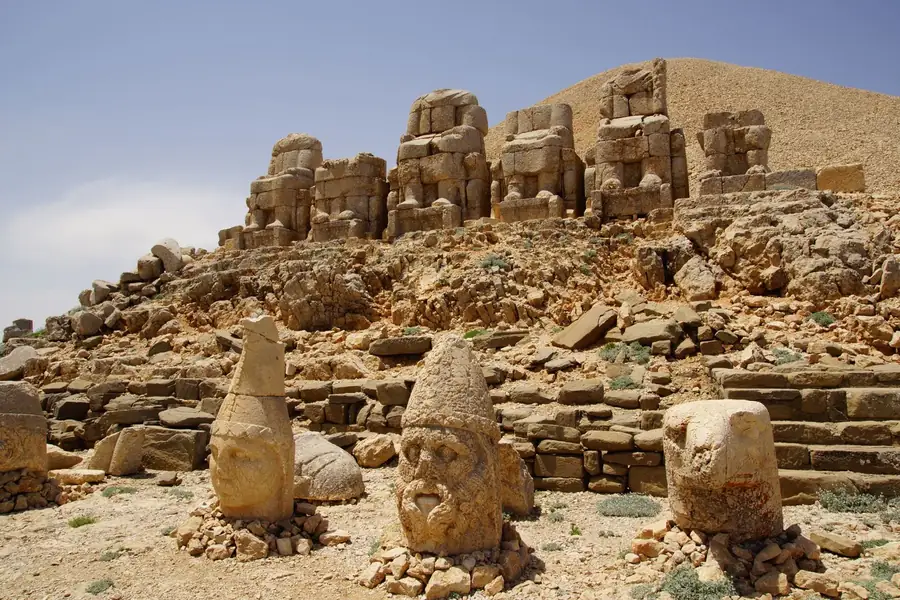
Mount Nemrut, Turkey
The Experience
First is the temperature plummet as you climb the final stairs, the stars above looking close enough to touch. The moment the sun breaks the horizon, the features of the statues, the hooked nose of the eagle, the stern brow of Zeus, become sharp and vivid against the dark sky. What you catch first is the weathered texture of the sandstone, pitted by two thousand winters of snow and ice. Just about everyone leave immediately after the sun is up, but staying an extra hour allows you to see the detail in the Persian-style reliefs of the king shaking hands with deities, a quiet shaped by a vanished diplomacy.
Why It Matters
Mount Nemrut stands as the most significant monument of the late Hellenistic period. It is a rare physical manifestation of the cultural bridge between the Greco-Roman West and the Persian East. Beyond its history, it is a masterpiece of ancient engineering, moving thousands of tons of rock to a remote peak without the aid of modern machinery.
Why Visit
Nemrut offers a solitude that is rare among ancient wonders. While the ruins of Ephesus or Rome are surrounded by modern life, this site remains isolated in a rugged landscape that hasn't changed since the king's burial. It is a place for those who want to stand face-to-face with the hubris of the past.
Insider Tips
- 1
Visit the West Terrace for sunset if you want a more solitary experience, as most crowds only come for the sunrise on the East Terrace.
- 2
Look for the 'Lion Horoscope' relief, one of the oldest known calendars in the world, which depicts a specific planetary alignment from 62 BC.
- 3
Wear sturdy hiking boots; the loose gravel on the paths can be surprisingly treacherous in the dim pre-dawn light.
- 4
Stop at the Arsemia ruins on the way back down to see the magnificent rock-cut inscription and the burial site of the king's father.