“For two thousand years, the world believed this city was a fairy tale until a man with a copy of the Iliad and a shovel proved that the legend was made of stone.”
About Troy
The earliest settlement at Troy dates back to the Bronze Age, around 3000 BC, making it one of the oldest known urban centers in the region. Its strategic location at the mouth of the Dardanelles allowed it to control trade between the Mediterranean and the Black Sea, leading to immense wealth and constant conflict. Alexander the Great and later the Roman emperors made pilgrimages here, believing themselves to be the descendants of the Trojan heroes. The Romans rebuilt the city as 'Ilium,' adding a theater and a senate building, before it was eventually abandoned in the Byzantine era as the coastline receded and the harbor silted up.
What Troy actually is
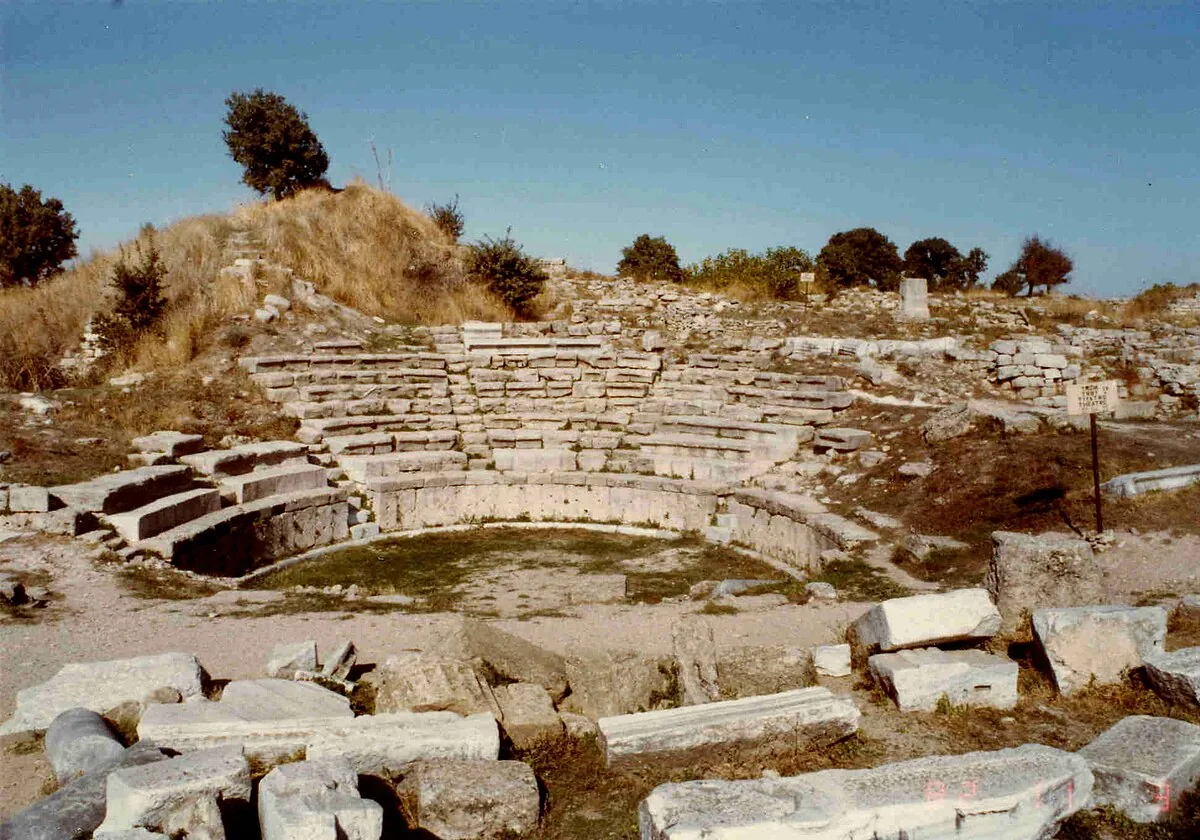
Standing on the windy mound of Hisarlık, the line between myth and reality becomes as blurred as the horizon where the Aegean meets the Dardanelles. Troy is not a single city, but a vertical museum of nine different layers of civilization, stacked one on top of the other like a giant archaeological cake. To the casual observer, it is a maze of dry stone walls and sun-bleached trenches, but to those who know the Iliad, it is the stage for Achilles, Hector, and the face that launched a thousand ships. The wind here is constant and fierce, the same 'windy Ilios' described by Homer nearly three thousand years ago. It is a site that demands the imagination of a poet and the patience of a scientist, offering a haunting glimpse into the birth of Western literature.
Standing on the windy mound of Hisarlık, the line between myth and reality becomes as blurred as the horizon where the Aegean meets the Dardanelles.
hill of Hisarlık, 1870
For centuries, Troy was considered a legend, a fictional city invented by Homer, until Heinrich Schliemann began excavating the hill of Hisarlık in 1870. Schliemann, a self-taught archaeologist with a flair for the dramatic, used the Iliad as his map and eventually discovered a trove of gold jewelry he dubbed 'Priam's Treasure.' While he famously (and destructively) dug straight through the actual layers of Homeric Troy to reach a much older level, his discovery proved that the legend had a physical foundation. Modern excavations have identified Troy VI and VII as the most likely candidates for the city of the Trojan War, showing evidence of massive fortifications, fire, and warfare dating back to approximately 1200 BC. The site has since become a pillar of global archaeology, revealing a continuous history of habitation spanning four thousand years.
Visiting Troy
The air is sharp and carries the scent of dry grass and salt from the nearby straits. The relentless, low-pitched whistle of the wind through the archaeological trenches and the distant lowing of cattle from the Scamander plain. Along the wooden boardwalks, The heat of the Anatolian sun radiating from the prehistoric stones. The physical layers of the city walls, the massive, sloping blocks of Troy VI giving way to the smaller, more desperate repairs of Troy VII. The light at sunset is particularly evocative, casting long shadows across the ramps where the Trojan Horse might have once stood. Near the top of the mound, looking out toward the sea, There is a strange, lonely connection to a past that is both deeply historical and entirely legendary.
The site is located about 30
The site is located about 30 kilometers south of the city of Çanakkale. Almost all visitors take a local minibus from the city center, a 45-minute walk through rolling farmland and olive groves. Çanakkale itself is reachable by ferry from the Gallipoli peninsula or by domestic flights and buses from Istanbul. The site is well-organized with a modern museum located just outside the main gate, which provides the necessary context for interpreting the complex layers of the ruins.
The site is located about 30 kilometers south of the city of Çanakkale.
The Experience
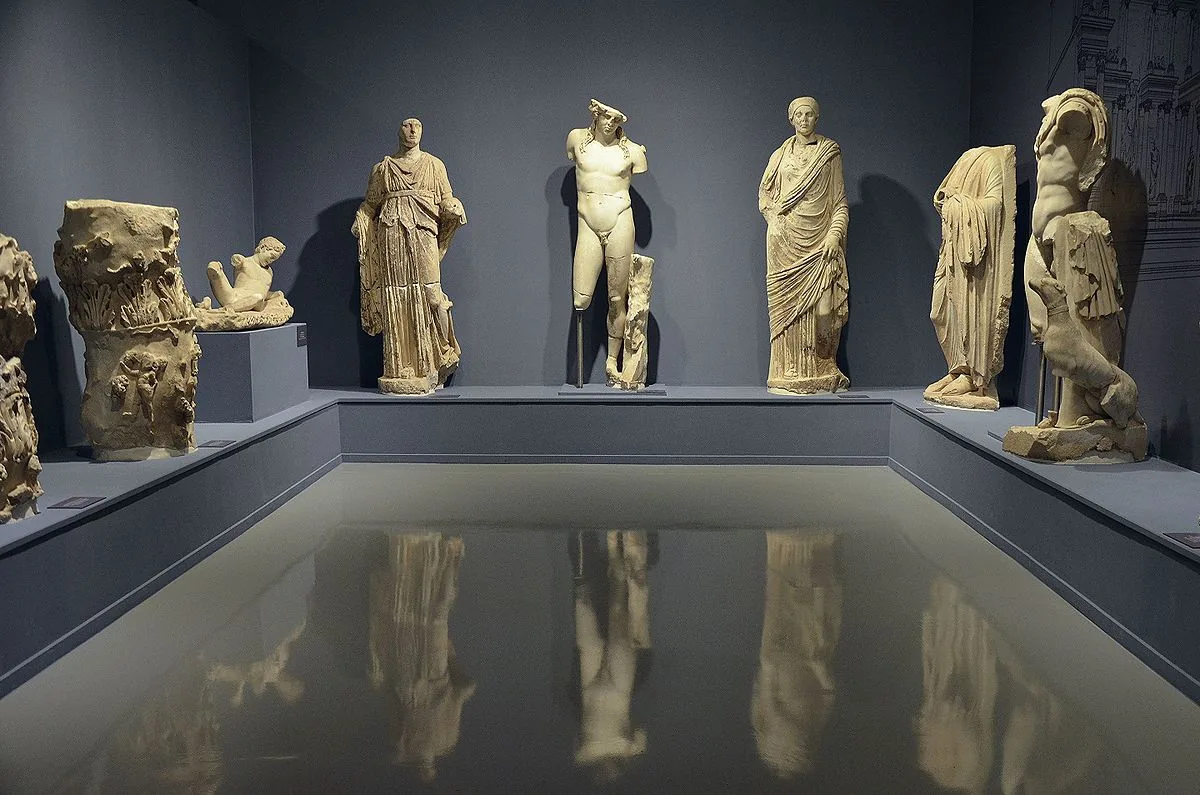
You feel a shiver of recognition as you stand before the 'Scaean Gate,' the spot where Homeric heroes supposedly fell in battle. The clatter of the wind is your constant guide, emphasizing the desolation of a city that was once the envy of the world. The small details, like the ancient drainage systems and the storage jars still half-buried in the earth, which bring the abstract legend down to a human scale. The most powerful moment is spent in the new Troy Museum, where the 'Gold of Troy' and the intricate statues are displayed with a modern elegance that honors the site's complexity. It is a place that requires you to look past the rubble and see the ghost of a civilization.
Why It Matters
Troy is the most famous archaeological site in the world due to its unique status as the intersection of history and epic poetry. It is a UNESCO World Heritage site that serves as the definitive record of the development of ancient civilizations in Anatolia and the Balkans. Humanly, it represents our enduring obsession with the story of the underdog and the tragic nature of war.
Why Visit
Visit Troy not for the ruins themselves, but for the story they tell. While it lacks the pristine marble columns of Ephesus, it offers a deeper, more atmospheric connection to the roots of human storytelling. It is the only place where you can walk through the very landscape that inspired the foundational text of Western civilization.
✦ Insider Tips
- 1
Visit the Troy Museum before the archaeological site; the artifacts and 3D reconstructions are essential for visualizing what the various layers once looked like.
- 2
Don't spend too much time on the replica wooden horse at the entrance; the real 'horse' is the strategic geography you see from the top of the walls.
- 3
Look for the 'Sloping Wall' of Troy VI; it is the most impressive piece of engineering on the site and was designed to be climb-proof.
- 4
Hire a local guide at the gate; the ruins are notoriously difficult to interpret without a professional to point out where one century ends and another begins.