Brazil's national dish requires an overnight soak, four hours of slow cooking and every cut of pork imaginable. The result is an ink-dark bean stew that the entire country eats on Wednesdays and Saturdays.
About Feijoada
Brazil's national dish and its greatest communal meal: a black bean stew slow-cooked for hours with every conceivable cut of salted pork (trotters, ears, tail, ribs, sausage) until the broth turns ink-dark and unctuous; served on Wednesdays and Saturdays with rice, collard greens, farofa and a slice of orange; a UNESCO candidate for intangible heritage.
The National Dish
Brazil's feijoada is not a simple bean stew. It is a serious, multi-hour event that requires preparation from the night before (the beans soak overnight) and a cast of preserved pork cuts that would make a charcutier pause: trotters, ears, tail, smoked ribs, salty short loin, chouriço and black sausage. All of it slow-cooks together for hours in the same pot of black beans until the broth turns ink-dark and unctuous, the beans absorb the rendered fat and the meats soften to falling tenderness.
“All of it slow-cooks together for hours in the same pot of black beans until the broth turns ink-dark and unctuous, the beans absorb the rendered fat and the meats soften to falling tenderness.”
The Service
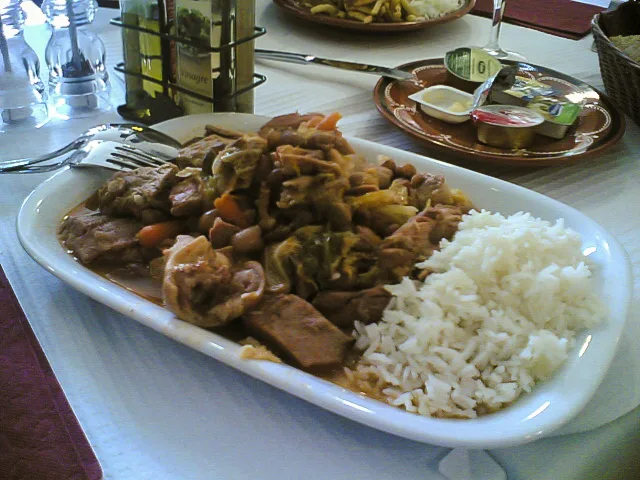
Feijoada arrives at the table in a heavy clay pot still bubbling at the edges, served over white rice with collard greens braised with garlic (couve), crumbled farofa (toasted manioc flour to add to the broth), a slice of orange to cut the richness and a caipirinha to start the meal. The orange is not a garnish, the acid is essential to how the dish sits in the stomach. It is traditionally eaten on Wednesdays and Saturdays across Brazil, the official feijoada days.
Origins
The dish was historically associated with enslaved people, who received the offal cuts their enslavers discarded and slow-cooked them into something extraordinary. This history is now acknowledged as central to understanding feijoada's significance, not just as food but as cultural survival.
What to Expect
The feijoada arrives in a clay pot that is still simmering when it reaches the table. The diner ladles it over white rice, adds the collard greens, crumbles in the farofa and squeezes the orange over everything. A first bite is heavy, smoky, deeply savoury and slightly fatty. The orange has a chemical effect on the richness. The dish is consumed in larger quantities than anticipated.
Why Try It
Feijoada tells the story of Brazil: the African heritage, the Portuguese pork tradition, the improvisation of people who created extraordinary food from what they were given. Eating it properly, with all the accompaniments, on a Saturday, is one of the most specifically Brazilian experiences available.
Insider Tips
- Go on a Saturday, the city's best restaurants prepare feijoada once a week and Saturday is it.
- The farofa should be added by the spoonful throughout the meal, not just at the beginning.
- A caipirinha made with real cachaça (not vodka) is the correct aperitif. Drink it before, not during.
- The orange slice is not decorative. Eat it between bites, the acid cuts the heaviness of the beans.
- In Rio, the Academia da Cachaça and Confeitaria Colombo are reliable addresses.