PEI's cold, iron-rich tidal waters produce the sweetest rope-cultivated mussels in North America, steamed with white wine and garlic, eaten with bread that's really just an excuse to drink the broth.
About PEI Mussels
Prince Edward Island's cold, fast-moving tidal waters produce the sweetest, plumpest blue mussels on earth: rope-cultivated, grit-free, and steamed open in white wine, garlic and herbs; served with crusty bread to catch the broth; PEI exports 80% of Canadian mussel production.
The Mussel
Prince Edward Island's cold, iron-rich tidal waters produce rope-cultivated blue mussels widely regarded as the finest in North America: grit-free because they grow on suspended ropes rather than the seabed, plump and reliably sweet. The island accounts for the large majority of Canada's mussel production, and the industry is central to its economy. The province takes its mussels seriously.
“The island accounts for the large majority of Canada's mussel production, and the industry is central to its economy.”
The Preparation
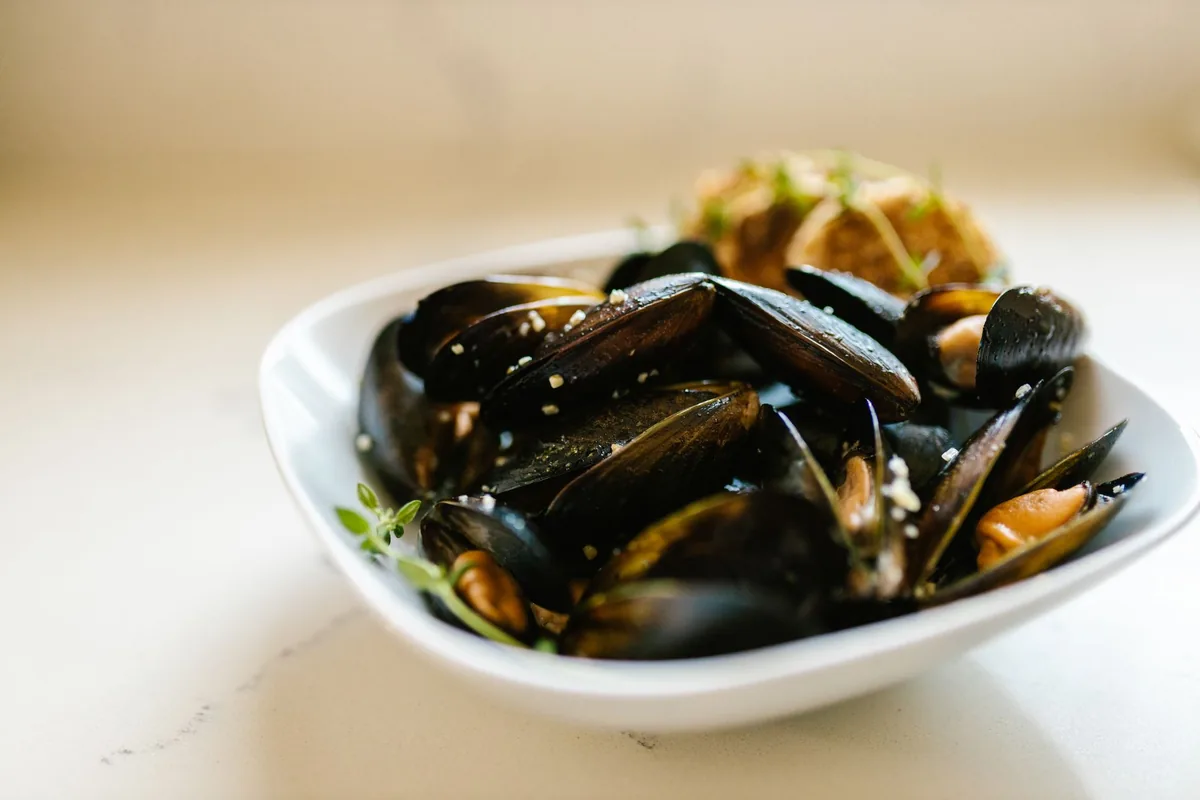
The standard treatment is simple because the mussels need no help: steamed open in white wine with shallots, garlic and herbs, served in the pot with crusty bread alongside. The broth, mussel liquor mixed with wine and aromatics, is the best part, to be mopped up with bread until the bowl is clean. Anything more elaborate tends to get in the way.
Rope-Grown and Clean
Rope cultivation is the detail that sets PEI mussels apart, keeping them off the sandy bottom so they stay free of grit and grow an even, tender meat. The cold North Atlantic water slows their growth and concentrates their sweetness. Harvested year-round but at their plumpest in the warmer months, they are about as sustainable as shellfish farming gets.
A Local Argument
PEI mussels make the clearest case for eating locally in Canada: a cheap, abundant, sustainably farmed ingredient that no import can match. Eaten on the island, fresh from the surrounding waters with a glass of local white, they are at their absolute best. The bread is really just an excuse to finish the broth.
What to Expect
The mussels arrive in a black pot, still steaming, the shells open and glistening. The broth is clear and golden and smells of the ocean. The diner eats the mussels fast, they cool quickly, and between each one a piece of bread is torn and submerged in the broth. By the end there is no broth left and too much bread has been used.
Why Try It
PEI mussels are the clearest argument for eating locally and seasonally in Canada: a cheap, abundant, sustainably farmed ingredient that produces results that no import can match. Eating them on PEI, with a glass of local white wine, is the definitive version.
Insider Tips
- Eat in the summer and autumn, peak mussel season when the flesh is at its plumpest.
- Ask for extra bread specifically for the broth, the broth is better than the mussels.
- The Confederation Trail is PEI's cycling route, several farm restaurants along it serve mussels from the surrounding waters.