Bogotá's golden potato-chicken soup gets its character from three potato varieties and one irreplaceable herb, guascas. Without it, the dish is a different soup entirely.
About Ajiaco
Bogotá's defining soup: a thick, golden stew of three types of potato (creamy papa pastusa, waxy papa criolla and thickening papa sabanera), chicken and the herb guascas that gives it its uniquely earthy, hay-like fragrance; served with cream, capers and corn on the cob; a Bogotano's cure for altitude and cold alike.
Bogota's Soup
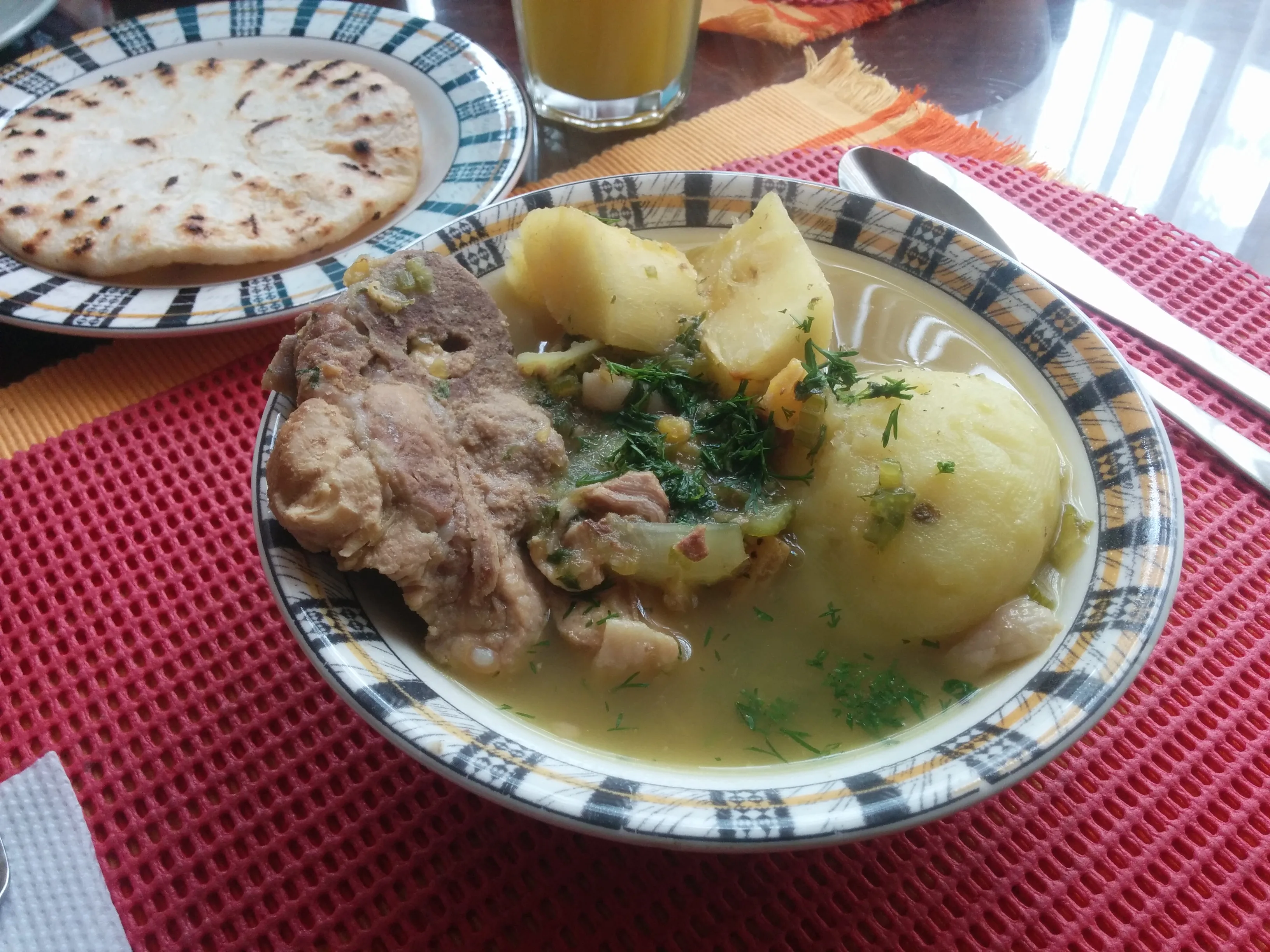
Ajiaco is the defining dish of Bogota, a thick golden soup of chicken and three kinds of potato, scented with the herb guascas. Papa criolla, a small yellow potato, all but dissolves to thicken the broth, while sturdier varieties hold their shape. It is served with corn on the cob, then finished at the table with cream and capers.
“Ajiaco is the defining dish of Bogota, a thick golden soup of chicken and three kinds of potato, scented with the herb guascas.”
The Herb Guascas
What makes the soup unmistakably Bogotano is guascas, a wild herb with a faintly earthy, hay-like aroma that grows across the Andes. Without it the soup is simply chicken and potato; with it, the dish takes on the character that locals recognise instantly. It has no real substitute, which keeps ajiaco tied to its region.
The Three Potatoes
The use of several potato varieties is deliberate rather than incidental, each one doing a different job. The waxier potatoes give body and bite, while the yellow criolla breaks down into the broth and turns it thick and golden. Colombia's highland potato diversity is the foundation the whole dish is built on.
How It Is Served
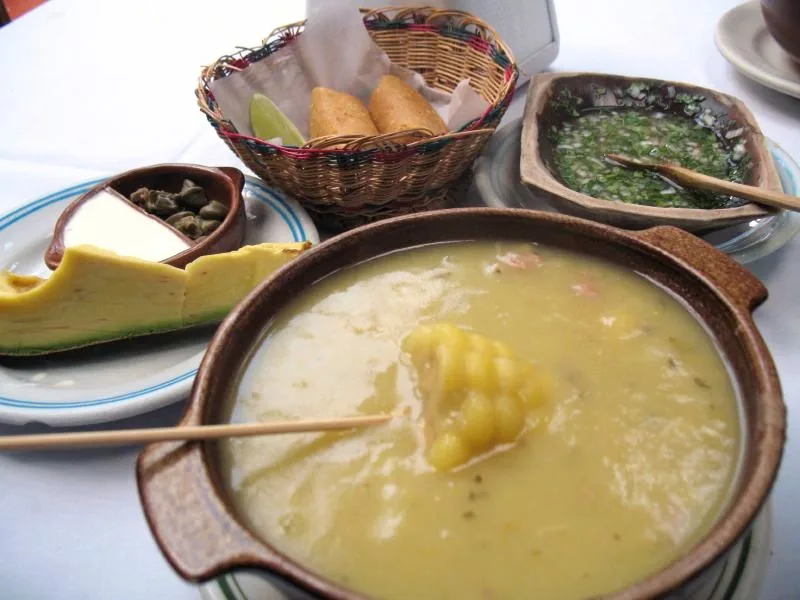
Ajiaco arrives steaming, often with a cob of corn standing in the bowl, and is dressed at the table to taste. A spoon of cream rounds the broth, capers add a briny lift, and avocado is served alongside. Warming and substantial, it suits the cool, high-altitude climate of a city sitting above 2,600 metres.
What to Expect
The ajiaco arrives in a clay bowl, the broth thick and gold, the corn cob standing upright in the centre. Cream is added and stirred in. The capers are added last. The fragrance of guascas is present in every spoonful.
Why Try It
Ajiaco is the taste of Bogotá's high-altitude climate: warming, substantial and specific to a city at 2,600 metres.
Insider Tips
- La Puerta Falsa in Bogotá's La Candelaria (since 1816) is the most historic address.
- The cream and capers are served separately, added at the table to taste.
- Eat it at lunch, not dinner. It's a midday dish.