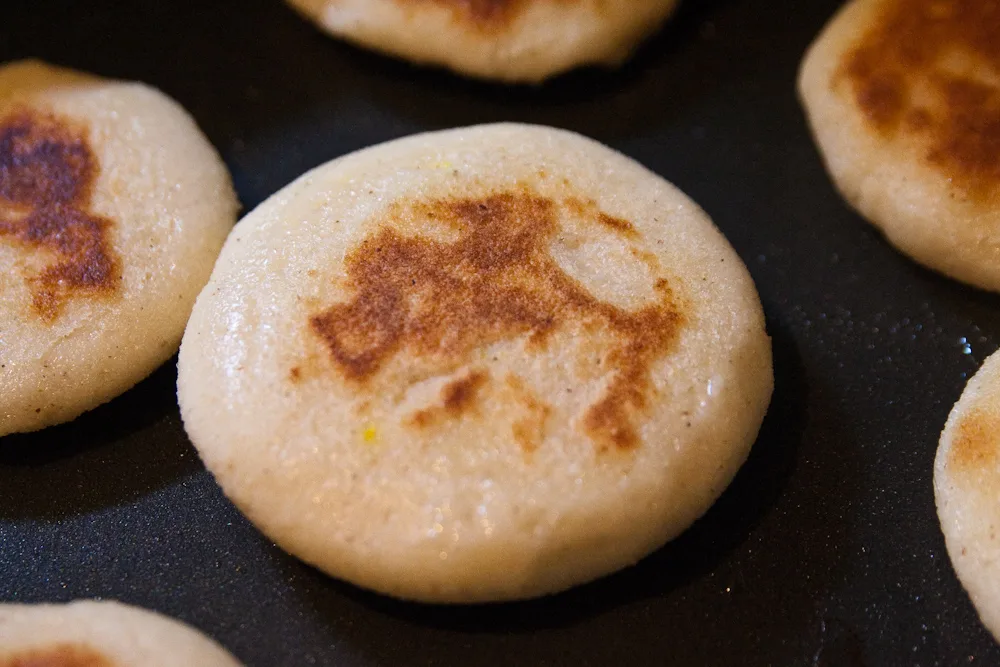
"Colombia's corn patty appears at every meal in every region: plain, stuffed with cheese, or fried with an egg inside. Both food and utensil simultaneously."
About Arepas
Colombia's daily bread: a griddle-cooked patty of ground white or yellow corn masa, eaten plain, stuffed with cheese, egg or shredded beef; every region has its version: paper-thin in Bogotá, thick and cheesy in Antioquia, oversize in Tolima; consumed at every meal from breakfast to late night as both food and utensil.
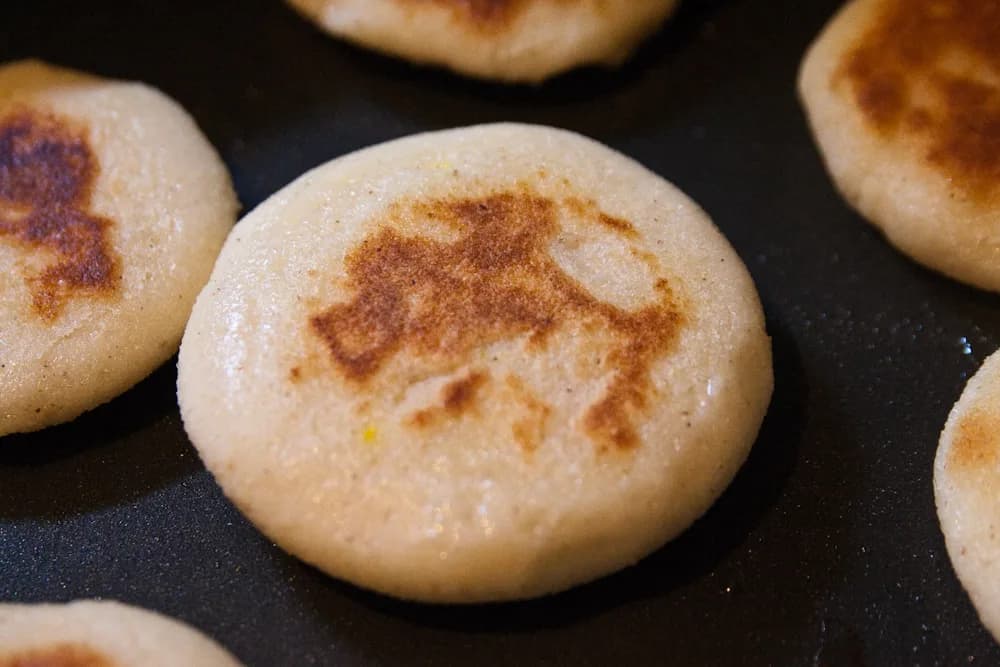
Arepas, a staple of Colombia's cuisine
Daily Bread
The arepa is Colombia's daily bread, a round patty of ground corn griddled, baked or fried until both faces form a golden crust. It appears at breakfast, lunch and dinner, plain or split and filled, and serves as both food and edible utensil. Versions range from thin and simple to thick and stuffed, depending on the region.
Regional Versions
No single arepa speaks for the whole country. Bogota and the highlands favour thin, plain arepas; Antioquia makes a thicker, milder one, often topped with butter and cheese; the Caribbean coast fries the dramatic arepa de huevo with a whole egg sealed inside. The arepa de choclo, made with sweet corn and oozing cheese, is a favourite across the coffee region.
Masa and Method
The arepa starts from corn, either fresh-ground or made from pre-cooked corn flour mixed with water and salt into a soft masa. The dough is patted into discs and cooked on a griddle, sometimes finished on embers for a smoky crust. Simplicity is the point, since the flavour comes from the corn itself.
Food and Utensil
The arepa's role at the table is practical as much as culinary, a warm disc to split, fill or use to scoop up eggs, beans and cheese. It is cheapest, most everyday food, and Colombians abroad name it among the things they miss most. Eaten hot off the griddle, it is a different and far better thing than the same arepa cold.
What to Expect
At a Bogotá market the arepa arrives plain and hot from the griddle. The diner splits it and adds butter. In Medellín it arrives stuffed with cheese already melted inside.
Why Try It
Arepas reveal Colombia's corn geography, the same grain prepared entirely differently depending on which valley locals inhabit.
✦ Photo Gallery
Insider Tips
The arepa de choclo with cheese in Antioquia is the most delicious version.
Eat them hot, cold arepas are a fundamentally different experience.
Arepa de huevo from Cartagena street stalls is worth seeking out.