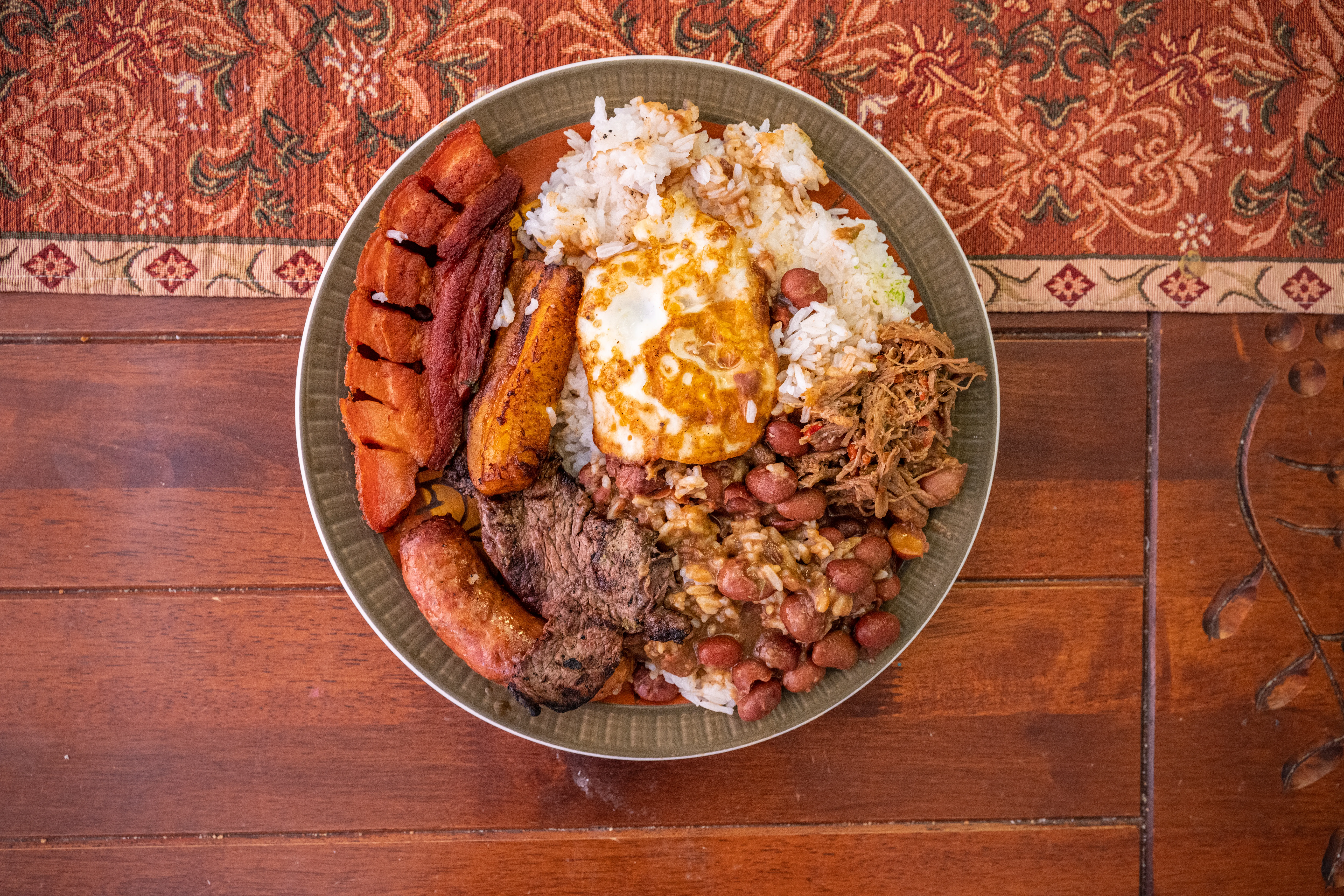
"Colombia's most formidable plate: ten components including beans, rice, chicharrón, egg, chorizo and arepa, built to fuel a mountain farmer for a full day."
About Bandeja Paisa
Colombia's most formidable plate: a platter built to feed a coffee-region labourer: red kidney beans, white rice, chicharrón (fried pork rind), ground beef, chorizo, fried egg, sweet plantain, black pudding, avocado and an arepa; banned by no cardiologist who has tasted it; the Antioquia region's proudest export.
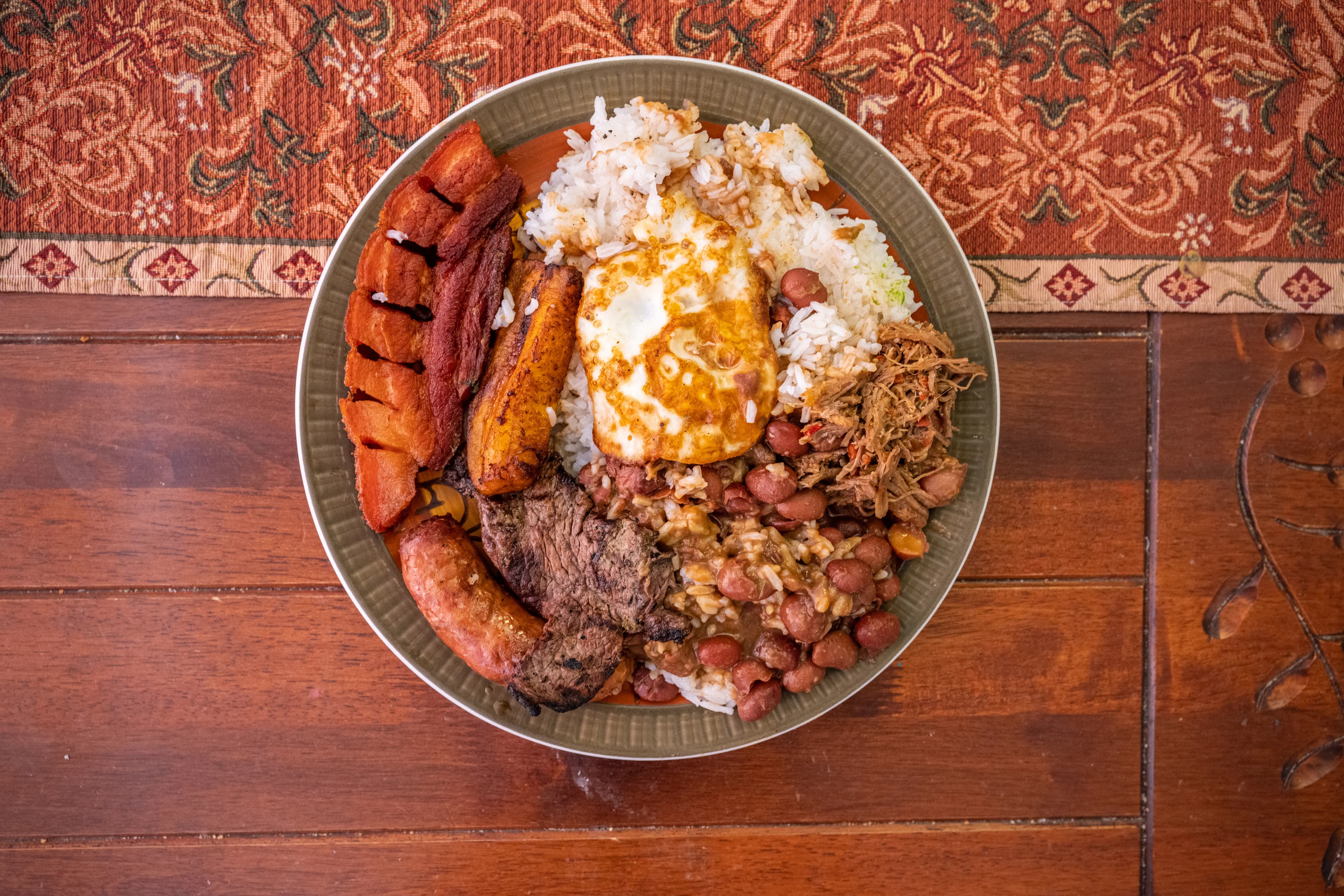
Bandeja Paisa, a staple of Colombia's cuisine
Antioquia's Plate
The bandeja paisa is Colombia's most formidable platter, a spread from the Antioquia coffee region that piles up to ten components on a single tray: red beans, white rice, ground beef, chicharron, chorizo, fried egg, sweet plantain, black pudding, avocado and an arepa. It was built to fuel a farmworker, the arriero, through a long day in the mountains. It is a meal measured by abundance.
The Chicharron
The textural anchor of the plate is chicharron, a slab of fried pork belly with crackling skin and soft fat beneath. Against the many soft, starchy elements, its crunch and richness give the platter its centre of gravity. Freshly fried, it is the piece most diners reach for first.
The Components
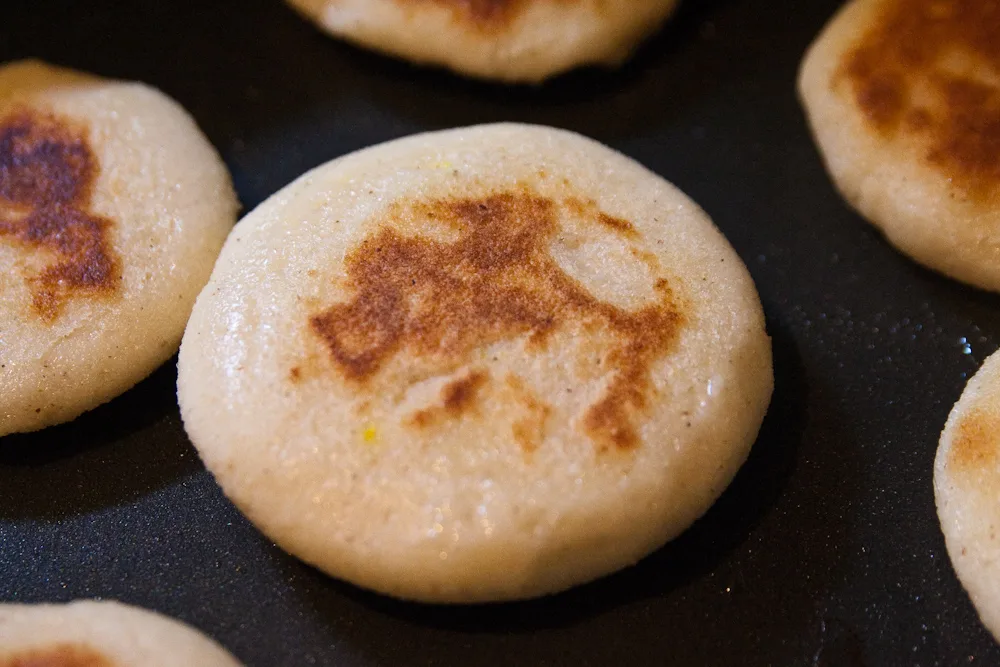
Each part plays a role: the beans, cooked with a tomato-and-onion hogao, are the soul of the dish; the rice and plantain provide bulk and sweetness; the egg is broken over everything; the avocado and arepa cool and round it out. There is no set order, and the pleasure is in moving between contrasts across the tray.
Origins in the Mountains
The bandeja paisa grew out of the food of the paisa region's farmers and muleteers, who needed calories for hard physical work at altitude. What began as practical sustenance became a point of regional pride and a fixture of Medellin's restaurants. It remains lunch food by necessity, far too substantial for the end of the day.
What to Expect
The bandeja paisa covers the entire table when it arrives. A bite of chicharrón, a forkful of beans and rice, the egg broken over everything, are consumed in no particular order.
Why Try It
Bandeja paisa is Antioquia's proudest export, the region's agricultural abundance expressed as a single overwhelming plate.
✦ Photo Gallery
Insider Tips
Eat it at lunch. It's too substantial for dinner.
The beans should be cooked with hogao (tomato-onion sauce), plain beans are wrong.
Restaurante El Rancho in Medellín serves one of the most reliable versions.