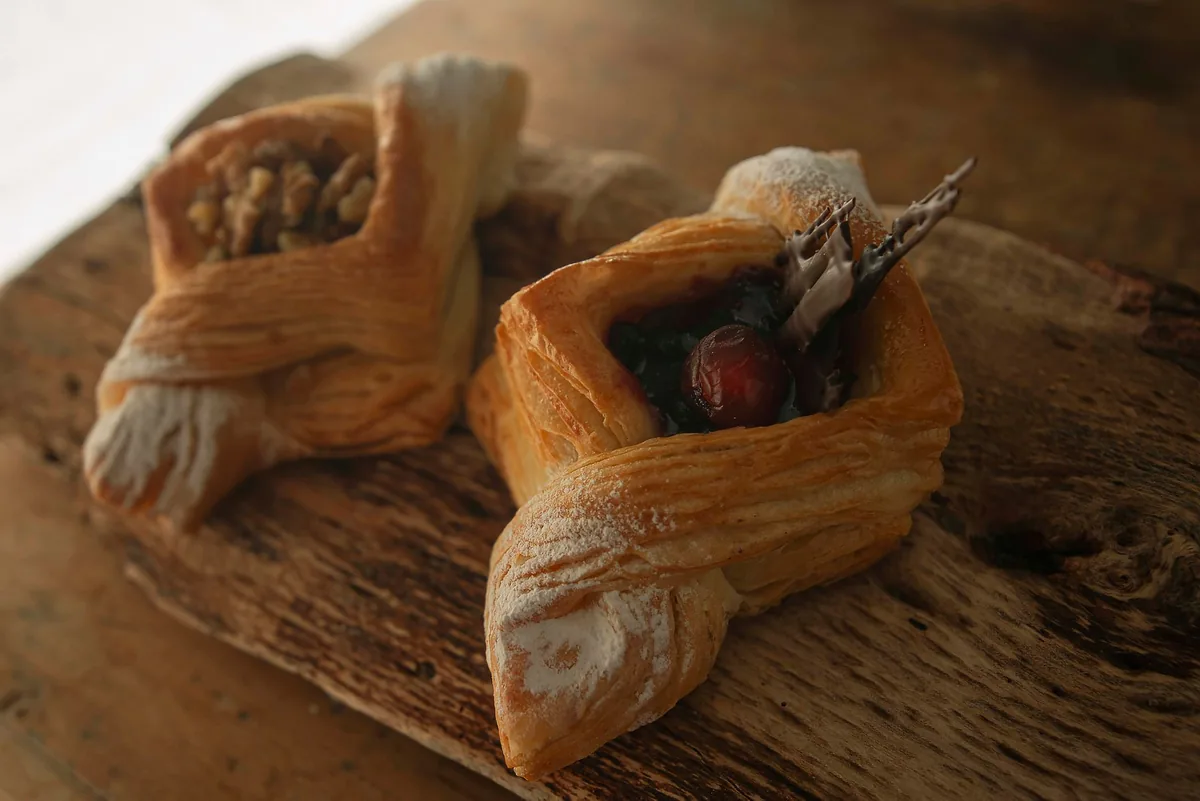
"The Danes took a technique from Viennese bakers in the 1840s and made it more buttery and more precise, the Danish pastry is now more Danish than anything Austrian."
About Danish Pastry (Wienerbrød)
Denmark's greatest export: a laminated dough of flour, butter and yeast folded 27 times to create 729 paper-thin, buttery layers that puff and crackle from the oven; the Danes learned the technique from Viennese bakers in the 1840s and then perfected it; the kanelsnegl (cinnamon snail) and spandauer (custard envelope) are the canonical forms.
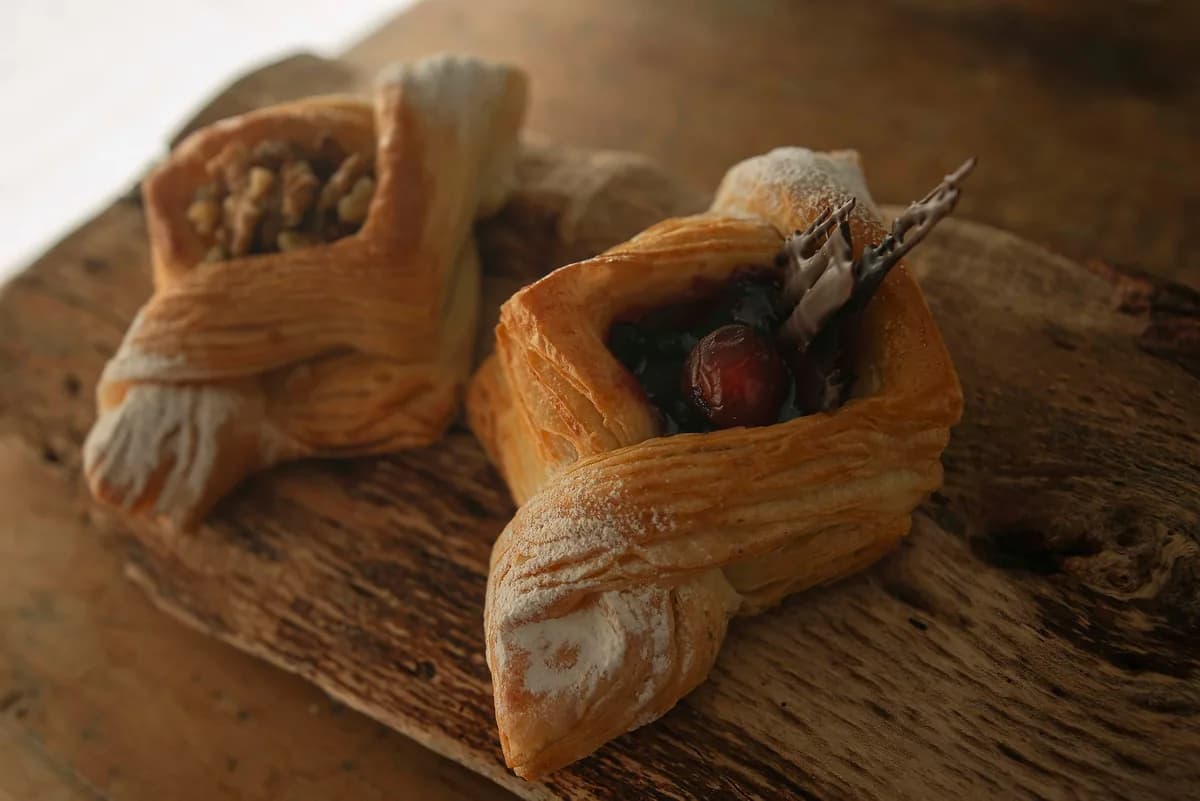
Danish Pastry (Wienerbrød), a staple of Denmark's cuisine
A Borrowed Technique
Denmark's most famous baked export, wienerbrod, is Austrian in origin. Viennese bakers arrived during a labour dispute in the nineteenth century and brought laminated pastry with them. The Danes took the method and made it their own, more buttery and more precisely layered, with forms that do not exist in Viennese baking. The name, meaning Vienna bread, quietly admits the borrowing.
The Lamination
Danish pastry is built by folding cold butter into yeasted dough through repeated turns, creating dozens of paper-thin alternating layers. In the oven, water in the butter steams and separates them into a honeycomb of crisp sheets that puff and crackle. The smell of it from a Copenhagen bageri early in the morning is one of the city's reliable pleasures.
The Forms
Where the French keep to a few shapes, the Danes built a whole vocabulary: the kanelsnegl, a cinnamon snail; the spandauer, a custard-filled envelope; the kringle, a large pretzel-shaped pastry; and many more, often finished with remonce, icing or nuts. Each has its own filling and fold, and bakeries are judged on the whole range.
Bageri Culture
The bageri is a fixture of Danish daily life, and the city treats pastry with the seriousness Vienna reserves for coffee. The best is eaten within hours of baking, when the layers still shatter and the butter is most fragrant. A borrowed technique became, over generations, an entirely Danish tradition.
What to Expect
At a Copenhagen bageri the kanelsnegl, a cinnamon snail, is still slightly warm from the oven, with laminated layers visible at the cut edge, hundreds of thin sheets compressed into a centimetre of pastry. The cinnamon sugar filling has caramelised at the edges. The butter smell is the first thing that hits, followed by the flavours of the pastry. This pastry is consumed in three bites.
Why Try It
Danish pastry in Copenhagen is one of the clearest examples of how a borrowed technique becomes, over generations, an entirely original tradition. The city's bageri culture is serious about its pastry in the same way Vienna is serious about its coffee.
✦ Photo Gallery
Insider Tips
Go to a bageri early, 7 to 9 a.m. is when the pastry is freshest.
The kanelsnegl (cinnamon snail) and spandauer (custard envelope) are the canonical forms.
Hart Bageri in Copenhagen is widely considered the best contemporary Danish pastry address.