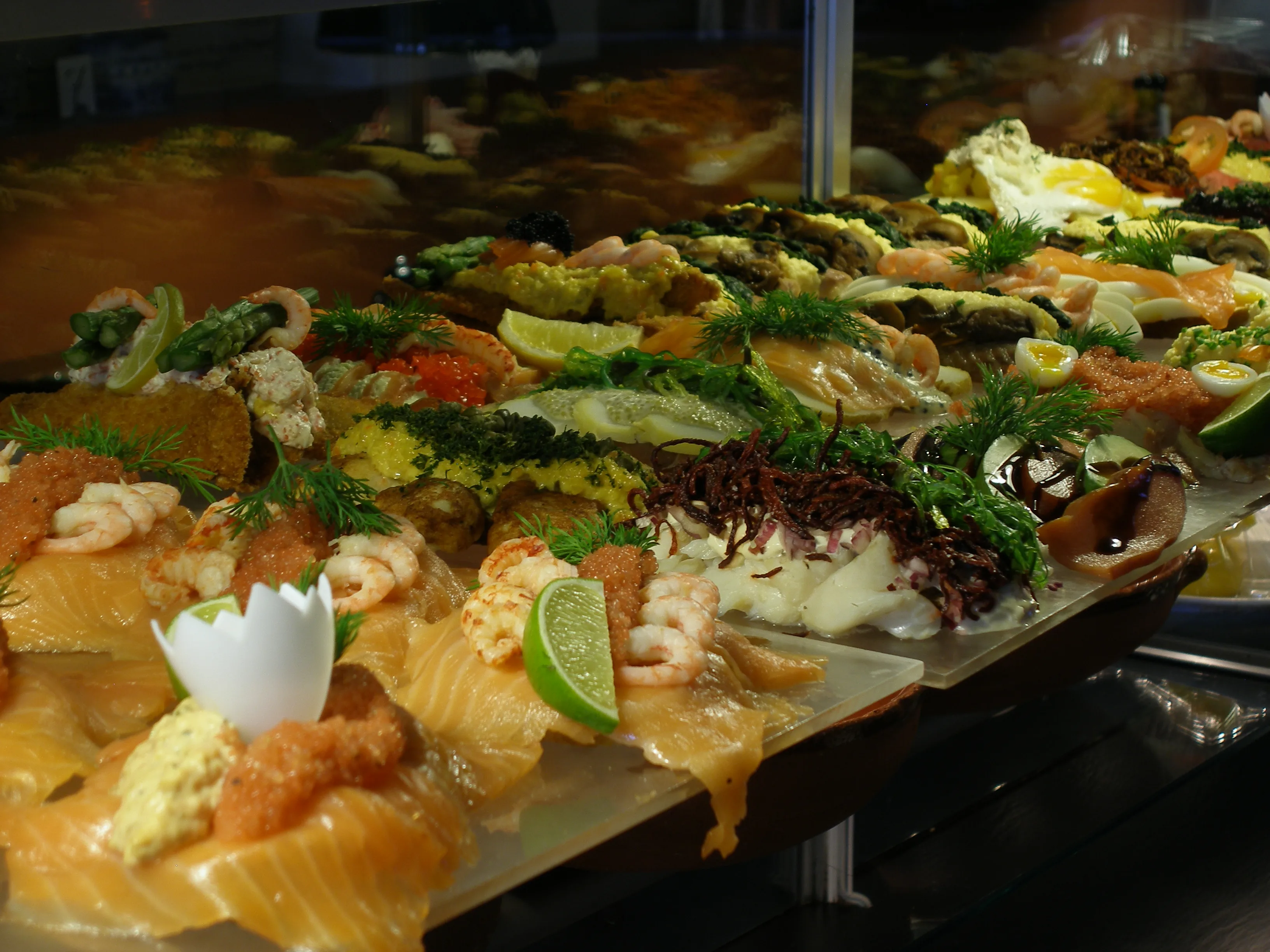
"Denmark's open-faced sandwich is eaten with a knife and fork, in a specific sequence, herring always first, in restaurants that have been serving them since 1877."
About Smørrebrød
Denmark's open-faced sandwich elevated to art form: a slice of dense, dark rugbrød (sourdough rye bread) spread with butter and layered with toppings that follow strict rules of colour, texture and flavour: herring with red onion, roast beef with remoulade and fried onion, or shrimp with lemon and dill; eaten with a knife and fork, never in the hand.
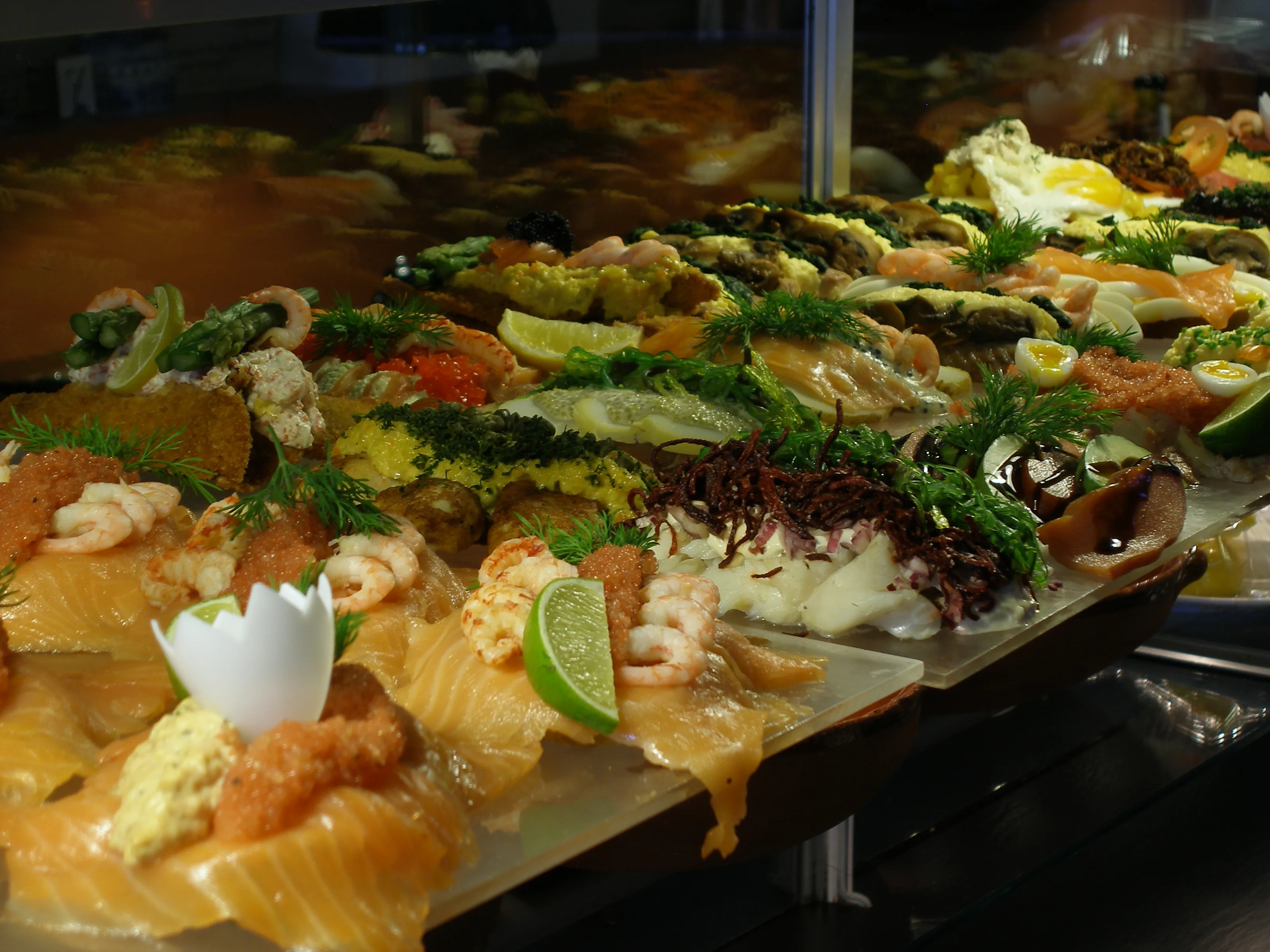
Smørrebrød, a staple of Denmark's cuisine
The Open Sandwich
Smorrebrod is Denmark's open-faced sandwich, and it is no quick lunch but an exercise in precision. A slice of dense, sour rye bread is spread with a thick layer of butter and topped with combinations that follow a strict visual and flavour logic. Each one is considered complete in itself and is not modified. It is as much composition as cooking.
The Toppings
The classic toppings are fixed and balanced: pickled herring with raw onion and capers; roast beef with crisp fried onion and remoulade; cured salmon with dill and lemon; liver pate with pickled beet and cornichon; cold shrimp with mayonnaise and dill. Each is built to a particular harmony of flavour, colour and texture. The dense rye beneath holds it all together.
The Protocol
Smorrebrod is eaten with a knife and fork, never picked up in the hand, and in a fixed order: herring first, then other fish, then meat. The sequence is part of the tradition rather than a suggestion. It is a deliberate, unhurried way of eating that belies the sandwich's simple appearance.
A Lunch Institution
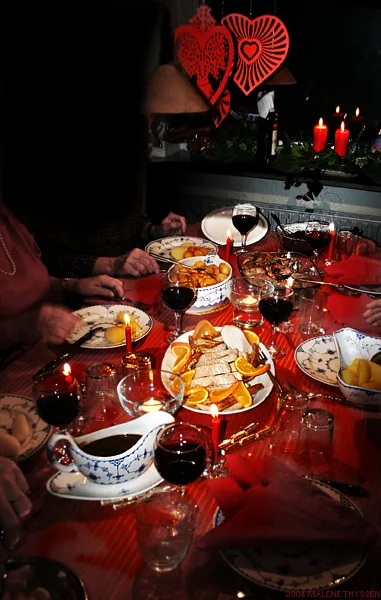
Copenhagen's smorrebrod restaurants are formal lunch institutions, some serving for well over a century, with menus that change daily by what is freshest and service of silver cutlery and linen. Despite looking like simple bread and topping, this is anything but casual food. It is one of the most precise and characteristic expressions of Danish cooking.
What to Expect
At Schønnemann in Copenhagen the smørrebrød arrives in sequence: the herring first, the dense rye bread glistening with butter beneath, then the shrimp, then the roast beef. Each combination is complete in itself. The flavours are clean and precise. The textures change between each order. The diner eats slowly, in the way the format demands.
Why Try It
Smørrebrød provides access to Danish food culture's most distinctive quality: a precision and seriousness applied to what looks like simple bread and topping. The history of Danish preserved fish, the dairy tradition, and the specific choice of toppings add a layer of pleasure to the eating experience for locals and visitors alike.
✦ Photo Gallery
Insider Tips
Schønnemann on Hauser Plads (since 1877) is the most historic address and worth booking.
Eat herring first, then fish, then meat, the classic sequence exists for flavour reasons.
Ask the waiter to recommend the daily specials, the menu changes based on seasonal availability.