Denmark's Christmas roast is judged entirely on the crackling, the pork rind scored, salted for 24 hours and roasted until each line puffs into a shattering bubble.
About Flæskesteg
Denmark's Christmas centrepiece and most beloved roast: a pork joint with the rind scored in tight lines, salted and roasted until the rind transforms into the crispiest, most audibly shattering crackling in Scandinavian cooking; served with red cabbage, caramelised potatoes and brown gravy; national pride rests on the quality of the svær (rind).
The Crackling
Denmark's Christmas roast is decided by its crackling. A joint of pork, loin or shoulder with the rind on, is scored in tight parallel lines and salted a day ahead so the surface dries, then roasted hot until the rind puffs into a lattice of shattering bubbles. Danish svaer is held up as the finest crackling in Scandinavian cooking, and few argue otherwise.
“Danish svaer is held up as the finest crackling in Scandinavian cooking, and few argue otherwise.”
The Method
The technique is exacting and unrushed. Deep, even scoring opens the rind; a long salting draws out moisture; and high heat at the right moment sets the crackle. Skip the drying time and the skin turns chewy rather than crisp. Cooks guard their timing as the difference between a good roast and a great one.
The Christmas Table
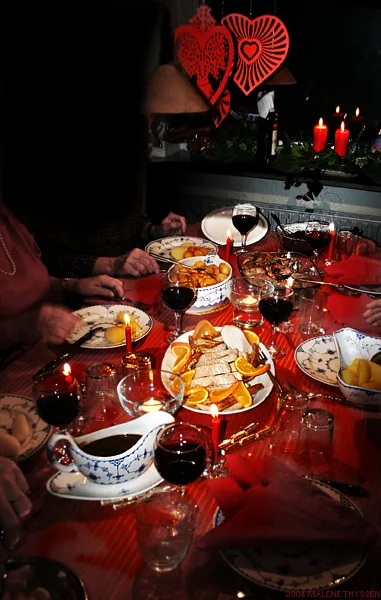
Flaeskesteg anchors a full Danish Christmas spread: red cabbage braised with apple, caramelised brown potatoes glazed in sugar and butter, plain boiled potatoes and a dark gravy from the pan. The meal takes hours and stretches across the afternoon. Each side is traditional and, to a Danish cook, non-negotiable.
A Festive Pork
For all the elaborate sides, the roast lives or dies on its skin, and the first shard of crackling, eaten before the meat is even carved, is the cook's reward. It is one of Northern Europe's great pork dishes and a clear sign of Scandinavian attention to process. Eaten in a Danish home at Christmas, in its proper context, it is at its best.
What to Expect
The Flæskesteg arrives from the oven and the crackling is tapped with a knife before carving. It sounds like breaking glass. The first piece off the rind is eaten before the meat is even sliced, the Christmas cook's reward. The rest of the meal is excellent. The crackling is the reason.
Why Try It
Flæskesteg is the centrepiece of the Danish Christmas table and one of Northern Europe's great pork dishes. The significance of crackling to Danish cooks, including the technique, salting timing, and heat, reveals something about Scandinavian attention to process.
Insider Tips
- The scoring and salting must happen 24 hours before roasting. This is the non-negotiable preparation step.
- Eat it in a Danish home if at all possible, since the Christmas context is inseparable from the dish.
- Brunede kartofler (caramelised potatoes) are the essential side, don't skip them for the rødkål alone.