Brittany's buckwheat galette (savoury, with ham and egg) and its white flour crêpe (sweet, with salted caramel butter) are two different foods cooked on the same griddle.
About Crêpes Bretonnes
The two faces of Breton tradition, buckwheat galettes for savoury (ham, egg and melted Comté in a fold) and white flour crêpes with Breton salted butter caramel for sweet; made on a round bilig griddle by a crêpière who has mastered the single-spread technique; Quimper's crêperies set the standard; eaten as a full meal.
Two Faces
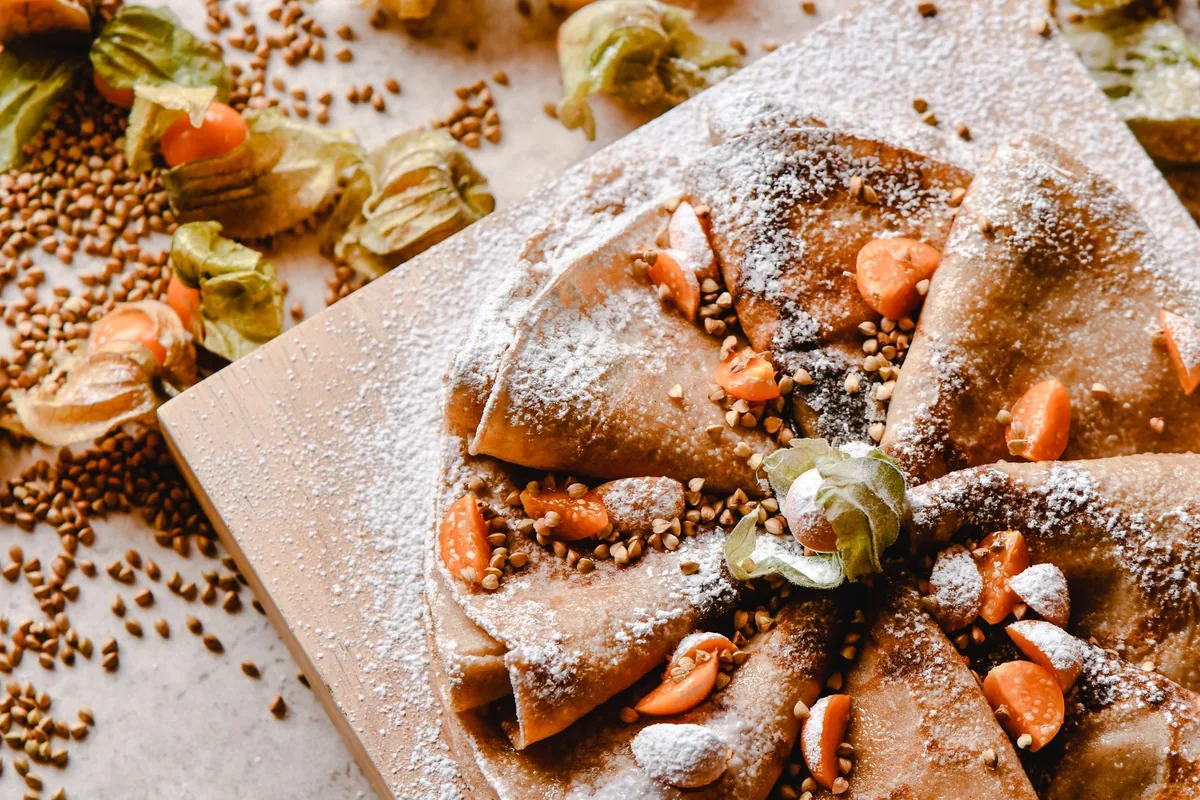
Brittany's crepe tradition has two distinct halves. The savoury galette is made from buckwheat flour, sarrasin, and filled with ham, cheese or egg as a full meal. The sweet crepe is made from white wheat flour and folded around sugar, jam or salted-butter caramel as dessert. They share a griddle but are genuinely two different foods.
“The savoury galette is made from buckwheat flour, sarrasin, and filled with ham, cheese or egg as a full meal.”
The Bilig
Both are cooked on a flat round griddle called a bilig, the batter spread in one smooth motion with a wooden rake, the rozell. The skill lies in reading the heat: too hot and the edges burn before the centre sets, too cool and the crepe sticks and tears. A practised crepiere makes it look effortless.
The Buckwheat
Buckwheat is the key to the savoury galette and to Brittany's identity on a plate. It is not a true wheat and grew well in the region's poor soils, giving the galette its nutty, faintly bitter flavour and darker colour. That local grain is what separates a Breton galette from an ordinary filled pancake.
Cider and Custom
In Brittany the order is fixed by habit: a buckwheat galette for the main course, a sweet crepe for dessert, both washed down with local cider served in a bowl-like cup. Salted Breton butter, beurre demi-sel, runs through both, sharpening the caramel and enriching the galette. It is regional French food at its most rooted in a single place.
What to Expect
At a Quimper crêperie the galette arrives folded into a square with ham and egg visible through the fold. The buckwheat gives a slightly nutty bitterness that wheat flour doesn't. The sweet crêpe follows, the salted butter pooled in the centre.
Why Try It
Breton crêpes are the argument for regional French food over Parisian French food, specific to a place, specific to ingredients grown there.
Insider Tips
- In Brittany: galette for lunch, crêpe for dessert. This is the correct order.
- Salted Breton butter (beurre demi-sel) is structurally superior to unsalted in both applications.
- Crêperie Anna in Quimper is widely considered among the best in Finistère.