France's most debated delicacy, fattened duck liver set in a terrine, eaten with Sauternes, is one of Western cooking's most complete flavour pairings.
About Foie Gras
France's most debated delicacy: the fattened liver of a duck or goose, cooked en terrine and sliced to reveal a smooth, ivory-gold slab of extraordinary richness and mineral depth; spread on toast with Sauternes; a product of artisan tradition in the Périgord and Gascony; France's most legally protected food product.
The Terrine
Foie gras en terrine is the classical French luxury, a fattened duck or goose liver gently cooked and set in an earthenware mould, then sliced cold to reveal an ivory-gold slab of great richness. Spread on toasted brioche with a glass of sweet Sauternes, it makes one of Western cooking's most complete pairings, the wine's sweetness meeting the liver's unctuous fat.
“Foie gras en terrine is the classical French luxury, a fattened duck or goose liver gently cooked and set in an earthenware mould, then sliced cold to reveal an ivory-gold slab of great richness.”
The Southwest
France's Southwest, Perigord and Gascony, is the heartland of foie gras, and its markets sell it fresh through the autumn and winter season. The towns of Perigueux and Sarlat are known for their stalls, and buying direct from a farm is part of the local tradition. The product is tied closely to that particular landscape and its long practice.
Ways to Serve It
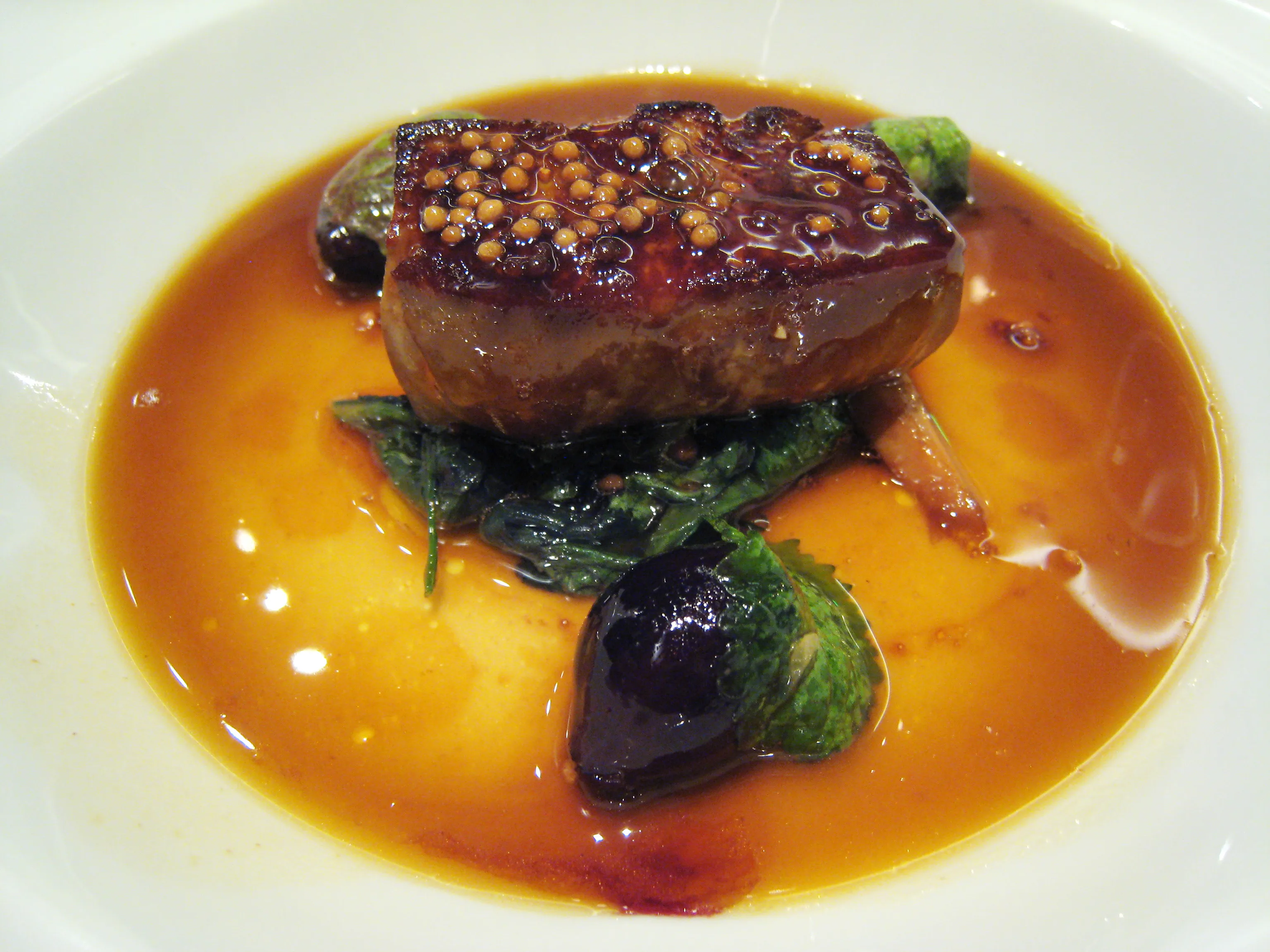
Beyond the cold terrine, foie gras is served mi-cuit, lightly cooked and meltingly soft, or poele, a seared hot slice that caramelises at the edges and collapses in the middle. Each form shows a different side of the same ingredient, from cool and firm to hot and yielding. The hot version is often paired with fruit to cut the richness.
The Pairing and the Debate
The classic match is a sweet wine, Sauternes above all, whose honeyed acidity balances the fat where a dry white would only make the liver taste coarser. Foie gras is also among the most debated foods in Europe over the ethics of its production, a discussion that travels with the dish. Served cold but eaten near room temperature, it remains the clearest expression of the Perigord table.
What to Expect
The terrine slice is cold and smooth, the colour of old ivory. It is spread on warm brioche. The Sauternes is poured. The diner eats. The fat melts before the diner finishes chewing. The sweetness of the wine and the mineral richness of the liver align.
Why Try It
Foie gras is the clearest expression of the Périgord's food identity, a product of a specific landscape, a specific breed and a specific tradition.
Insider Tips
- The Périgord Noir region's markets in October-December are the best places to buy fresh foie gras.
- Sauternes is the correct wine. A dry white wine makes the liver taste coarser.
- Serve cold, eat at room temperature, take it out of the refrigerator 15 minutes before serving.