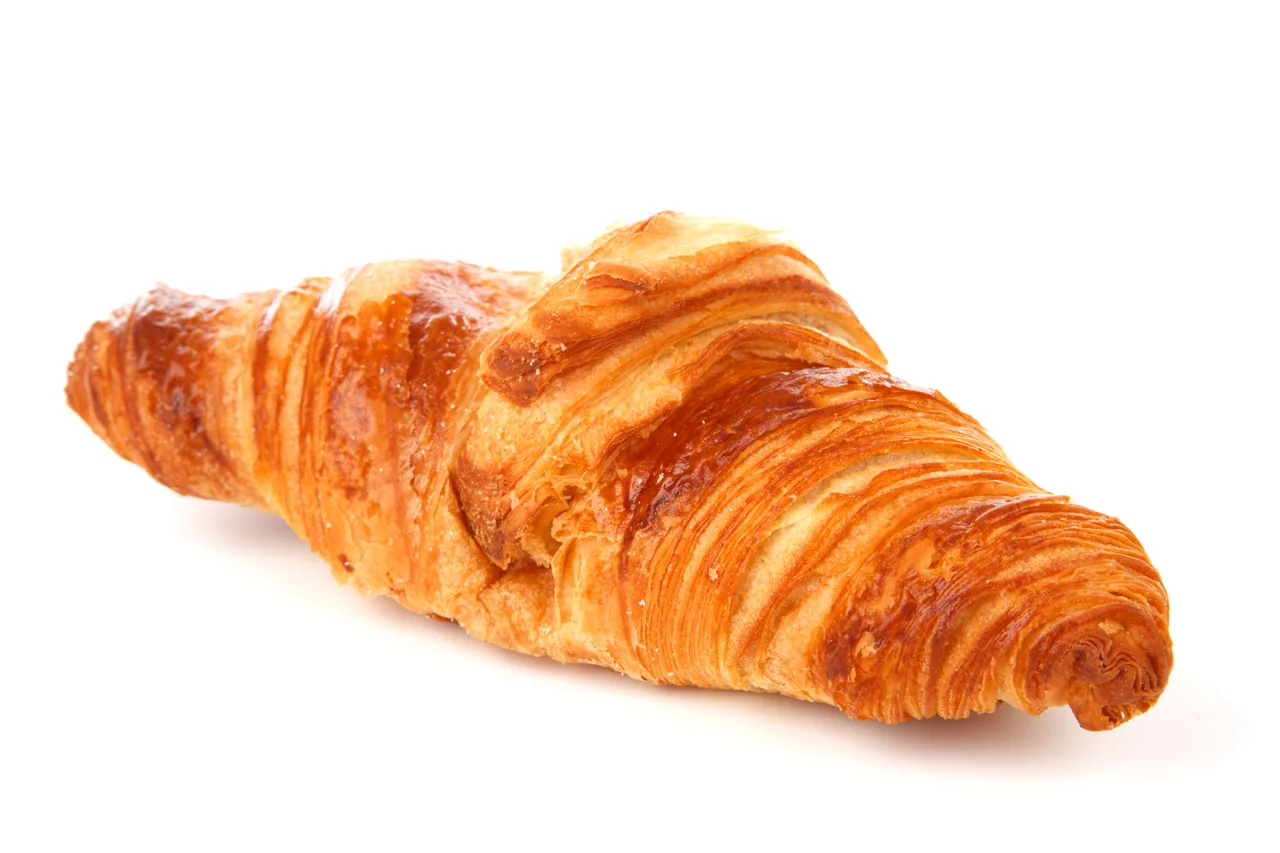
"A proper Parisian croissant takes hundreds of hand-folded butter layers and up to three days. In the traditional convention the straight shape signals all butter, while the curved crescent once meant margarine."
About Croissant
The greatest achievement of laminated pastry: 27 to 729 alternating layers of dough and butter folded by hand, shaped into a crescent, proved overnight and baked until each layer separates into a honeycomb of amber, shatteringly crisp exterior and a molten, buttery interior; the best in Paris require 72 hours of work before they reach the window.
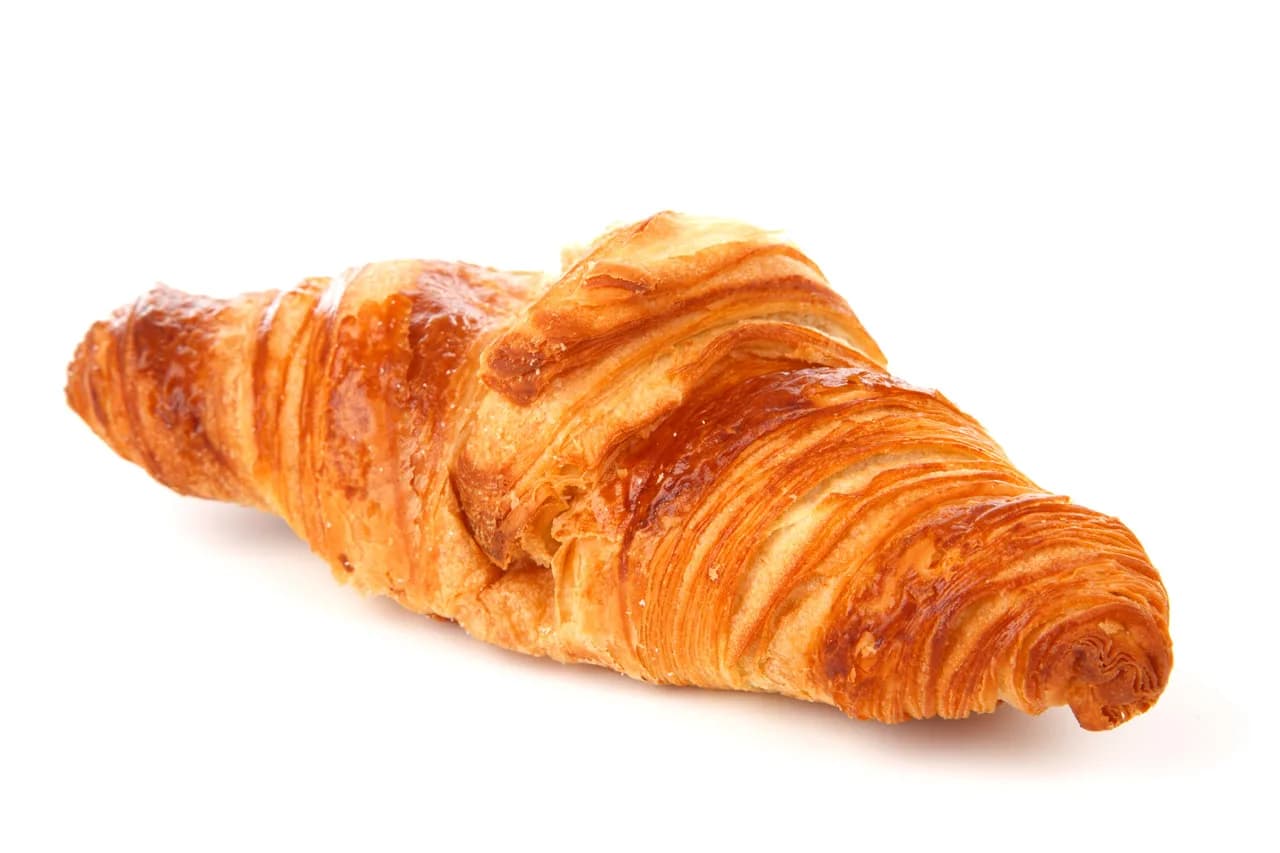
Croissant, a staple of France's cuisine
The Lamination
A proper croissant is built from dough and butter folded together into dozens of thin alternating layers over many hours of folding and resting. In the oven the water in the butter steams and forces the layers apart, creating an amber, shattering crust over a soft, honeycombed interior. The best Paris bakeries give the dough a day or more before it reaches the window.
Straight Means Butter
French convention reverses what many assume: an all-butter croissant, a croissant au beurre, is traditionally shaped straight, while the curved crescent has long signalled one made with margarine or mixed fats. The rule is not absolute and has weakened over time, but in a traditional boulangerie the straight shape is the sign to look for. It is the butter, not the curve, that matters.
The Butter
Everything rests on the quality and handling of the butter, which must stay cool and pliable so it laminates without tearing the dough or leaking out. A good croissant tastes richly of butter on its own and needs nothing added. Margarine versions can look the part but lack the flavour and the clean, crisp shatter.
Fresh From the Oven
A croissant is at its best within an hour of baking, when the crust still flakes onto the table and the inside is soft and faintly eggy. Eaten plain, with a coffee, it is one of the simplest and most exacting pleasures in French baking. The same ingredients in careless hands produce something entirely lesser, which is the whole point.
What to Expect
At a good Paris boulangerie at 8 a.m. the croissant is still warm. The crust shatters on the first bite and the layers pull apart, leaving flakes on the diner's coat. The interior is soft and slightly eggy. The croissant is eaten without additional butter, as it is already mostly butter.
Why Try It
The Parisian croissant is the best argument for why baking technique matters. The same ingredients in different hands produce completely different results.
✦ Photo Gallery
Insider Tips
Du Pain et des Idées in Paris's 10th arrondissement and Maison d'Isabelle in the 5th are the two best current addresses.
Eat it plain, not with jam or butter, the croissant already has enough of both.
Buy one early. Croissants are best within an hour of baking.