Crete's barley rusk soaked briefly, topped with grated tomato, crumbled feta and poured with Koroneiki olive oil. The oil determines everything.
About Dakos
Crete's ancient peasant salad: a barley rusk (paximadi) soaked briefly in water to soften its iron-hard crust, topped with grated ripe tomato, crumbled mizithra or feta, capers, olives and a generous pour of Cretan extra-virgin olive oil; the oil must be from Crete's Koroneiki olives; eaten for breakfast or as a meze with raki.
A Cretan Salad
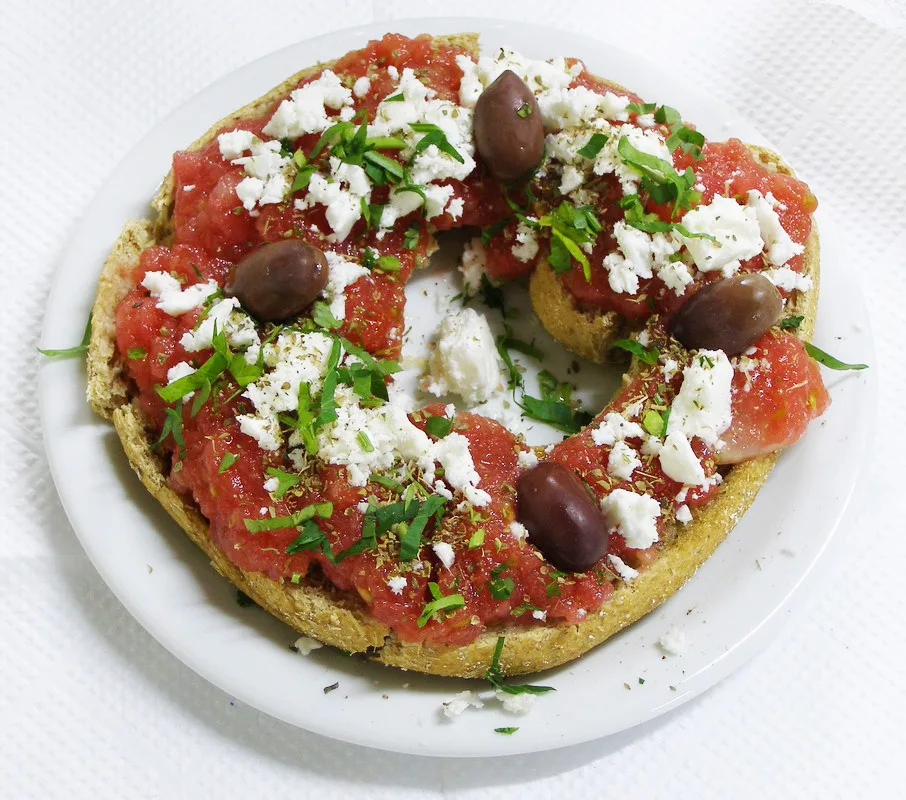
Dakos is Crete's simple peasant dish: a dry barley rusk briefly moistened, then topped with grated ripe tomato, crumbled mizithra or feta, olives, capers and a generous pour of olive oil. It is rustic and uncooked, a matter of good ingredients assembled with care rather than technique. The quality of the olive oil all but decides the dish.
“Dakos is Crete's simple peasant dish: a dry barley rusk briefly moistened, then topped with grated ripe tomato, crumbled mizithra or feta, olives, capers and a generous pour of olive oil.”
The Rusk
The base is paximadi, a barley rusk twice-baked until rock hard so it keeps for months without spoiling, the original logic of a frugal island larder. A short soak in water softens it just enough to eat while leaving a pleasant firmness. The tomato juices and oil finish the softening from above.
The Olive Oil
Crete produces some of the finest olive oil in Greece, and dakos is in many ways a vehicle for it. A grassy, peppery Cretan oil poured generously over the tomato and cheese is what lifts the dish from plain to memorable. A conservative pour is the most common way to undersell it.
Cretan Eating
Dakos sits at the heart of the Cretan diet, long studied for its links to longevity, built on barley, olive oil, vegetables and a little cheese. It is summer food, made when tomatoes are at their ripest, eaten as a light meal or meze. Simple and direct, it shows how much the island gets from very little.
What to Expect
The dakos arrives as a single rusk, the tomato poured over still glistening, the mizithra crumbled white across the red. A fork is used to eat it, the rusk soft but still firm enough to hold. The olive oil pools at the base.
Why Try It
Dakos is Cretan food at its most direct, a preservation technique (the rusk) that produces a better texture when rehydrated than fresh bread would.
Insider Tips
- Eat it on Crete using Cretan oil, the oil is the dish's defining variable.
- The mizithra version (fresher, milder) and the feta version are both correct, try both.
- Request extra olive oil, the standard pour is always conservative.