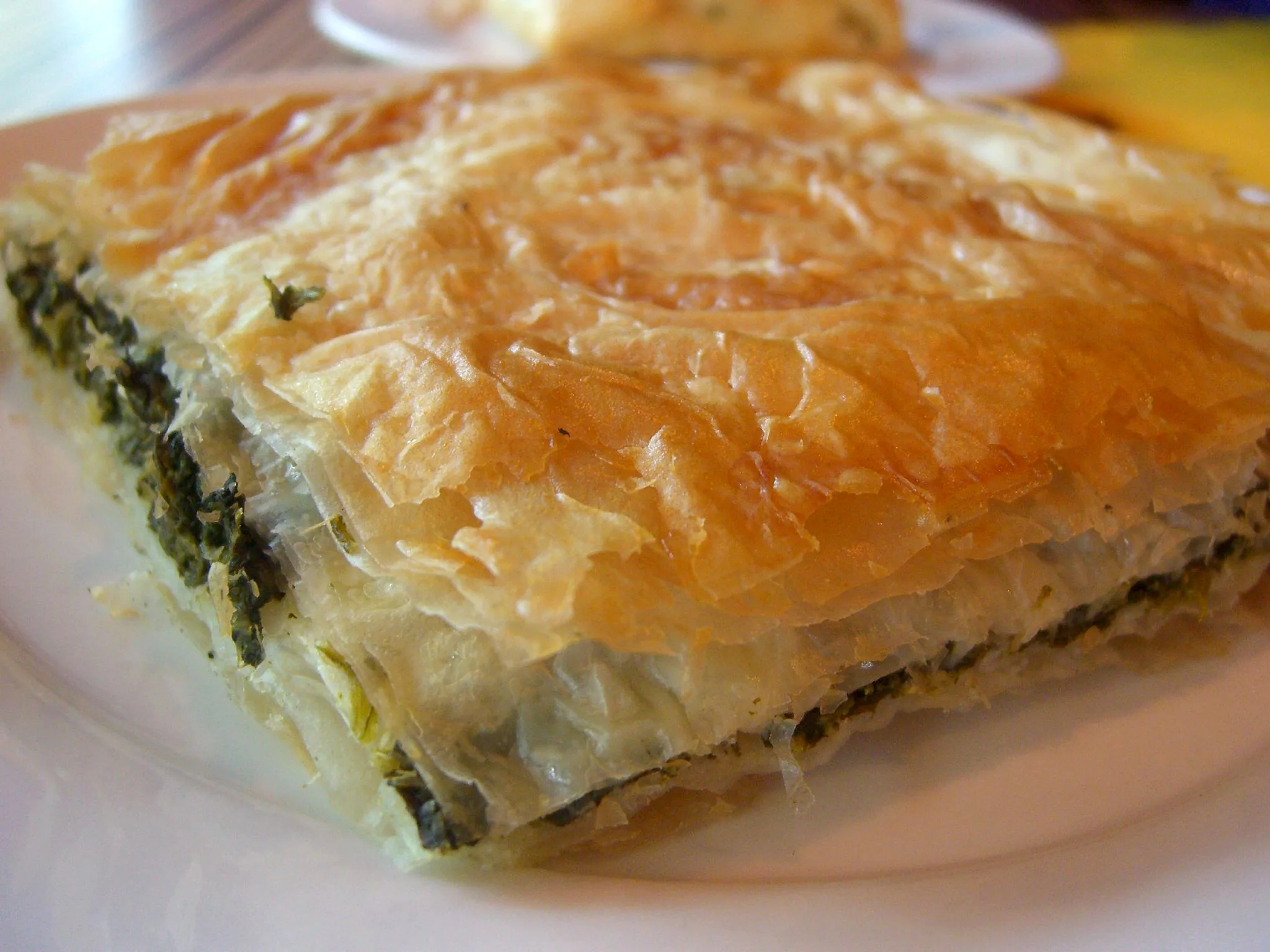
"Phyllo pastry, spinach, feta and dill, baked until the pastry crackles into dozens of golden layers. Eaten warm from a Greek bakery at any hour."
About Spanakopita
Greece's great pie: layers of hand-rolled phyllo dough brushed with olive oil, filled with spinach and crumbled feta, fresh dill and egg; baked until the phyllo crackles into dozens of translucent golden layers; sold in every bakery as a triangle; the phyllo must be homemade in the villages of Epirus where the tradition originates.
Spanakopita, a staple of Greece's cuisine
The Pie
Spanakopita is a Greek savoury pie of phyllo pastry layered with spinach, crumbled feta, fresh dill and egg, baked until the pastry crackles into dozens of thin golden sheets. The filling is soft and salty against the shattering crust. It is everyday food, eaten warm at any time of day.
The Phyllo
The pastry is the heart of the dish. The finest versions use phyllo stretched by hand until it is almost translucent, brushed with olive oil between the sheets so they bake up crisp and distinct. Commercial phyllo is thicker and crunchier, and both have their defenders. Either way, the layering is what gives the pie its texture.
Greens and Seasons
While spinach and feta are the classic filling, the wider Greek pita tradition uses whatever greens are in season, wild horta, leeks, chard and herbs, in countless regional versions. The mountainous Epirus region in the northwest is especially known for its hand-stretched phyllo pies. The filling follows the seasons and the foraging.
The Triangle
In bakeries spanakopita is sold in individual triangles, warm from the oven and eaten by hand; in tavernas it comes as a square slab with the layers visible in cross-section. Both are correct, and both are best warm, when the phyllo still crackles. Cold from the fridge, it loses much of what makes it good.
What to Expect
The spanakopita triangle arrives warm from the oven, the phyllo layers visible at the cut edge. The first bite shatters the pastry and releases the spinach and feta. The dill is faint but present. The feta is salty and slightly tangy.
Why Try It
Spanakopita is the Greek bakery experience, the smell of baked phyllo and olive oil at any hour of the day.
✦ Photo Gallery
Insider Tips
Buy from a Greek bakery (fournos) rather than a café, the freshness is always better.
Eat warm. Cold spanakopita is a different and inferior experience.
The Epirus region in northwestern Greece is where the phyllo-pie tradition is most developed, eat it there for the benchmark.