Greece's layered aubergine and lamb dish with béchamel, the cinnamon in the meat filling is what separates the Greek version from every imitation.
About Moussaka
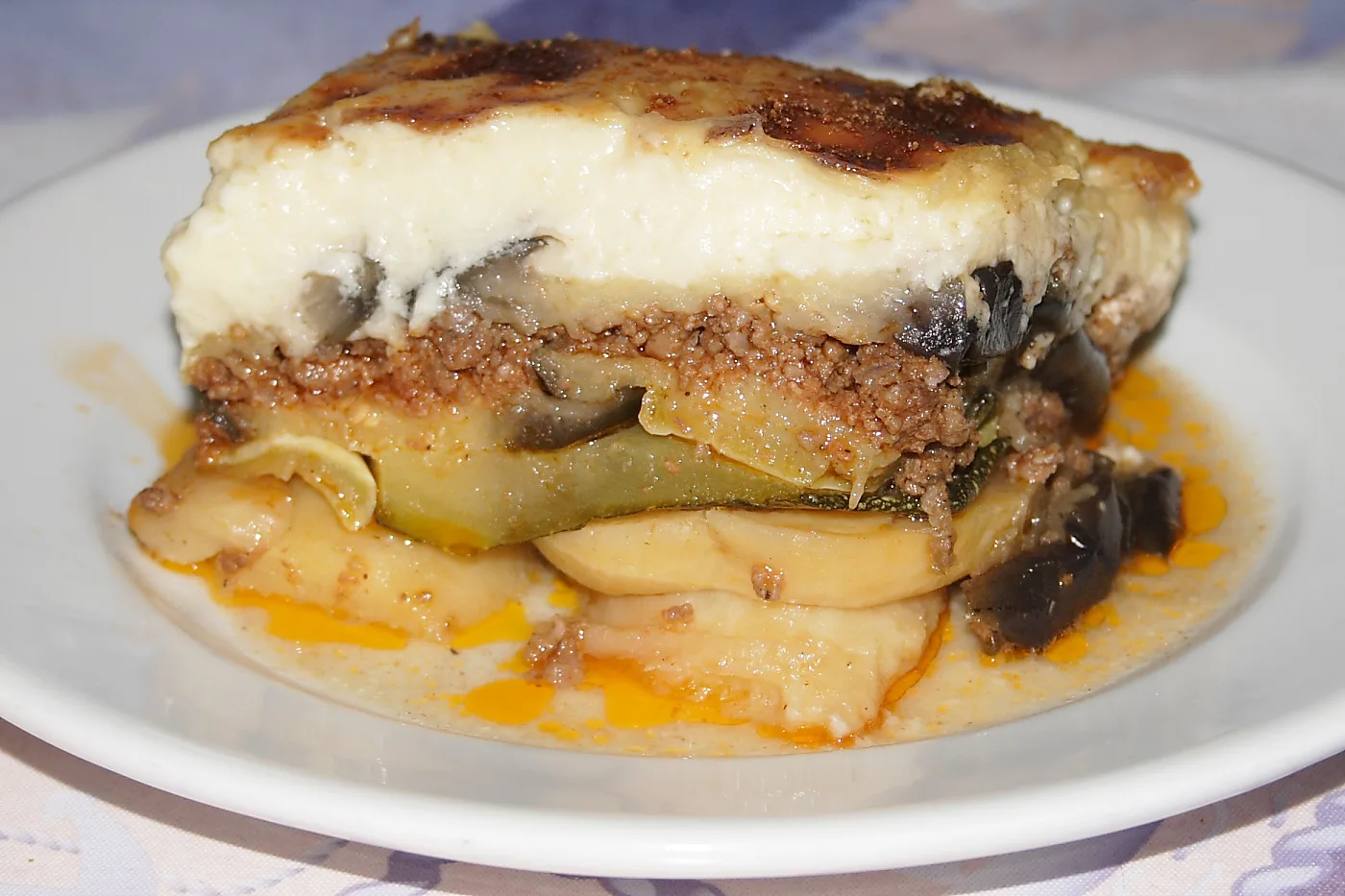
Greece's greatest layered dish: sliced aubergine and potato base, a layer of spiced minced lamb with cinnamon, allspice and tomato, then a thick blanket of béchamel baked until the top bronzes and the layers set into a sliceable terrine; every Greek family believes its version is the correct one; the cinnamon in the meat is non-negotiable.
The Layers
Moussaka is Greece's famous baked dish, built in layers: sliced aubergine, often with potato, at the base, spiced lamb mince in the middle, and a thick blanket of bechamel on top, baked until the surface bronzes and the whole sets into a sliceable block. The aubergine is fried or roasted first so it turns silky. It is hearty, rich and meant to be cut into neat squares.
“The aubergine is fried or roasted first so it turns silky.”
The Cinnamon
What marks Greek moussaka out is warm spice in the meat, cinnamon above all, with allspice and tomato. That fragrant, faintly sweet note in the lamb is what separates it from related layered dishes in Turkey and the Balkans. A filling that tastes only of herbs and tomato has missed the essential Greek character.
The Bechamel
The top layer is a thick bechamel, often enriched with egg and cheese so it sets firm enough to hold a clean slice yet stays soft when warm. Getting it right is the technical heart of the dish: too thin and it collapses, too stiff and it turns leaden. Baked, it forms the golden, slightly domed crust.
A Modern Classic
The layered, bechamel-topped moussaka known today was shaped in the twentieth century, when a French-trained Greek chef gave the older dish its creamy top. It has since become one of the country's most recognisable plates. It is best eaten warm rather than piping hot, once the layers have set enough to slice cleanly.
What to Expect
The moussaka arrives in a square portion, the béchamel surface golden and slightly domed. The fork cuts through all layers: the béchamel flows slightly, the meat is fragrant, the aubergine tender. The cinnamon is present in every bite of the dish.
Why Try It
Moussaka is Greek cooking's most complete expression of layered Mediterranean flavours: aubergine, lamb, spice and dairy in a single dish.
Insider Tips
- The cinnamon must be present, if the meat tastes only of herbs and tomato, the version is wrong.
- Eat it warm, not hot, the layers set and become sliceable when slightly cooled.
- Avoid tourist-area versions. Find a family taverna in any neighbourhood.