Harðfiskur is wind-dried Atlantic cod that survives centuries thanks to a cold-air fermentation that mirrors cheese aging.
About Harðfiskur
The 'shatter-crisp' ancestral superfood of the Vikings; wind-dried fillets of Atlantic cod or wolffish that achieve a high-intensity; concentrated sea flavor; the ritual involves tearing the tough; fibrous pieces by hand and applying a high-precision layer of cold; high-luxury Icelandic butter to soften the bite.
What Harðfiskur Is
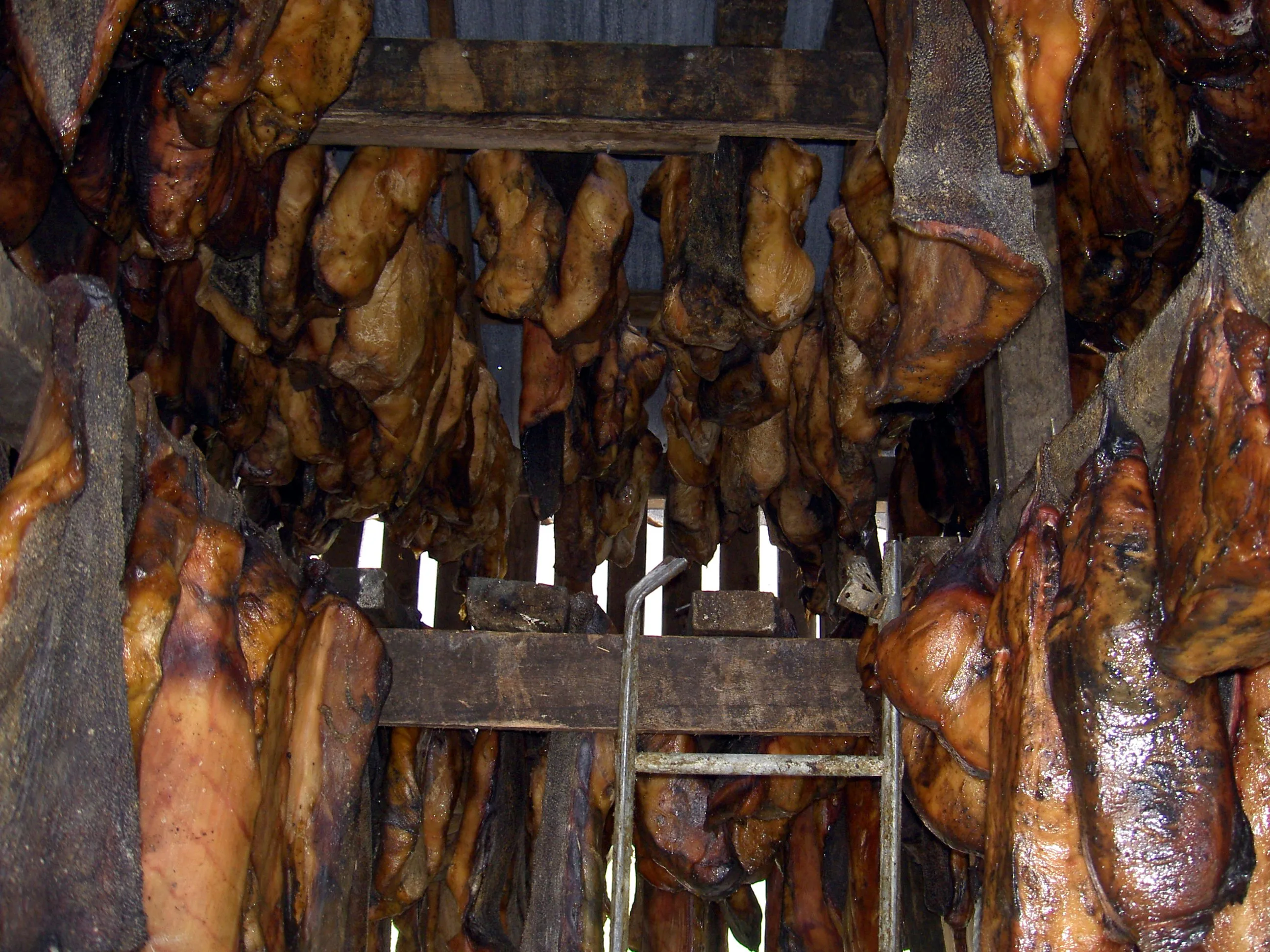
Harðfiskur consists of thin fillets of Atlantic cod or wolffish that have been dried by cold wind on wooden racks. The product is unsalted, relying on the natural preservation power of dehydration and cold-adapted bacteria. Its texture is firm, almost fibrous, and it can be stored for many years without spoilage.
“Harðfiskur consists of thin fillets of Atlantic cod or wolffish that have been dried by cold wind on wooden racks.”
Origin and Cultural Roots
The practice of drying fish on the foreshore dates back to the earliest known food preservation methods. In medieval English legal records, stock fishmongers were listed separately from ordinary fishmongers, highlighting the economic importance of the trade. Icelandic fishermen and their families have continued the tradition, turning the simple process into a cultural staple.
Production and Flavor Profile
Fish are laid on wooden racks, called "hjell" in Norway, where cold air and wind remove moisture over weeks. During this period, cold-adapted bacteria ferment the flesh, developing a concentrated sea flavor that is both salty and slightly sweet. The final product is shatter-crisp, and a thin layer of high-luxury Icelandic butter is often applied before eating to soften the bite.
Consumption Context
Harðfiskur is commonly eaten as a street snack, especially during outdoor gatherings and festivals. The ritual involves tearing the tough pieces by hand, then spreading butter with a precise, thin coat. It pairs well with a cold beer or a glass of brennivín, and it is frequently offered to visitors as a glimpse of ancient Nordic sustenance.
“Harðfiskur is commonly eaten as a street snack, especially during outdoor gatherings and festivals.”