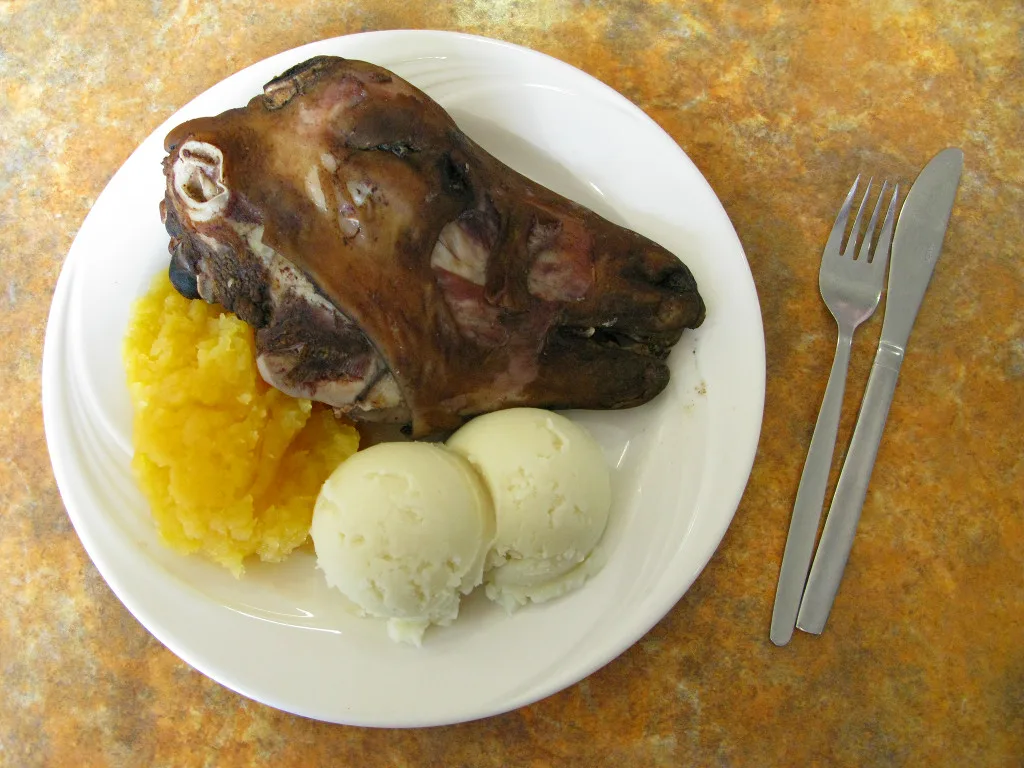
"Svið is a boiled sheep's head that survived famine, and the eye is often prized as the best part of the dish."
About Svið
A high-intensity heritage dish of singed and boiled sheep's head; halved to reveal the high-precision textures of the cheek meat and tongue; 'insiders' prize the high-gravity fat behind the eyes; it is a panoramic representation of the 'nose-to-tail' ancestral philosophy of the Icelandic farmstead.
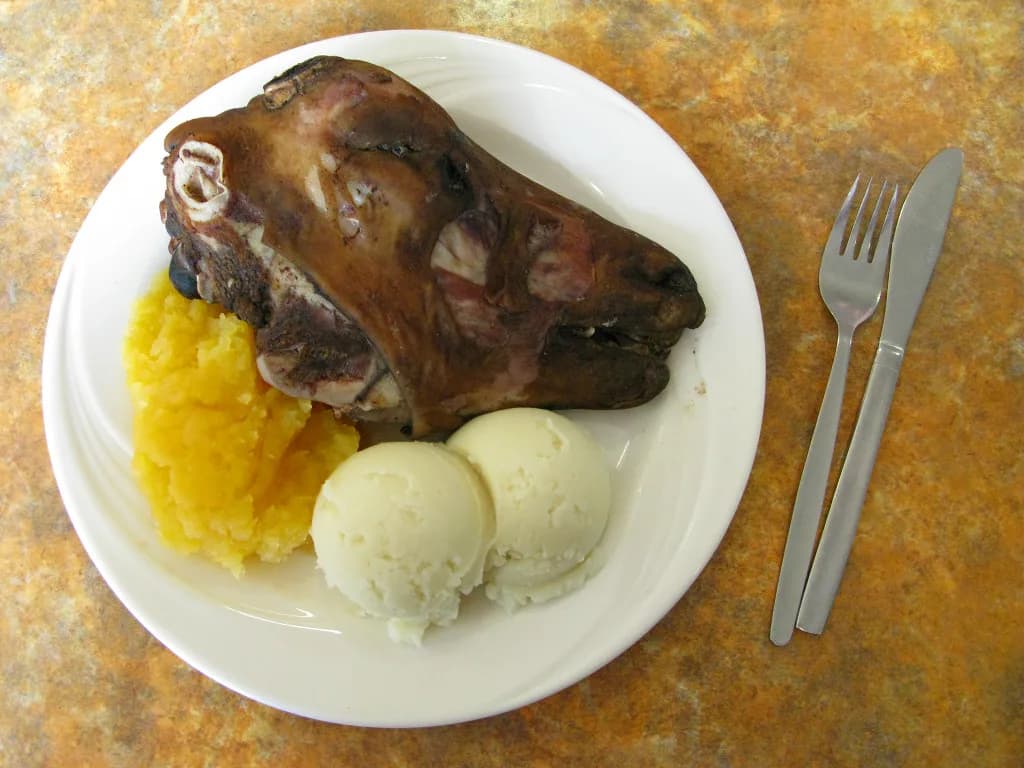
Svið, a staple of Iceland's cuisine
The Dish Defined
Svið consists of a whole sheep's head cut in half, fur singed off, and boiled after the brain is removed. The preparation leaves the cheek meat, tongue, and the high-gravity fat behind the eyes exposed for diners. The result is a dense, gelatinous texture that contrasts with the firmer muscle of the cheeks.
Historical Roots
The dish emerged when Icelandic farmers could not afford to waste any part of a slaughtered animal. It became a staple of þorramatur, the assortment of traditional foods served at the mid-winter Þorrablót festival. Similar head preparations appear in Norway and the Faroe Islands, linking the dish to a broader Nordic heritage.
Preparation and Flavor
After singeing, the head is boiled in water, sometimes with a lactic-acid cure that adds a subtle tang. The cheek meat offers a tender, slightly sweet bite, while the tongue provides a firmer, earthy flavor. The fat behind the eyes is described by locals as especially rich, adding a buttery mouthfeel.
When and How It Is Eaten
Svið appears on buffet tables during Þorrablót, where diners select pieces alongside other traditional items. The ears are often left untouched because of a superstition that removing them could be seen as theft. Children are warned that an unbroken bone under the tongue may silence them forever, a belief that adds a ritual element to the meal.
What to Expect
A diner lifts a slice of cheek from the steaming broth, feeling the gelatinous skin give way to tender flesh. The tongue, cool from the broth, offers a firm chew that contrasts with the melt of the eye-fat. The scent of boiled lamb mingles with a faint sour note from the lactic cure, creating a sensory profile that feels both ancient and immediate.
Why Try It
Svið embodies Iceland's commitment to using every part of the animal, a principle that defines the nation's culinary identity. Its presence at Þorrablót highlights the communal celebration of heritage foods.
Insider Tips
Seek out local farms or community gatherings during Þorrablót for the most authentic preparation.
Pair with a robust Icelandic craft beer or a glass of brennivín to cut through the richness.
Insiders note that the eye-fat is considered the most prized bite by many Icelanders.