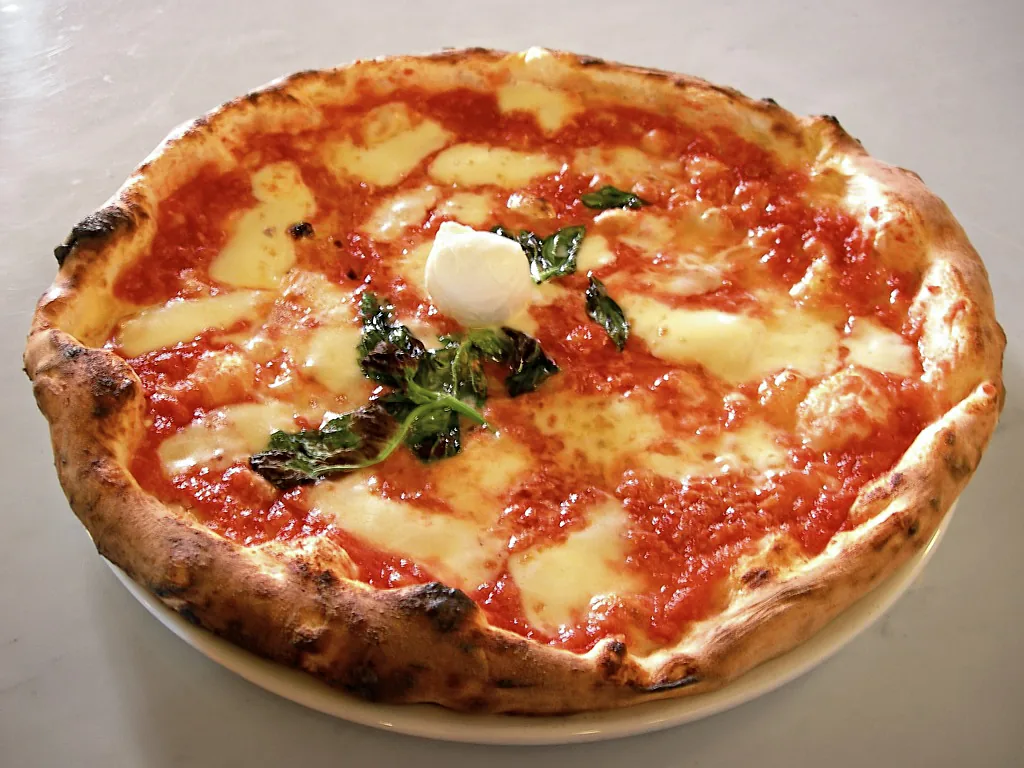
"Neapolitan pizza has a legal designation specifying the tomato variety, the mozzarella type, the oven temperature and the baking time. The law exists because the difference matters."
About Neapolitan Pizza Margherita
The original and still the greatest: a disk of 00-flour dough fermented for 24 hours, hand-stretched to a disc with a thick, air-filled cornicione crust, topped with San Marzano DOP tomatoes, buffalo mozzarella di Campania DOP and fresh basil, then baked for 60 seconds at 485°C in a wood-fired dome oven; the Margherita was created for Queen Margherita in 1889; the TSG certification protects the method in law.
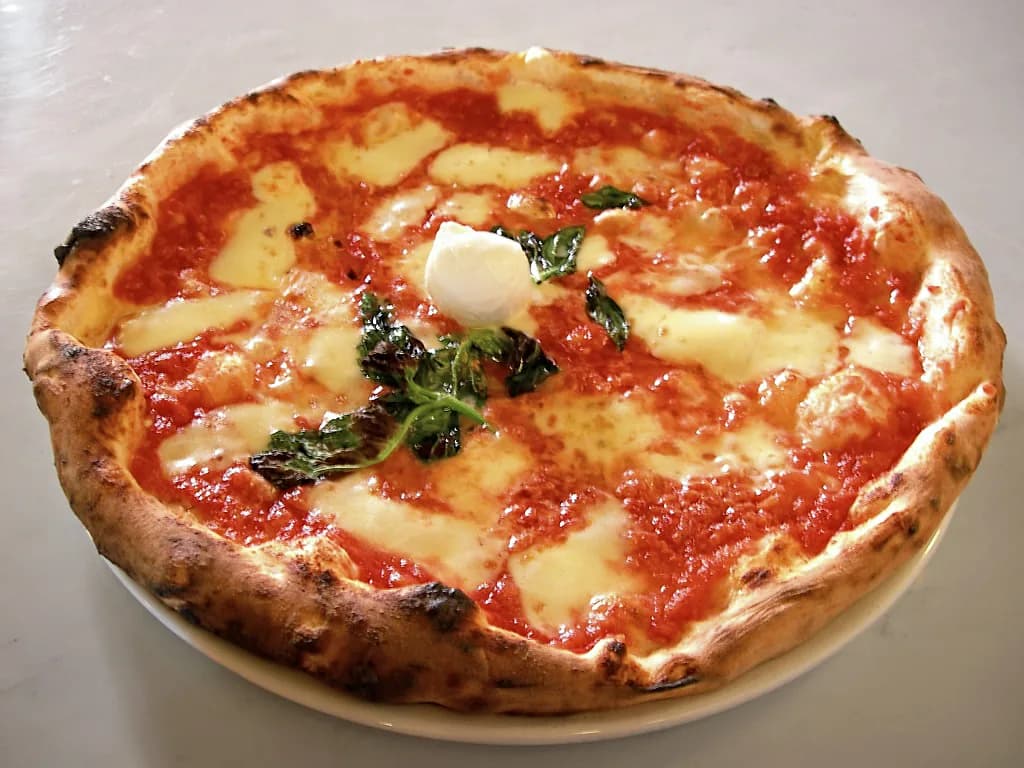
Neapolitan Pizza Margherita, a staple of Italy's cuisine
Protected by Law
Neapolitan pizza is so closely defined that it carries its own protected status, setting out the flour, the long fermentation, the San Marzano tomatoes, the mozzarella and the searing wood-fired oven. These are not loose traditions but written rules. The Margherita, with tomato, mozzarella and basil, is the benchmark against which all else is judged.
The Dough
The base is a slow-fermented dough of flour, water, salt and yeast, left to rise for many hours so it develops flavour and an airy structure. Stretched by hand, never rolled, it is dressed simply and baked for well under two minutes in an oven hot enough to blister it. The fermentation is what gives the crust its lightness and faint sourness.
The Cornicione
The cornicione, the raised rim, is the most telling part of a Neapolitan pizza: blistered and charred in spots, puffed with air from the long rise, chewy and fragrant. It is not a handle to be discarded but the showcase of the dough. The centre, by contrast, stays soft and slightly wet, eaten with a knife and fork or folded.
Naples on a Plate
Eaten in Naples, from one of its long-established pizzerias, the pizza is markedly different from versions made elsewhere, down to the local water, flour and mozzarella. The restraint is the point: tomato, cheese, basil and oil, and nothing more on a true Margherita. It is one of the world's simplest great dishes, defined by the quality of very few things.
What to Expect
At a Neapolitan pizzeria the pizza arrives in under 90 seconds from the oven, the cornicione blistered and slightly charred. The mozzarella is pooled in white islands on the tomato. The centre is soft and slightly wet. The diner eats it folded in four.
Why Try It
Neapolitan pizza eaten in Naples, specifically at Pizzeria Brandi, Di Matteo or Sorbillo, is substantially different from any version available outside Campania.
✦ Photo Gallery
Insider Tips
Di Matteo on Via dei Tribunali and Pizzeria Brandi in Chiaia are two essential Naples addresses.
The pizza arrives very hot and slightly soft in the centre. Let it rest 90 seconds before eating.
Order only Margherita or Marinara at a Neapolitan pizzeria. Elaborate topping combinations are not Neapolitan.