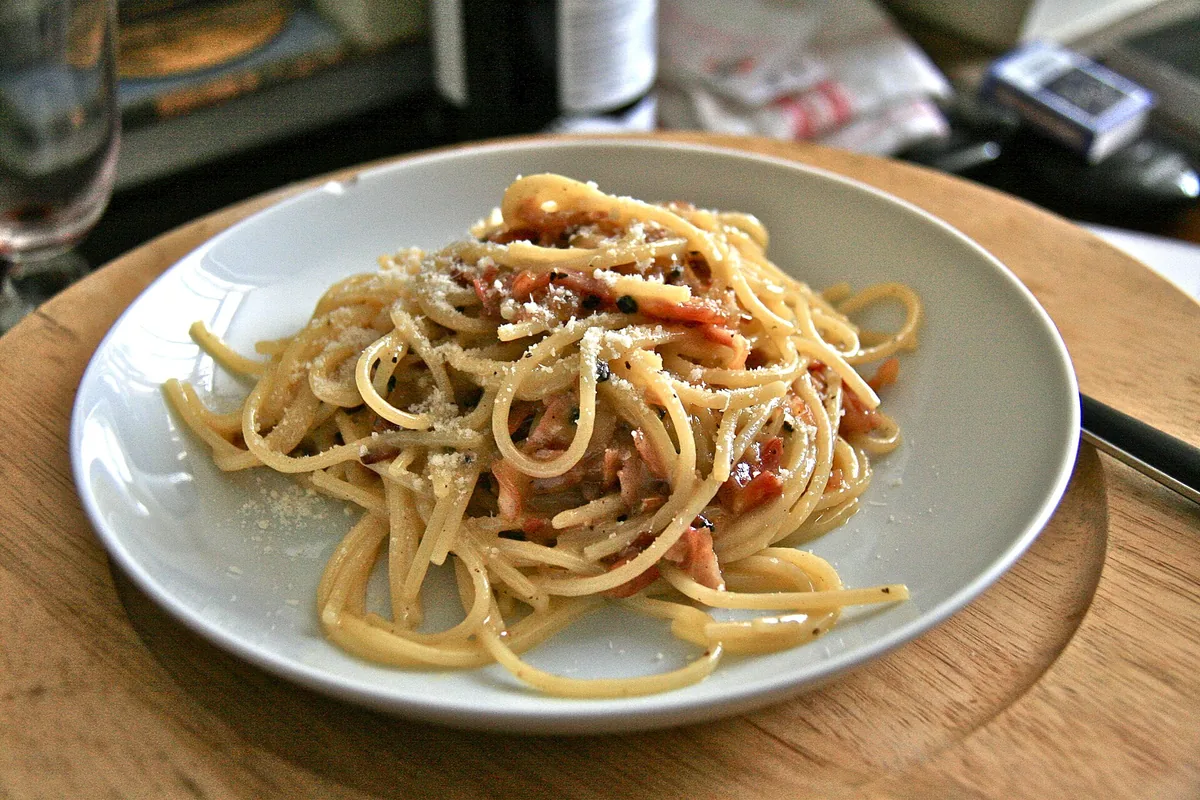
"Rome's carbonara has no cream, the sauce is egg yolk thickened by pasta water's residual heat. Too hot and it scrambles. The technique takes practice to get once and discipline to repeat."
About Pasta Carbonara
Rome's most imitated and most violated dish: spaghetti or rigatoni tossed off the heat with guanciale (cured pork cheek), Pecorino Romano, Parmigiano and a sauce of egg yolks thickened by the residual heat of the pasta; no cream, ever; the emulsification of egg, cheese and pasta water is a technique that takes weeks to master and seconds to ruin.
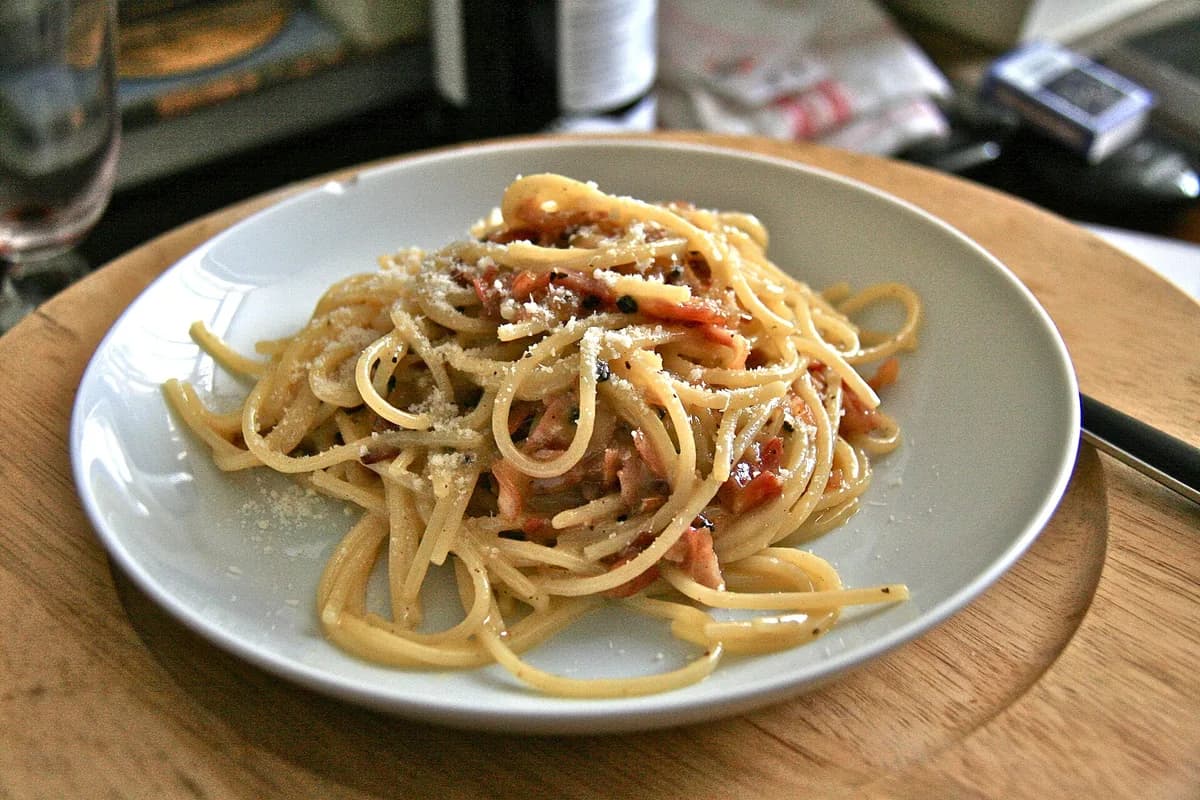
Pasta Carbonara, a staple of Italy's cuisine
Rome's Dish
Carbonara is a Roman classic of pasta tossed off the heat with guanciale, Pecorino Romano and a sauce of egg yolks thickened by the pasta's residual warmth. There is no cream, ever. The emulsion of egg, cheese and a little starchy pasta water is the whole technique, and it is unforgiving: too hot and the egg scrambles, too cool and the sauce stays thin.
Guanciale
The only correct fat is guanciale, cured pork cheek, which renders to a crisp edge and a soft centre and leaves behind a deeply porky fat that becomes the base of the sauce. Pancetta is a substitute and bacon is not, since neither gives the same flavour or texture. The rendered fat is folded into the egg and cheese, not drained away.
Four Ingredients
Carbonara is built on a handful of things done precisely: pasta, guanciale, egg yolk, Pecorino and black pepper. Each must be good and correctly handled, since there is nothing to hide behind. The sauce should coat every strand glossily, neither dry nor watery, a balance that takes practice to hit and discipline to repeat.
Origins and Myths
The dish is a relative newcomer by Roman standards, with origins debated between wartime Rome and the charcoal-burners, the carbonari, its name may recall. What is not in doubt is the Roman insistence on its form: no cream, no onion, no shortcuts. It is the clearest test of Roman cooking, a dish that addition can only ruin.
What to Expect
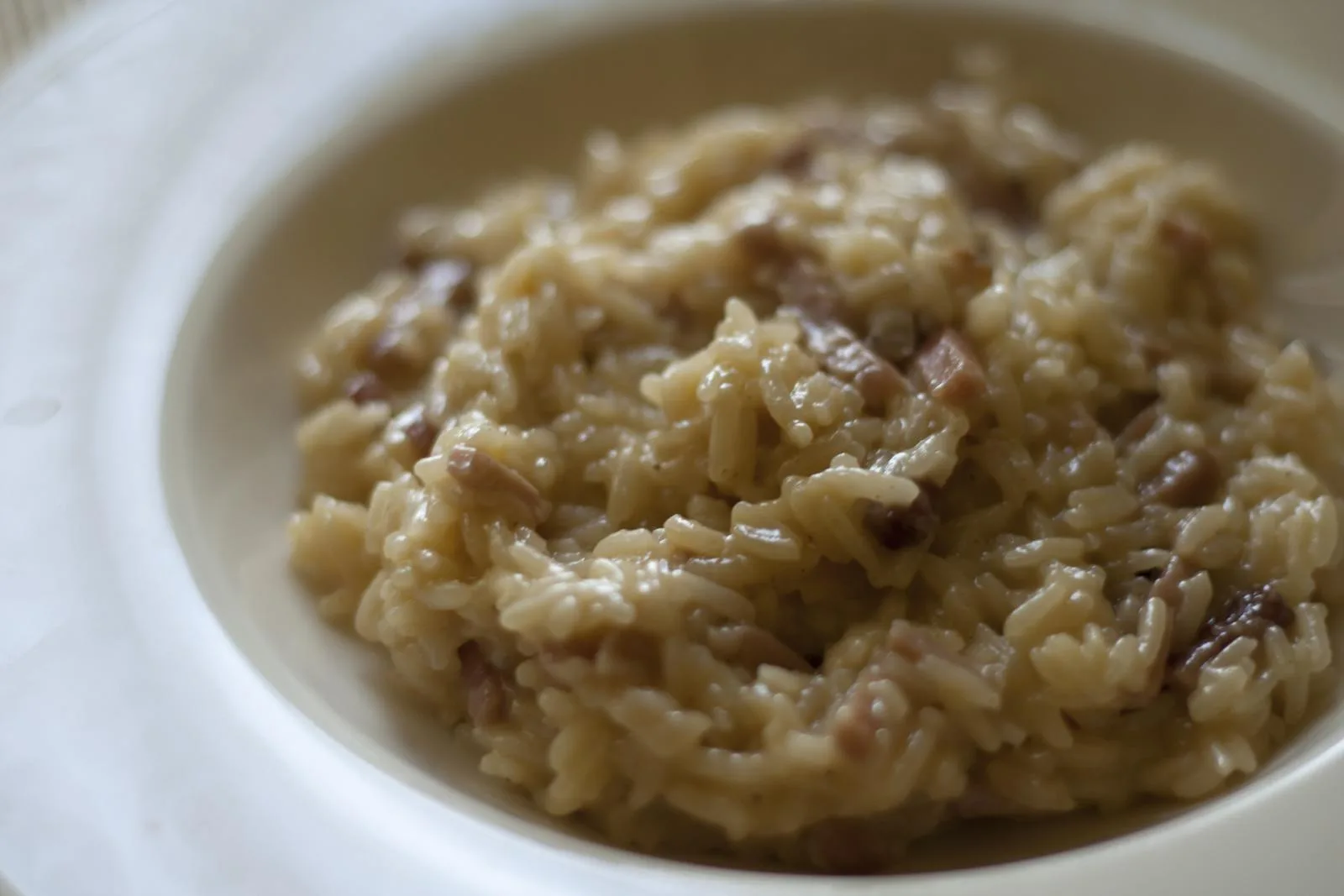
At a Roman trattoria the carbonara arrives in a white bowl, the pasta glossy with egg and Pecorino, the guanciale crisp and visible. No cream. The sauce coats every strand. The Pecorino is present in every bite.
Why Try It
Carbonara is the litmus test for Roman cooking, a dish that cannot be improved by addition, only ruined by it.
✦ Photo Gallery
Insider Tips
Roscioli and Tonnarello in Rome are the two most respected carbonara addresses.
Never accept cream in carbonara, if cream is present, it's a different dish.
Rigatoni holds the sauce slightly better than spaghetti. Both are correct but rigatoni is more forgiving.