Bologna's Chamber of Commerce registered the authentic ragù recipe in 1982: beef, pork, white wine, milk and minimal tomato, simmered four hours. Spaghetti bolognese doesn't exist in Bologna.
About Ragù Bolognese
Bologna's great slow-cooked meat sauce: a soffritto of celery, carrot and onion in lard and butter, combined with minced beef and pork, a splash of white wine, whole milk and just enough tomato to provide acidity; simmered for four hours minimum until the sauce turns a deep terra cotta; served only with fresh tagliatelle (never spaghetti) according to the Bologna Chamber of Commerce's registered recipe.
The Registered Recipe
Bologna takes its ragu so seriously that the city's chamber of commerce lodged an official recipe: a soffritto of celery, carrot and onion, minced beef and pork, white wine, a little milk and just enough tomato for acidity, simmered for hours. It is served with fresh tagliatelle, never spaghetti. The registration was as much a defence of tradition as a recipe.
“The registration was as much a defence of tradition as a recipe.”
Tomato and Milk
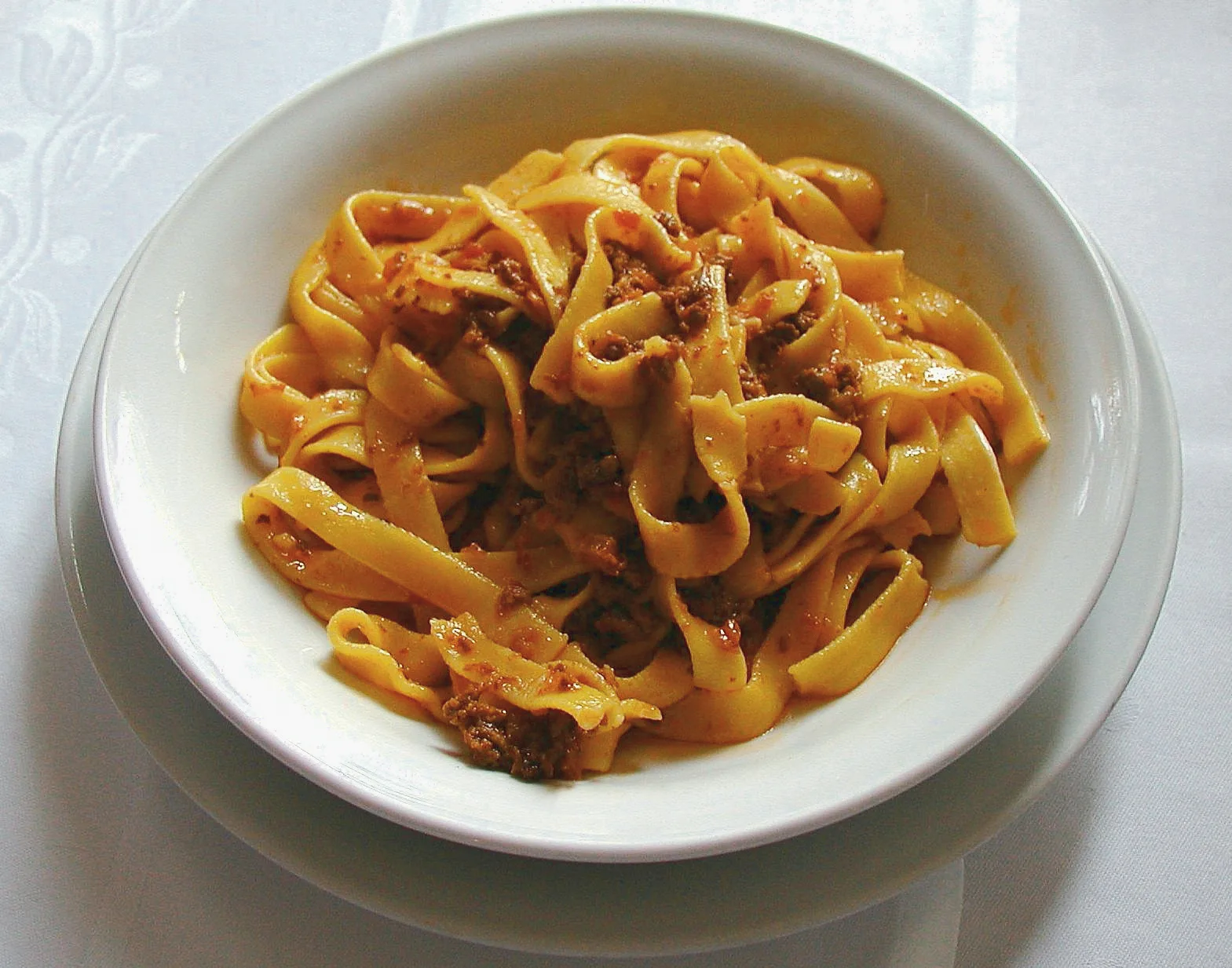
The two ingredients that surprise outsiders define the sauce. Tomato is used sparingly, for acidity rather than to make it red and saucy, so a true ragu is brown and meaty rather than scarlet. Milk, added during cooking, softens the acidity of the wine and tomato and lends a roundness. Together they make a sauce that clings to pasta rather than pooling around it.
The Pasta
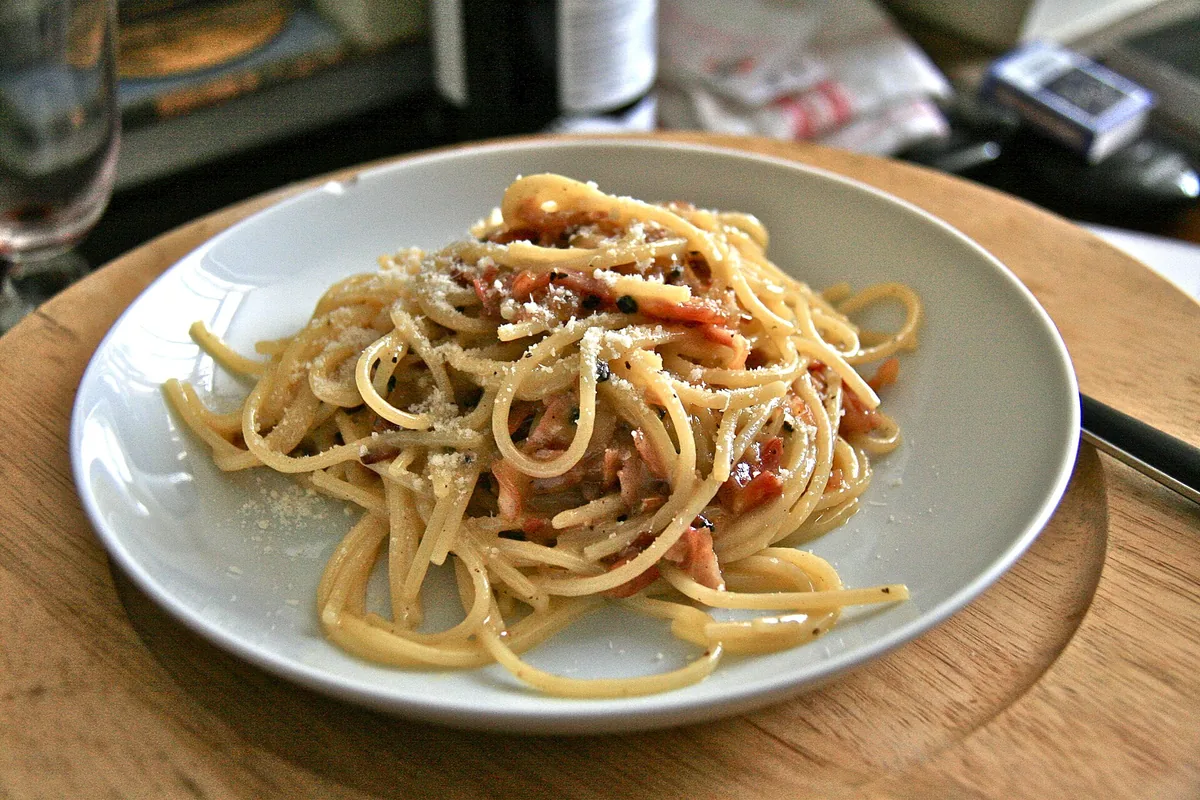
In Bologna ragu is paired with fresh egg tagliatelle, whose porous, ribbon-flat strands hold the meat sauce far better than smooth dried spaghetti. The much-mocked spaghetti bolognese is essentially unknown in the city. The match of sauce to pasta shape is treated as part of the recipe itself.
Time Over Tomato
What makes a great ragu is patience rather than any single ingredient. The long, gentle simmer melds the meats, wine, milk and aromatics into something deep and complex that no quick sauce can match. It is the clearest example of an Italian principle: the recipe is only the starting point, and time and technique do the rest.
What to Expect
The ragù arrives on fresh tagliatelle: wide, ribbon-flat, made that morning. The sauce is dark and thick, coating the pasta without drowning it. The milk has softened the acidity. Four hours of cooking are present in every forkful.
Why Try It
Ragù bolognese is the dish that proves Italian cooking's most important principle: the recipe is the starting point, the technique and the time are what produce the result.
Insider Tips
- Osteria dell'Orsa in Bologna is a reliable and affordable address for the benchmark version.
- Use fresh tagliatelle (not dried spaghetti), the pasta width and porosity are integral to the dish.
- The milk is not optional. It's the ingredient that separates a true bolognese from a generic meat sauce.