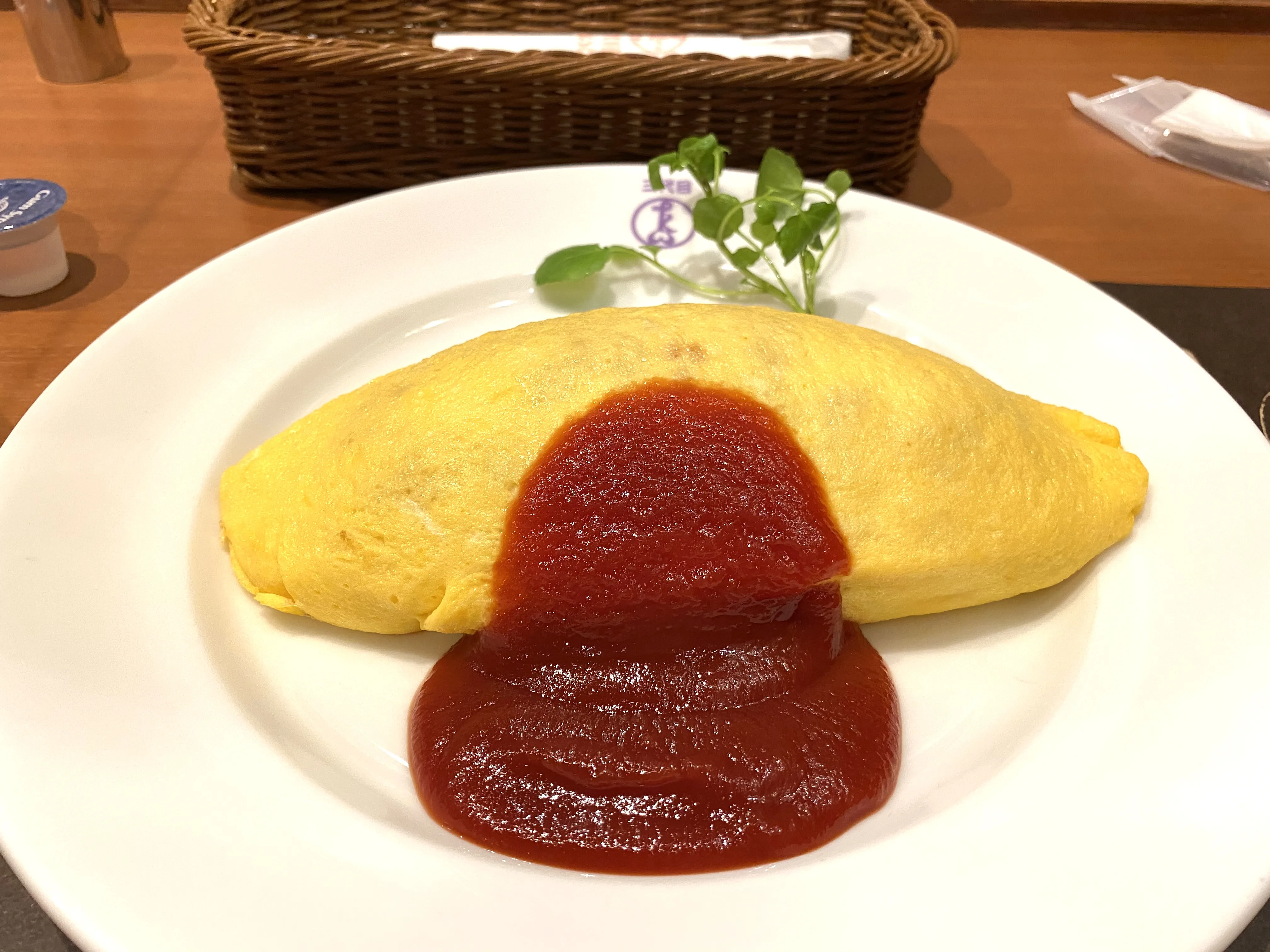
"Japanese comfort food: tomato fried rice wrapped in a soft omelette split open at the table. The Kyoto restaurant Kichi Kichi's tableside technique has been filmed 100 million times."
About Omurice
Japan's most beloved yoshoku (Western-influenced) dish: a pillow of tomato-flavoured fried rice wrapped in a thin, French-style omelette skin that is split at the table and draped over the rice like a blanket; at Kichi Kichi in Kyoto, chef Motokichi Yukimura's tableside technique of slicing the omelette skin with a knife has been filmed 100 million times.
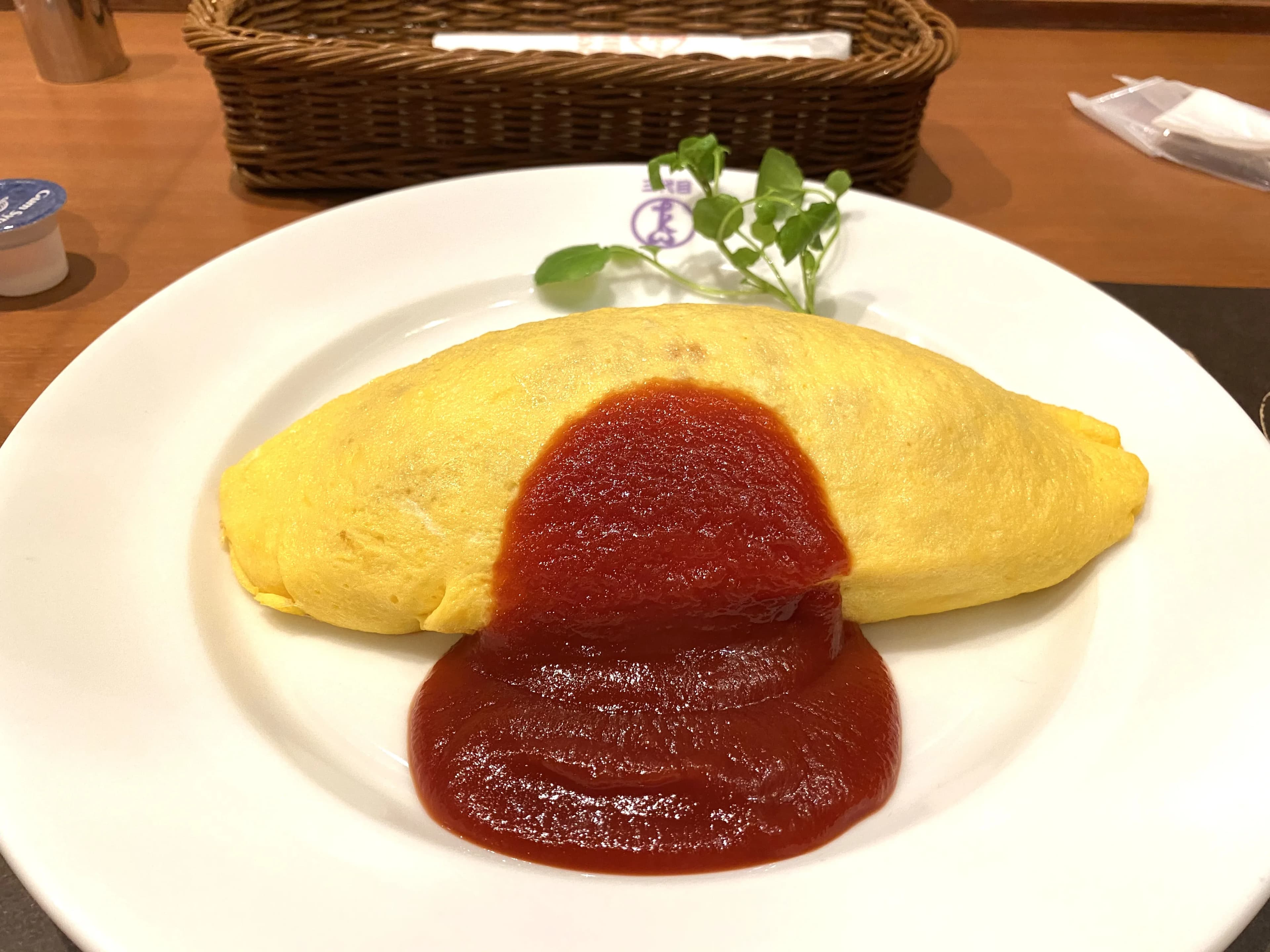
Omurice, a staple of Japan's cuisine
Western Meets Japanese
Omurice is one of Japan's best-loved yoshoku dishes, the Western-influenced home cooking that developed over the last century. Tomato-seasoned fried rice is wrapped in a thin omelette and finished with ketchup or a richer demi-glace sauce. It is comfort food, equally at home in a diner, a home kitchen and a children's lunchbox.
The Egg
The omelette is the demanding part. It must be thin, soft and pale, not browned, cooked in a single continuous motion and laid over the rice without tearing. In the most famous tableside version, the omelette is set on the rice and slit open with a knife so it unfolds and drapes itself over the mound. Getting that soft, just-set skin is a real test of technique.
The Rice
Beneath the egg is the rice, fried with onion, often chicken or peas, and seasoned with ketchup until lightly sweet and savoury. It is the heart of the dish, the omelette its wrapper. A demi-glace version swaps the ketchup finish for a darker, richer sauce.
A Yoshoku Classic
Omurice shows how Japan absorbed a foreign idea, the French omelette, and refined it into something with its own technique and aesthetic. It is nostalgic, everyday food rather than haute cuisine, yet pursued with real care in the best kaiseki-adjacent diners. Theatrical at its most refined and homely at its simplest, it is yoshoku at its most beloved.
What to Expect
At Kichi Kichi the omelette arrives on the plate, the chef slits it with a knife and the egg unfolds and drapes itself over the rice in one continuous motion. It is genuinely theatrical and the food is excellent.
Why Try It
Omurice shows how Japan absorbed a Western concept and refined it into something with a technique and aesthetic entirely Japanese.
✦ Photo Gallery
Insider Tips
Kichi Kichi in Kyoto (tiny, reservations required) is the most famous omurice address in Japan.
The omelette skin should be pale gold, not browned. Browning means the heat was too high.
The tomato fried rice filling should be slightly sweet with ketchup. The demi-glace version is richer.