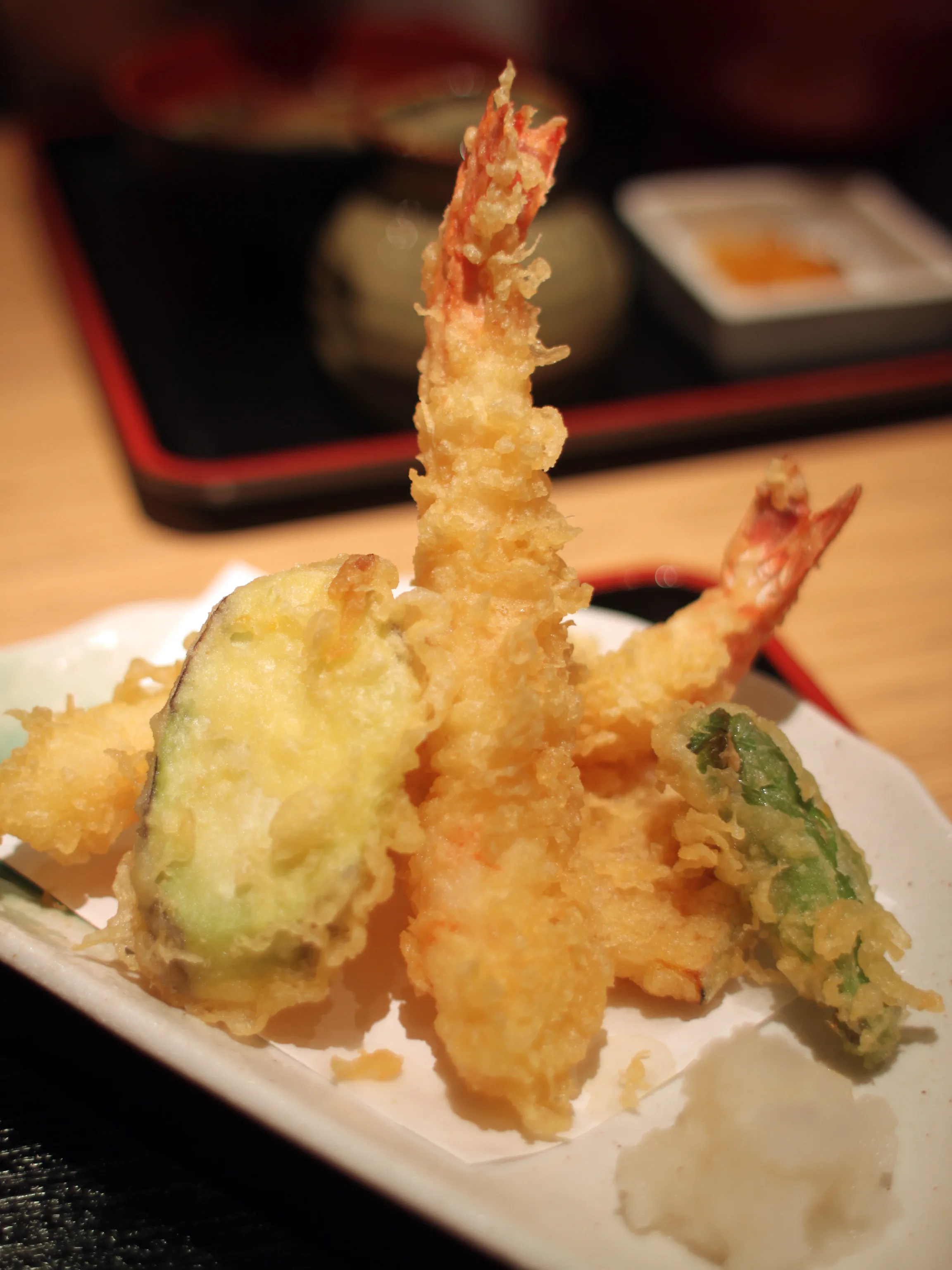
"Japan's greatest frying technique: ice-cold batter mixed until just barely combined, the lumps are intentional, fried in sesame oil and eaten the moment it leaves the oil."
About Tempura
Japan's greatest contribution to frying technique: seafood (tiger prawn, squid, kisu fish) and seasonal vegetables dipped in an ice-cold batter of soft wheat flour and egg yolk and submerged briefly in 180°C sesame oil; the batter must be mixed with cold chopsticks until it is still lumpy (lumps are not a defect); served immediately with tentsuyu dipping broth.
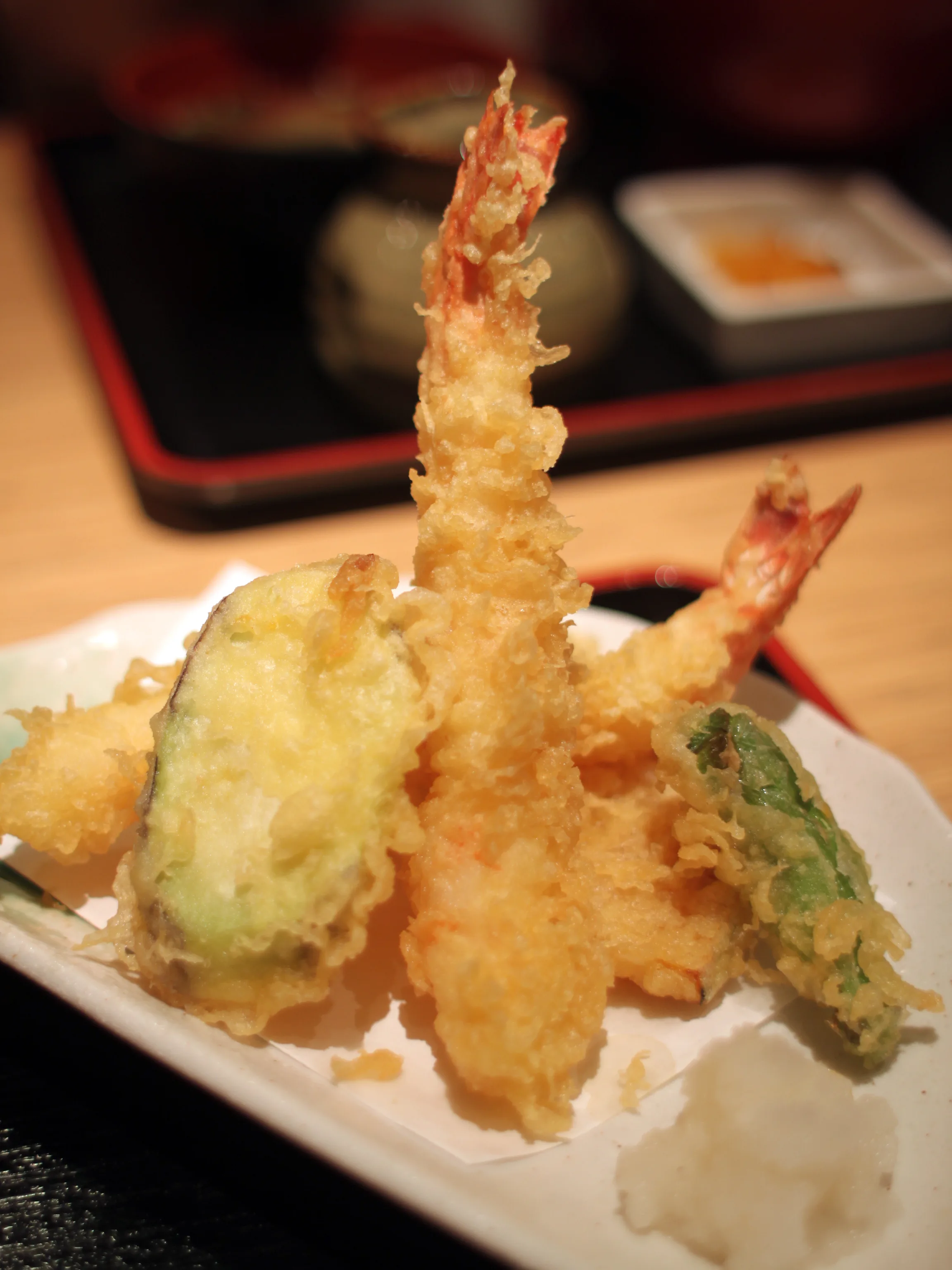
Tempura, a staple of Japan's cuisine
The Batter
Tempura is Japan's great frying technique: seafood and vegetables dipped in an ice-cold batter of soft wheat flour and egg and fried briefly in hot oil. The batter is barely mixed, with cold chopsticks, and the lumps are intentional, since overmixing develops gluten and makes the coating heavy. The aim is a thin, lacy, crackling crust rather than a thick shell.
The Oil and the Fry
Everything depends on temperature and timing. The oil, often cut with fragrant sesame oil, is kept hot and the pieces fried for moments, just long enough to set the batter and warm the ingredient through. Each item is cooked to its own timing, the prawn differently from the sweet potato. Pulled at the right second, the coating stays pale and crisp.
The Service
Tempura is eaten the instant it leaves the oil, dipped in tentsuyu, a light dashi broth with grated daikon, or with a pinch of salt. Held more than a minute, it begins to soften and lose its point. The casual form is tendon, tempura over rice; the formal form is a counter where pieces arrive one by one.
At the Counter
At a tempura counter the chef fries to order, setting each piece on a rack as it comes from the oil, the prawn first, its batter audibly crackling. The whole craft is one of restraint: the thinnest coating, the shortest time, served without delay. Done well, it is among the most delicate fried food anywhere.
What to Expect
At a tempura counter in Tokyo, each piece arrives on a rack as it comes from the oil. The tiger prawn is first, the batter gossamer-thin and audibly crackling. Diners dip the prawn in tentsuyu and eat immediately.
Why Try It
Tempura demonstrates what restraint in frying means: the thinnest possible coating, the shortest possible time, served without delay.
✦ Photo Gallery
Insider Tips
Tenmatsu in Nishi-Azabu (Tokyo) is a respected mid-range tempura counter.
Eat each piece the moment it arrives, tempura held more than 60 seconds begins to go soft.
The prawn (ebi) and sweet potato (satsuma-imo) pieces are the benchmarks for judging batter quality.