Korea's most composed bowl: individually seasoned vegetables, beef and egg over rice in a stone bowl that keeps cooking until the bottom scorches. Jeonju is the bibimbap capital.
About Bibimbap
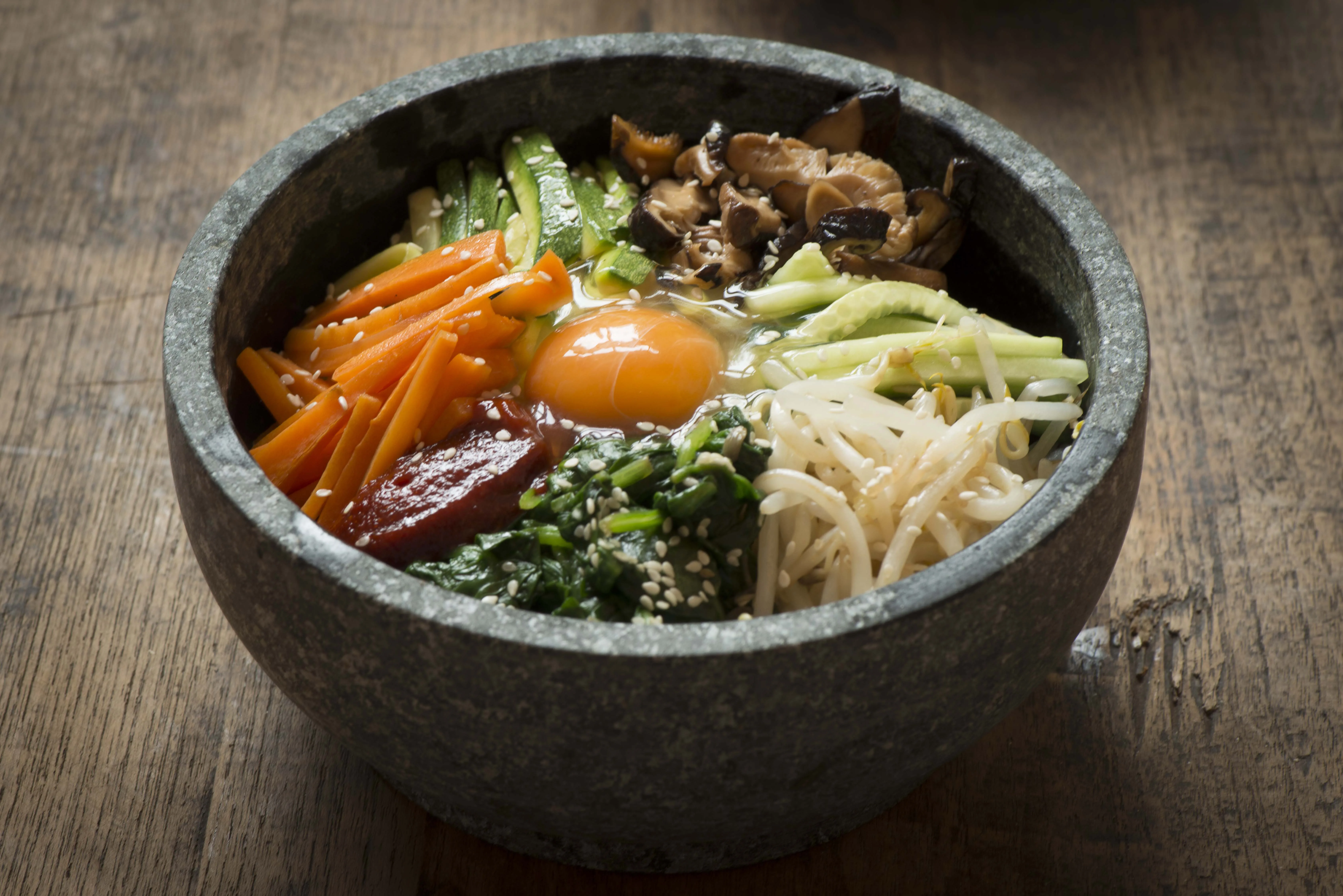
Korea's most perfectly composed bowl: steamed rice topped with individually seasoned namul vegetables (spinach, fernbrake, bean sprouts, mushroom, carrot), sliced beef, a soft-fried egg and gochujang (fermented chilli paste) in a stone dolsot bowl that continues to cook the rice into a crispy bottom layer (nurungji); Jeonju is the designated bibimbap capital of Korea.
The Bowl
Bibimbap is among Korea's most composed dishes: steamed rice topped with an array of individually seasoned namul vegetables, sliced beef, a fried egg and a spoon of gochujang. In the dolsot version it is served in a hot stone bowl that keeps cooking the rice at the base into a crisp, scorched layer. The point is the contrast of many separately prepared elements brought together.
“Bibimbap is among Korea's most composed dishes: steamed rice topped with an array of individually seasoned namul vegetables, sliced beef, a fried egg and a spoon of gochujang.”
The Namul
What sets bibimbap apart is that each vegetable is prepared and seasoned on its own, spinach, bean sprouts, fernbrake, mushroom, carrot, each blanched or sauteed and dressed differently. The care taken with these namul is the heart of the dish. Assembled in the bowl, they form a deliberate balance of colour, flavour and texture.
Mixing and Nurungji
Bibimbap is made to be mixed. The gochujang is stirred through so every grain of rice and every vegetable is coated, a step that is not optional. In the stone bowl, a layer of nurungji, scorched crisp rice, forms at the base while the dish is eaten and is scraped up at the end as a prize.
Jeonju
The city of Jeonju is regarded as Korea's bibimbap capital, its version distinguished by particular ingredients such as raw marinated beef and local bean sprouts, and served amid a spread of side dishes. The dish there is treated with real ceremony. It shows the precision of Korean cooking, where each component is perfected before assembly.
What to Expect
The dolsot arrives sizzling, the stone bowl holding heat. The gochujang is added and everything is mixed, a non-optional step. At the base of the bowl, the nurungji forms while the dish is being consumed. The nurungji is scraped up at the end.
Why Try It
Bibimbap is the dish that shows Korean cooking's precision: each namul vegetable prepared separately, each seasoned specifically, before assembly.
Insider Tips
- Mix everything before eating, bibimbap served unmixed is not being used correctly.
- Jeonju Hanok Village has dozens of bibimbap restaurants. Gogung is the most established.
- Scrape the nurungji (scorched rice) from the stone bowl at the end. It's the best part.